Vine Training
Author: Knut Sætrevik
How do you set up the conditions? It is important to train the grapevines to get good light access to the clusters. There are several methods for doing this. In open ground, double and single “Guyot” are preferred. The plant below is in double “Guyot”. This means laying out one fruiting shoot horizontally on each side. Single means taking out shoots to one side only. For double Guyot you need a plant spacing of 150-180 centimeters. For single, 100-120 centimeters may be suitable. To give the plant something to grip onto, and in this way protect itself against wind, you can stretch wires between posts that are well anchored in the ground. How high the wire should be strung depends on the climate. If you expect early or late night frosts in spring and autumn, it may pay off to tie the first wire 70-80 centimeters above the ground. You then do not get full benefit from the ground heat during the growing season. Therefore I tie my plants on a low wire – approx. 40-50 centimeters above the ground. You string wires with 30-40 centimeters spacing in height. Every other one of these is double. Between the double wires you can guide the shoots, and you then protect yourself against weather and wind. On the ground, under the plants, it is a good idea to lay stones or stone slabs. The heat will then stay longer into the afternoon. In the photo above you can see a plant of the German wine grape Rondo. The variety is otherwise marginal in the Norwegian climate, planted freely in rows. It has nevertheless produced ripe grapes every year here in sætrevik. In 2004 they were harvested as late as October 23. When the grapes start to turn blue it is important to protect the grapes from birds. Thrushes, magpies and free-ranging hens are a major nuisance! Roe deer, deer, small rodents and sheep can be a problem in some areas.
Figure: Rondo in double Guyot
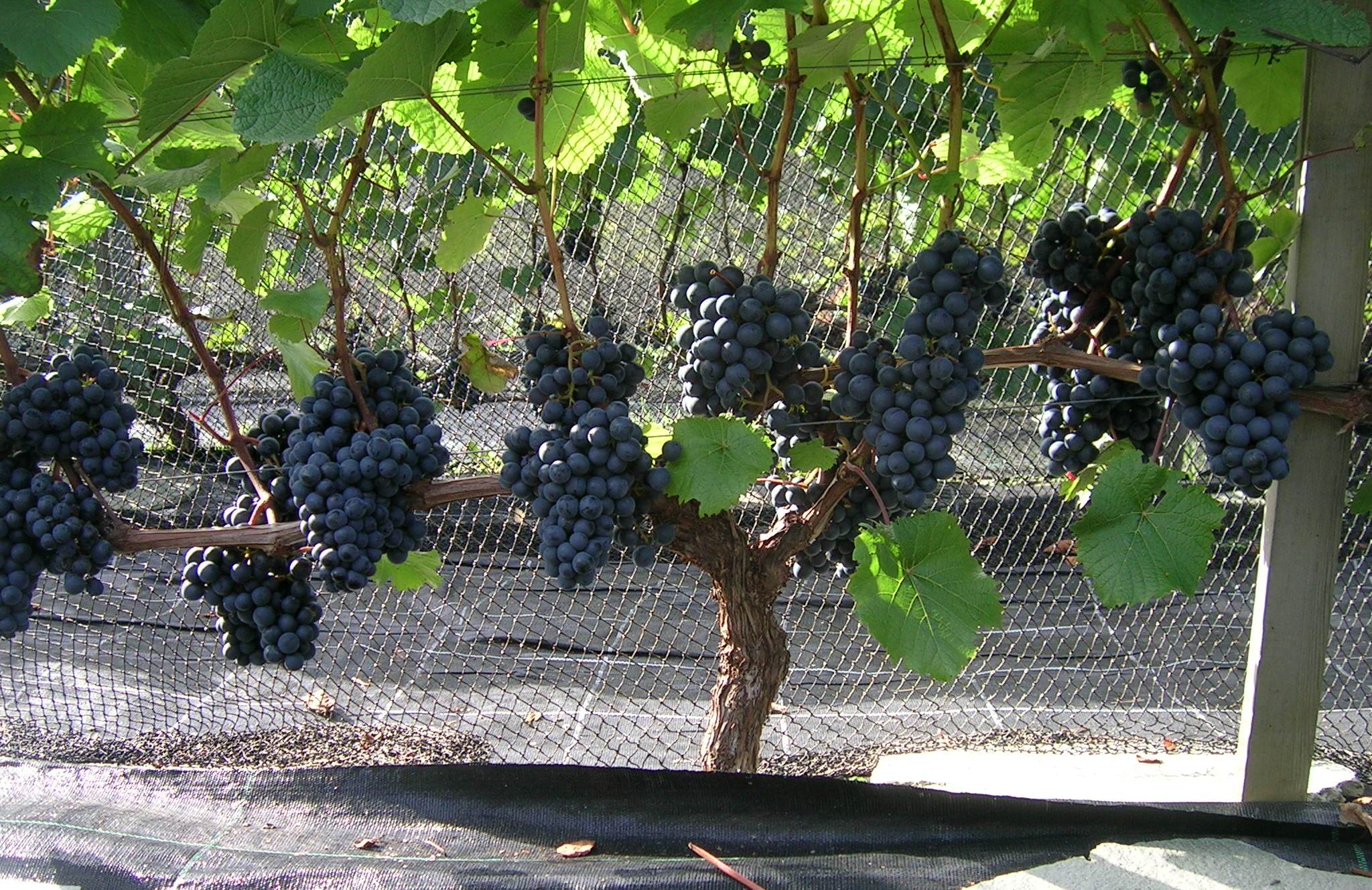
(The photo shows the German wine grape Rondo planted freely in rows and trained in double Guyot.)
Figure: Guyot against rock or wall
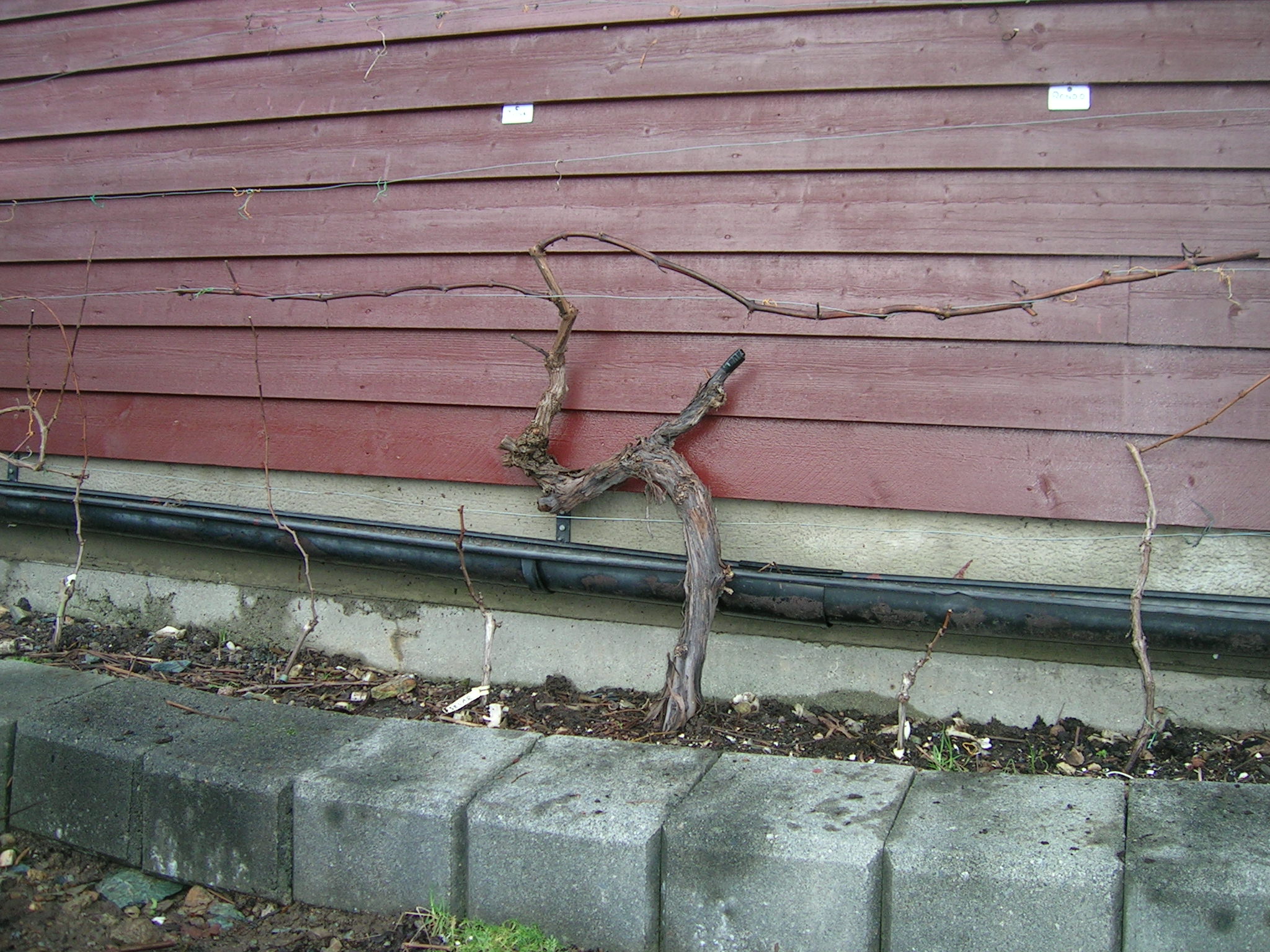
(“Guyot” can in principle be done in the same way against rock or wall. Chicken wire can easily be used on rock.)