White Table Grapes
Author: Knut Sætrevik
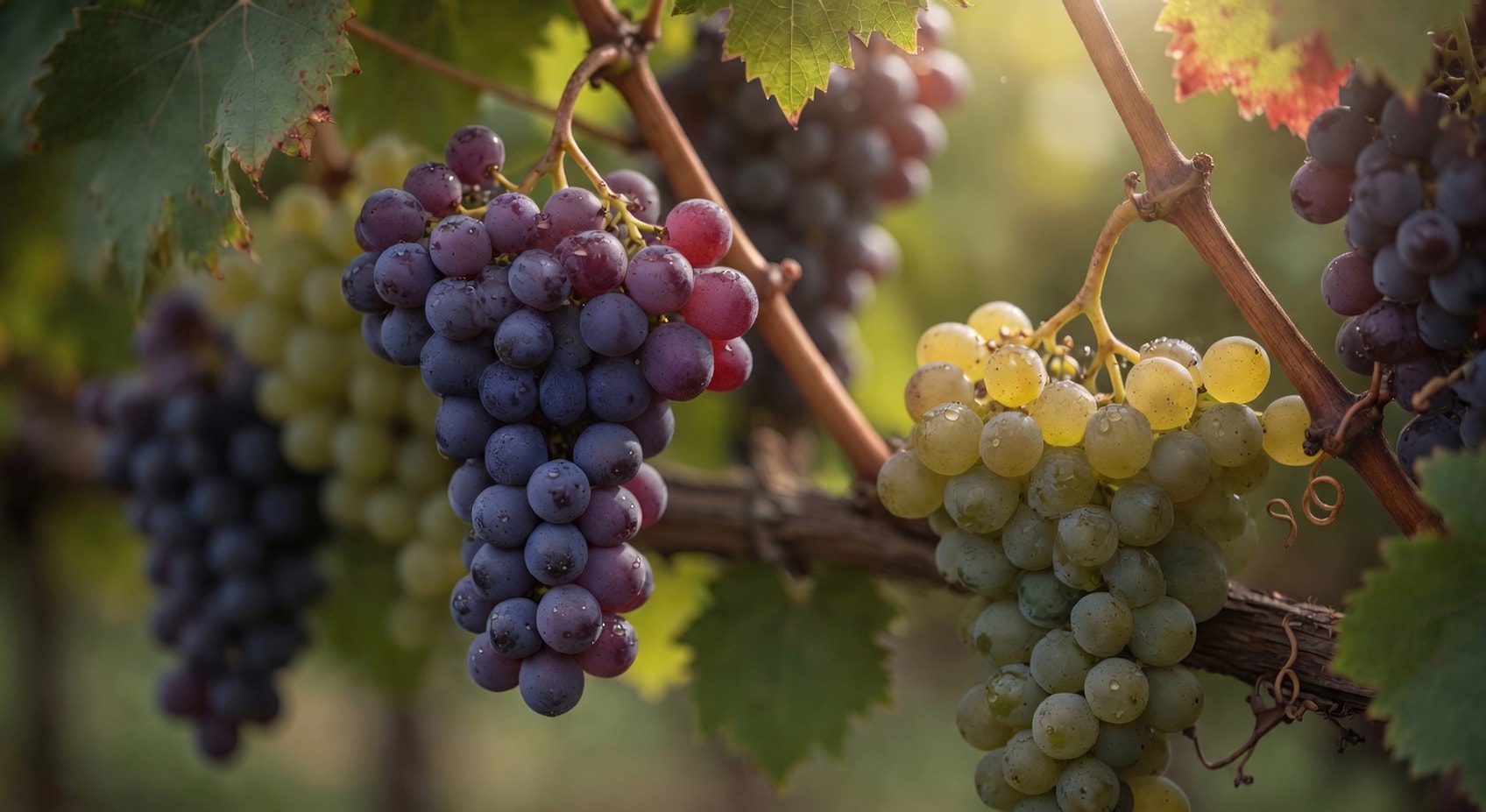
Varduva
A white variety from Lithuania. It is resistant to disease. It has an “American” taste, but the flavor is good and reminds a little of tropical fruits. The grapes are medium-sized on dense clusters. Thinning in the clusters is recommended when the grapes are the size of peas. Then the grapes become larger and sweeter.
Figure: Varduva
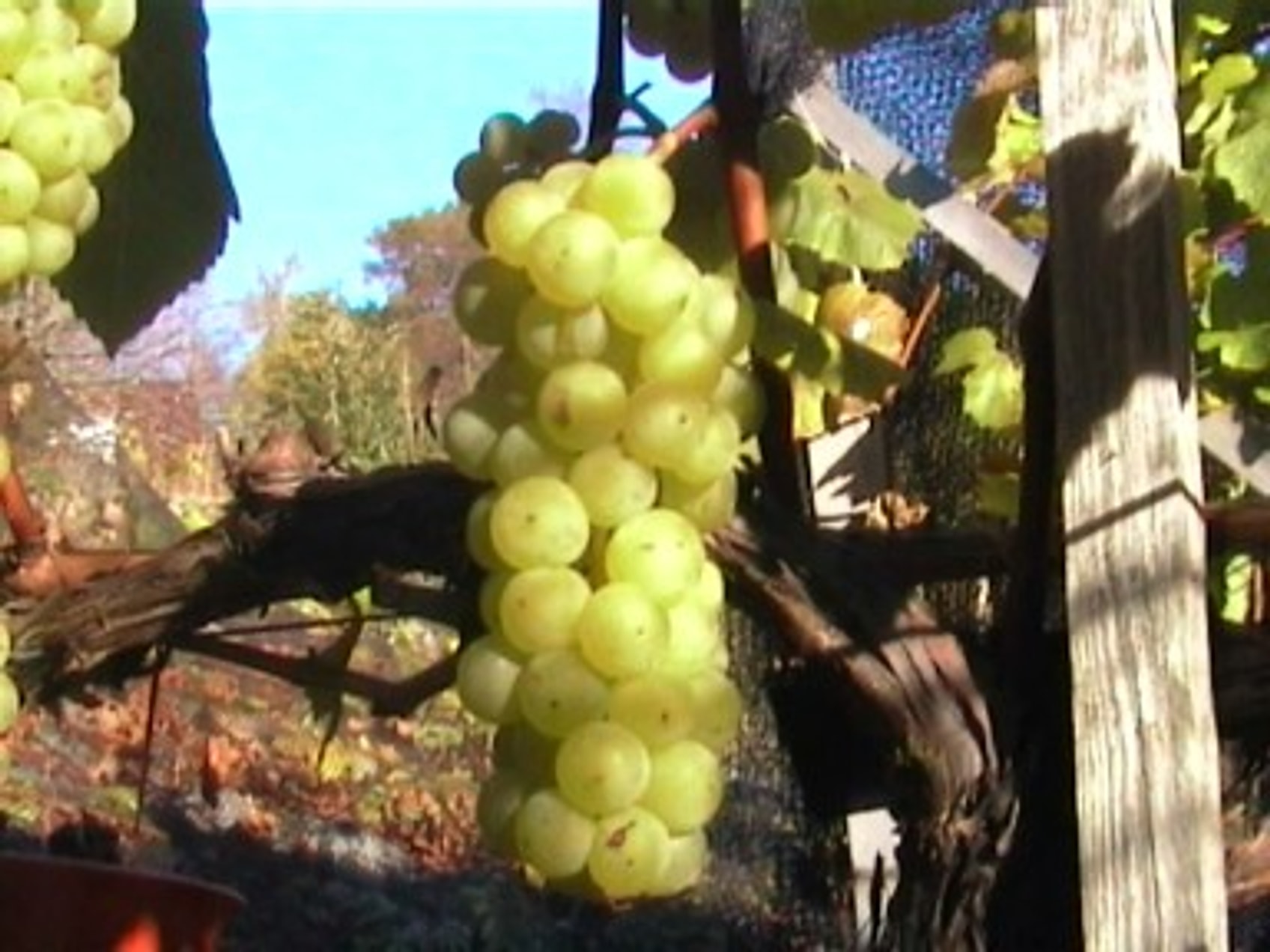
Lilac
is a variety from Siberia, Biysk/Omsk, crossed by RF Sharova. It has beautiful loose clusters with medium-sized grapes that acquire a light pinkish-lilac color at full ripeness. For white wine it should certainly be harvested 1-2 weeks earlier to retain some of the acid structure in the juice. The variety has light muscat notes in the flavor. It is used as a table grape in Siberia. It may be a relevant blending variety for wine. The new shoots and grape stems have a fine red color like Siberian dogwood. It tolerates -30°C.
Figure: Lilac
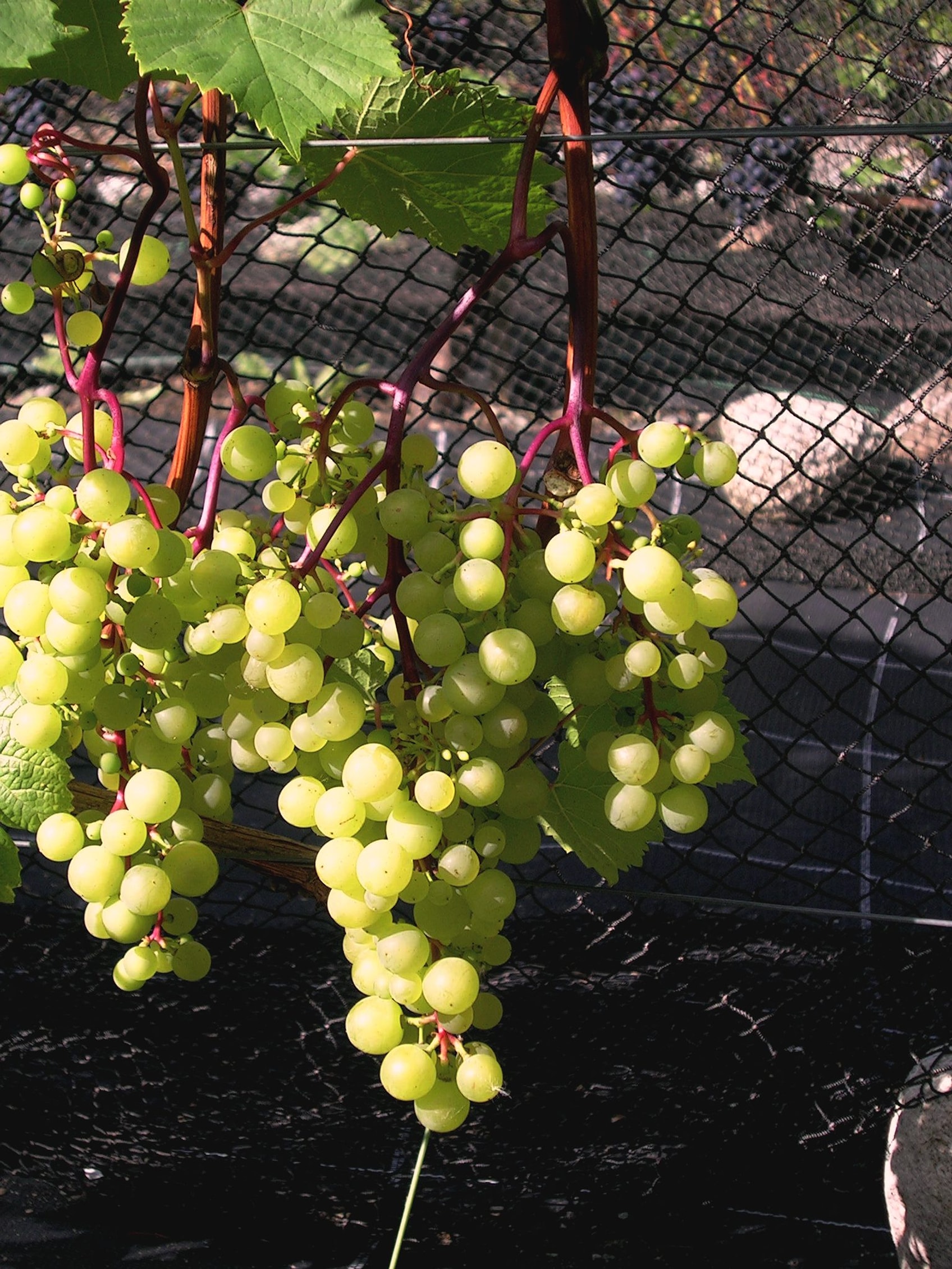
Aleochenkin
is a fine grape from Russia. It has mid-early ripening. Ripens from 15 to 20 September against a south-facing wall or masonry. The grapes are medium-sized on large clusters. An excellent table grape. For this one it is recommended to have only 1 cluster per shoot, then the clusters can reach up to 1 kg. Tolerates cold down to -20°C provided the shoots are well ripened before night frost in autumn.
Figure: Aleochenkin
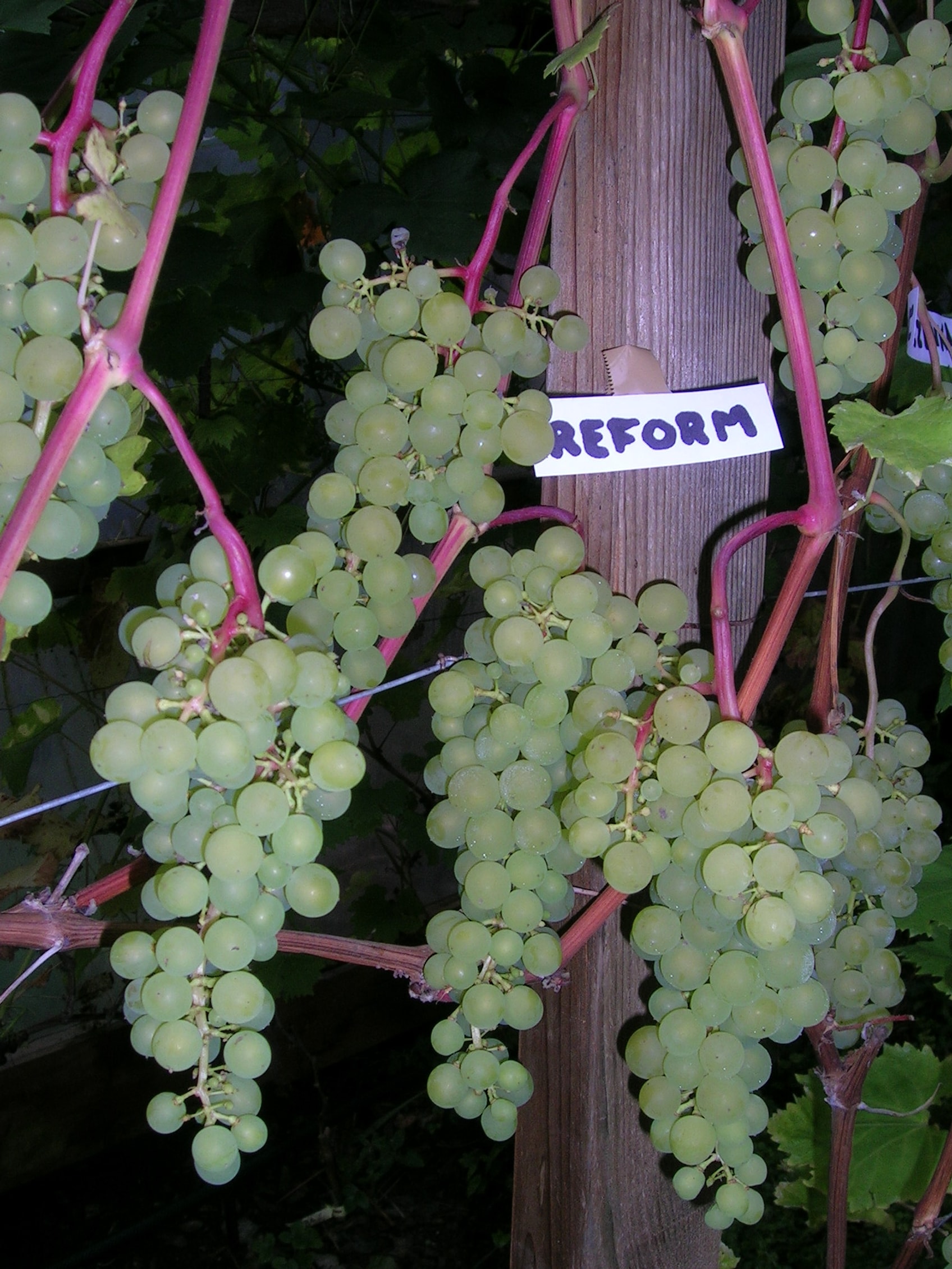
Reform
is a variety from Hungary with small to medium-sized grapes with good flavor. Gives a small yield if it is wet during the flowering period. Ripens around 20 September against a south-facing wall or masonry.
Figure: Reform
Himrod
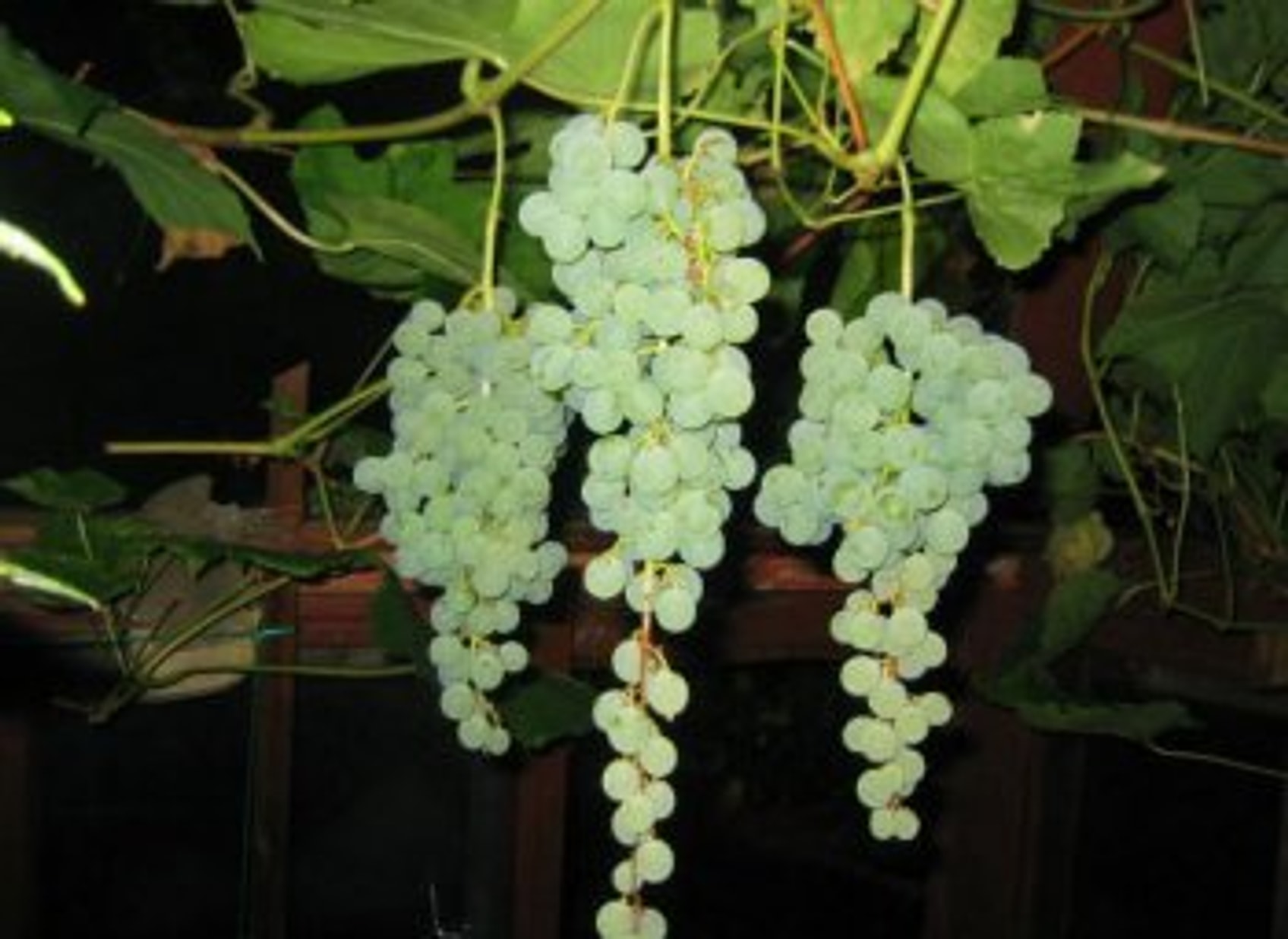
is a seedless grape from the USA. Here in our climate it should be grown in a greenhouse. The flavor is good. The variety can be dried and used as raisins. It has small grapes on loose, long clusters. It is a vigorous grower.
Figure: Himrod
Korinka Russkaya
is a small seedless yellow grape from Russia that can be grown outdoors. It is productive and has early ripening. Around 15 September against a south-facing wall or masonry. It tolerates cold well, around -25°C.