Blue Wine Grapes
Author: Knut Sætrevik
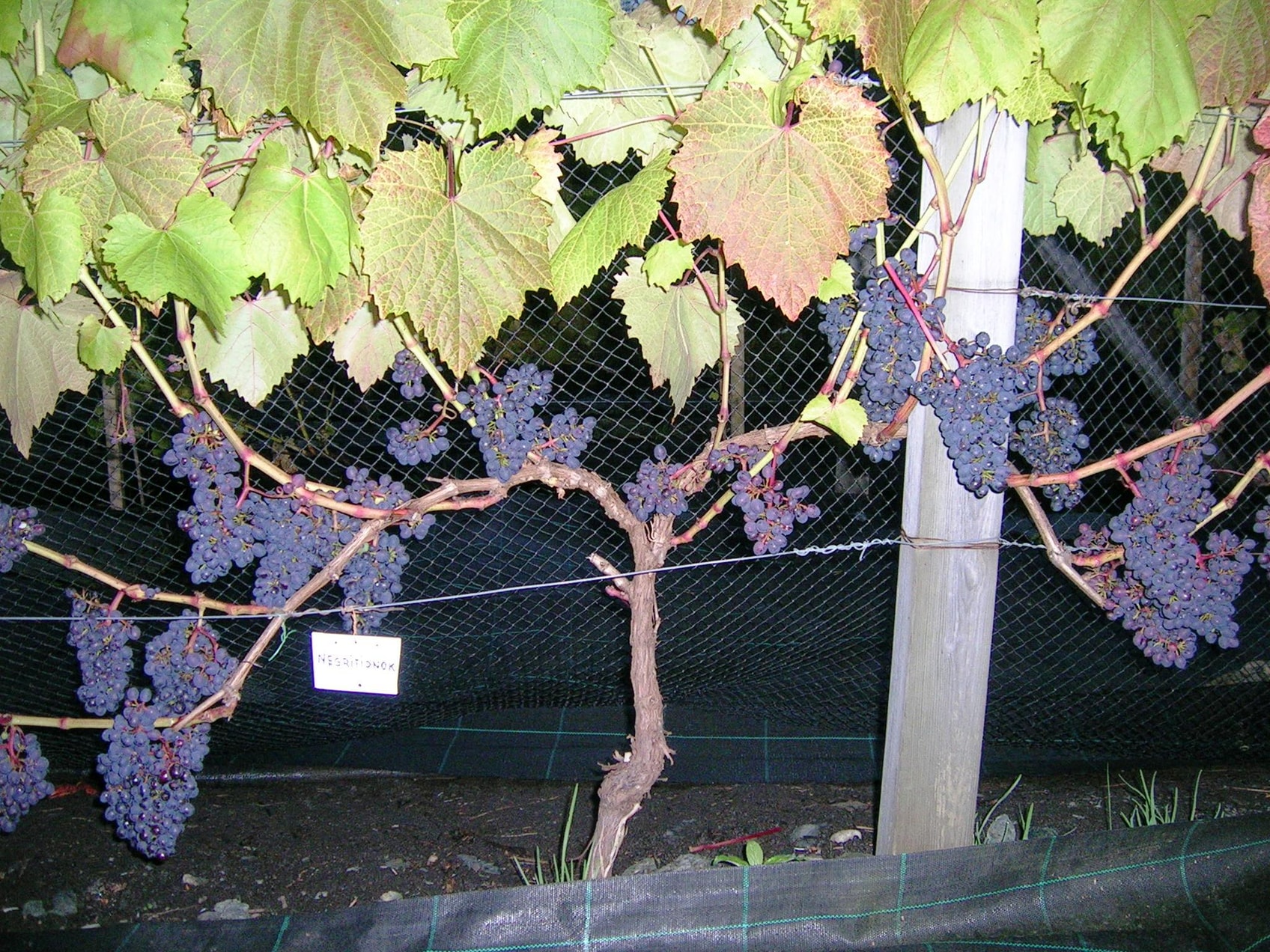
Negritionok
This is a fine blue wine grape. In warm seasons, this grape ripens about 1 week before Rondo. In cooler seasons, it ripens a little after Rondo. This shows that it responds faster to heat. In Poland the grape ripens about 2 weeks earlier than Rondo. Negritionok has medium-sized elongated grapes. It originates from Russia or Ukraine, and one of the parents is Riesling. The variety first produced grapes here in 06. How resistant it is to diseases must be evaluated over time. It is winter hardy to -23°C.
Figure: negritionok-clusters-2008
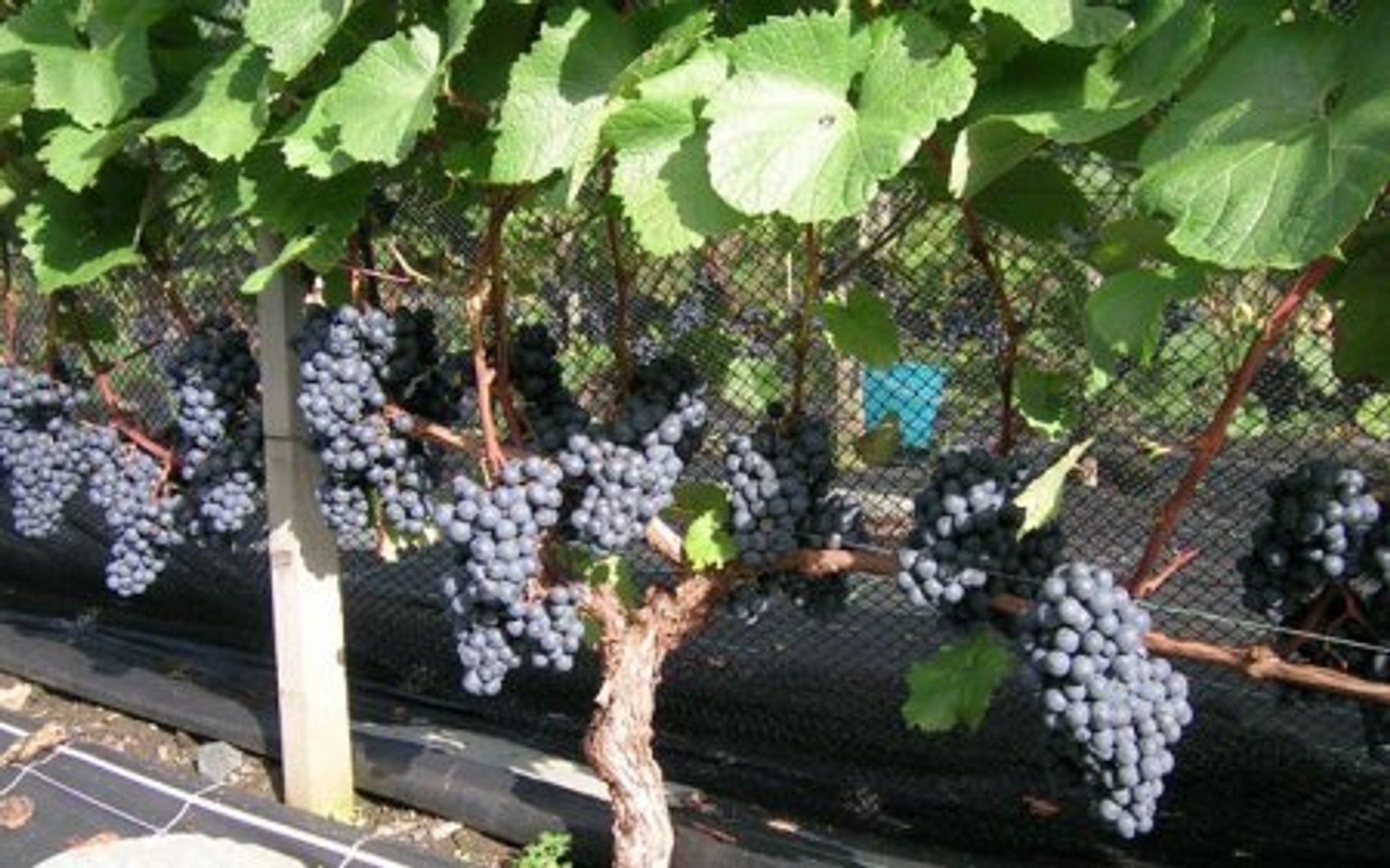
Rondo
Rondo is a wine variety selected in Germany at the research station in Geisinheim. For a wine variety it has quite large grapes. It is very productive. Unfortunately Rondo is a marginal variety in Norway. It suits best on the coast where there is the longest interval between spring and autumn frost. Ripens against a south-facing wall or masonry around 1 October. When grown freely in the open it ripens 10-20 October. If the wood is well ripened before the first frost it tolerates -24°C.
Figure: rondo-clusters-2008
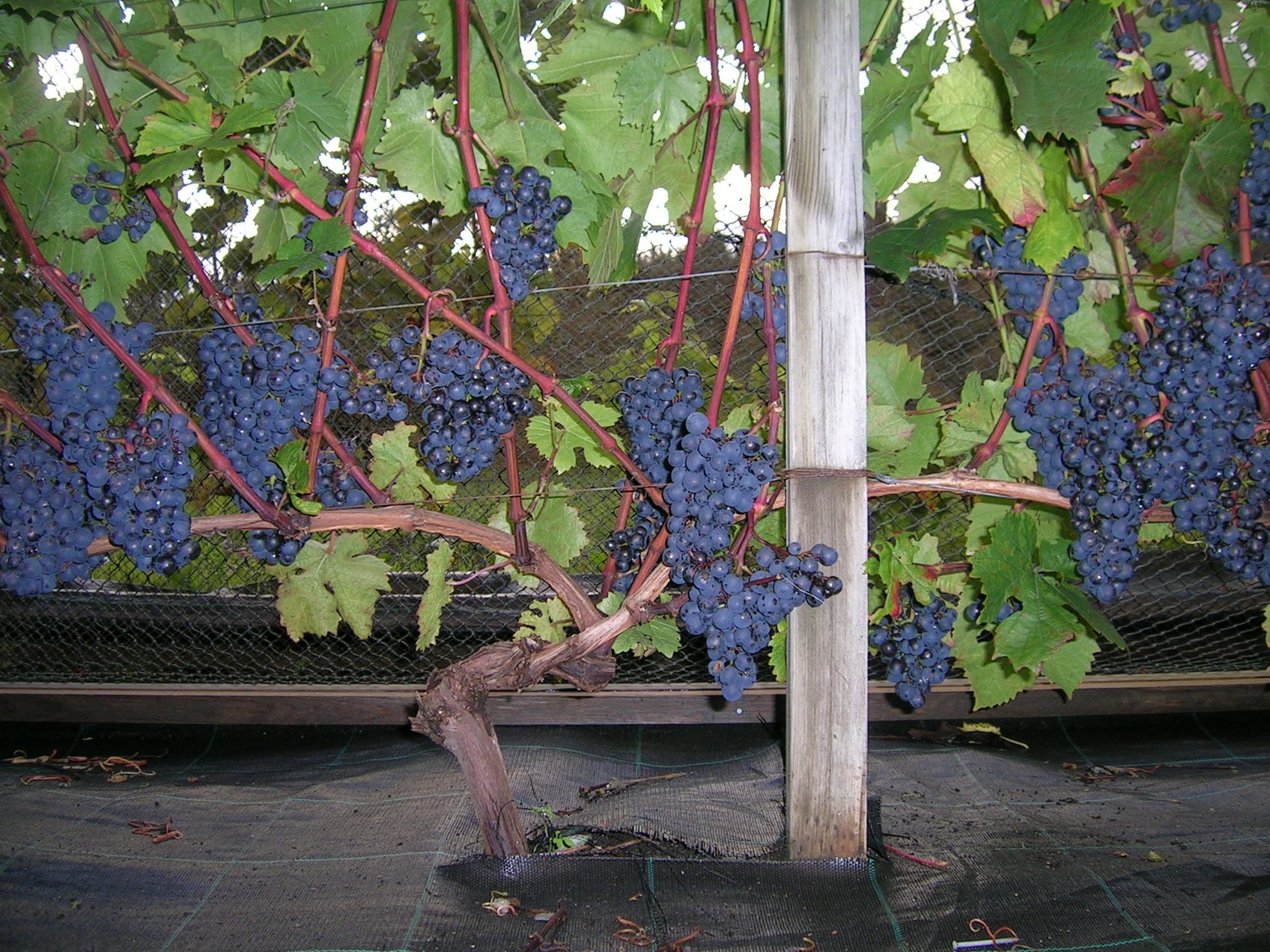
Kuzminski Sinni ( Tidligere C.G.L. 02 5 43)
The variety was crossed in Russia by Kuzmin. It has medium grapes on medium-sized clusters. Good flavor in the grapes. It is among the earliest to ripen. In some years it can be susceptible to powdery mildew. Winter hardy to -30°C.
Figure: kuzminski-sinni-clusters-2011
Zilga
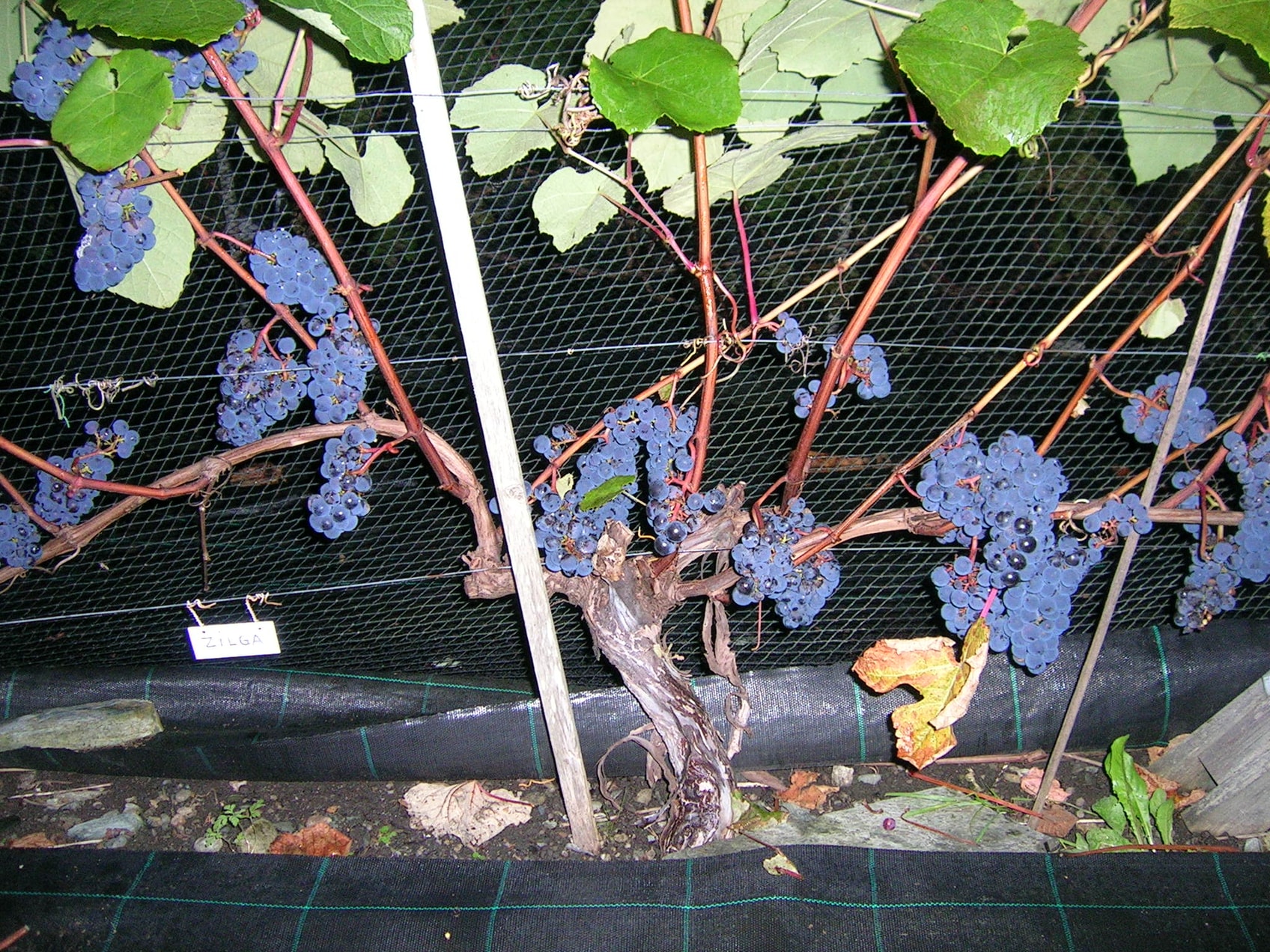
It was crossed in Latvia. This grape has a blueberry flavor. It is very productive and vigorously growing. Medium-sized clusters and grapes. Prefers neutral to acidic soil and should not receive lime. An easy variety to grow. The variety has colored juice and can also be used for rosé wine. It tolerates down to -35°C.
Figure: zilga-clusters-2008
Scandia ( T.P. 2 1 37)
This is a new cross from Minnesota that Arild Syversen in Asker received from the breeder Tom Plocher. We have this on a trial cultivation agreement with T. Plocher. It has very early ripening, like Hasansky Sladky. It has been tested as a wine variety in Minnesota with good results. We expect grapes on the first plants in 2008. The grapes are small on small to medium clusters. If this grape becomes overripe and the weather is wet, it easily gets attacked by grey mould (Gråmugg).
Figure: scandia-labeled-vine-2012
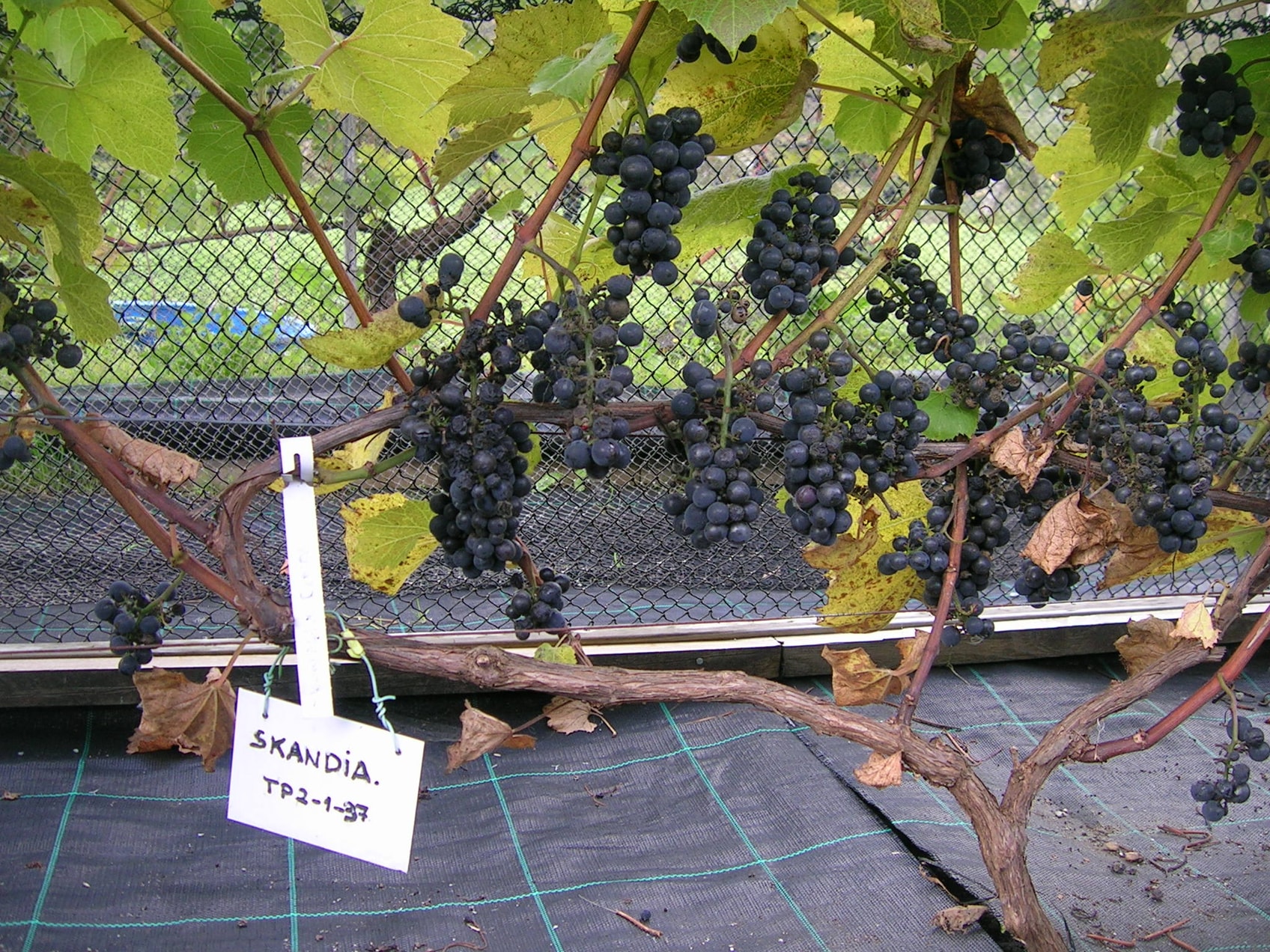
Photo taken by Knut Sætrevik
Hasansky Sladkij
This is one of the earliest blue varieties we have from Russia. It is very hardy and can tolerate down to -35°C. It is sweet and has a fine flavor. The grapes are small, but have a high content of vitamin C. Vigorous growth. A fine variety for Norwegian conditions.