Growing Grapes at Sætrevik
Author: Knut Sætrevik
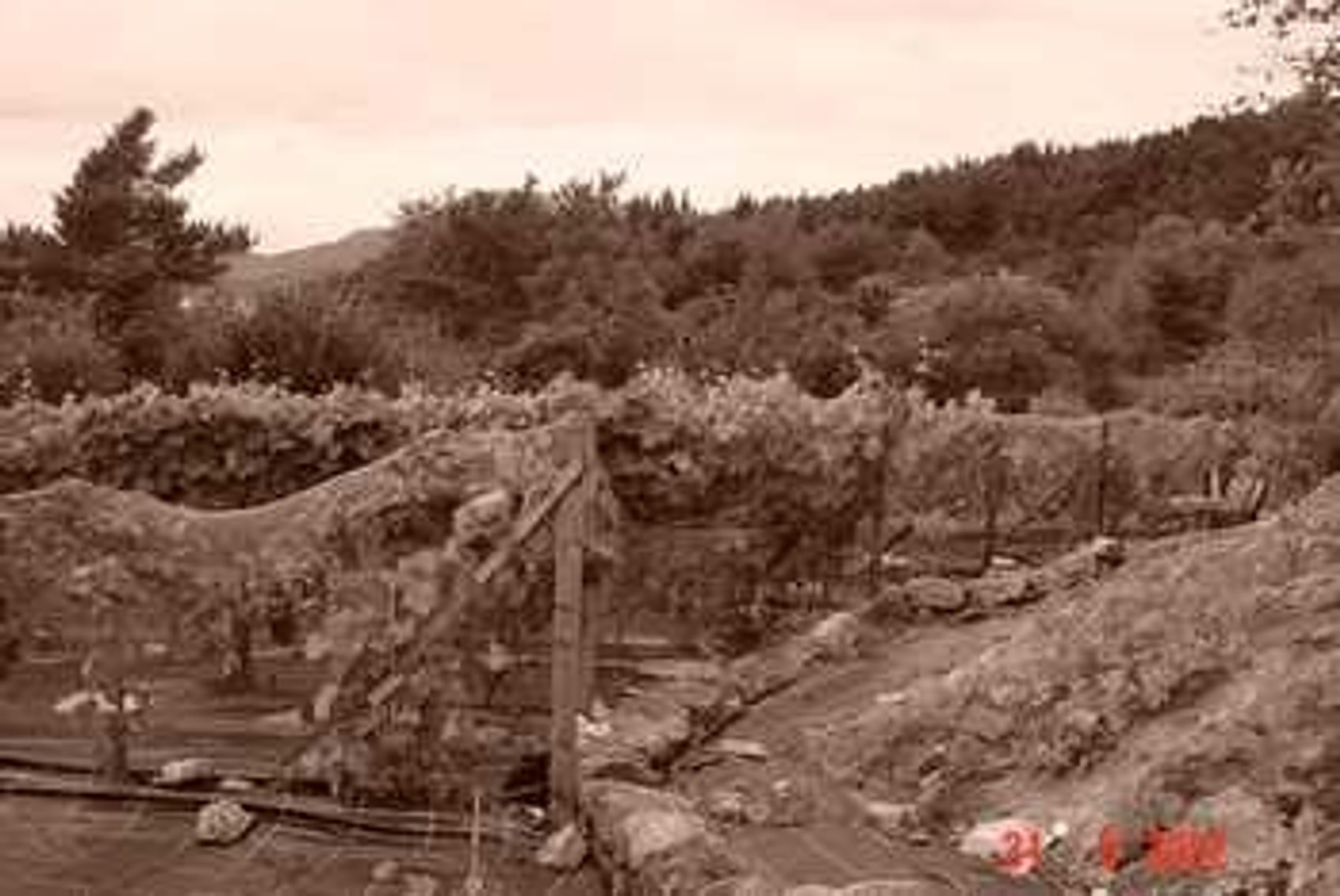
Here is shown grapevines in open ground at Sætrevik
In 1987 my son tried to plant some grape seeds. After a few weeks we saw that a couple of sprouts broke through the soil. The plants grew and became too large to keep indoors in the living room. Since we did not have a greenhouse at that time, we left the plants standing outdoors over the winter. The plants withered, but when spring came they sprouted from the trunk. I was interested in fruit growing and therefore also took an interest in the grape plants. I was of course aware that these types of grape plants came from the Mediterranean and probably had problems ripening in Norway. As thanks for a favor I had done for a neighbor, I received two grape plants – Boscoop Glory and Dr. Smithmann. These were planted in a south-facing, sheltered spot. After 3 years some grape clusters appeared, and the interest was strengthened. The grapes did not have such high sugar content. Over time I learned more about pruning technique and obtained new varieties – the first from professor Ljones at Aas Agricultural College. This was in 1994. These varieties had better properties for our climate. My later focus has been to try out new varieties to find those with the most ideal properties for planting in northern regions. So far I estimate having tested around 150 different varieties. The varieties come from Minnesota, Canada, Germany, Hungary, Moldova, Ukraine, Russia, Latvia, Lithuania and Poland. It turns out over time that some of the American, Russian and Baltic ones, but also some from Hungary and Germany, ripen well outdoors against a good sun-warmed wall, and some also freely on the trellis.