Autumn
Author: Knut Sætrevik
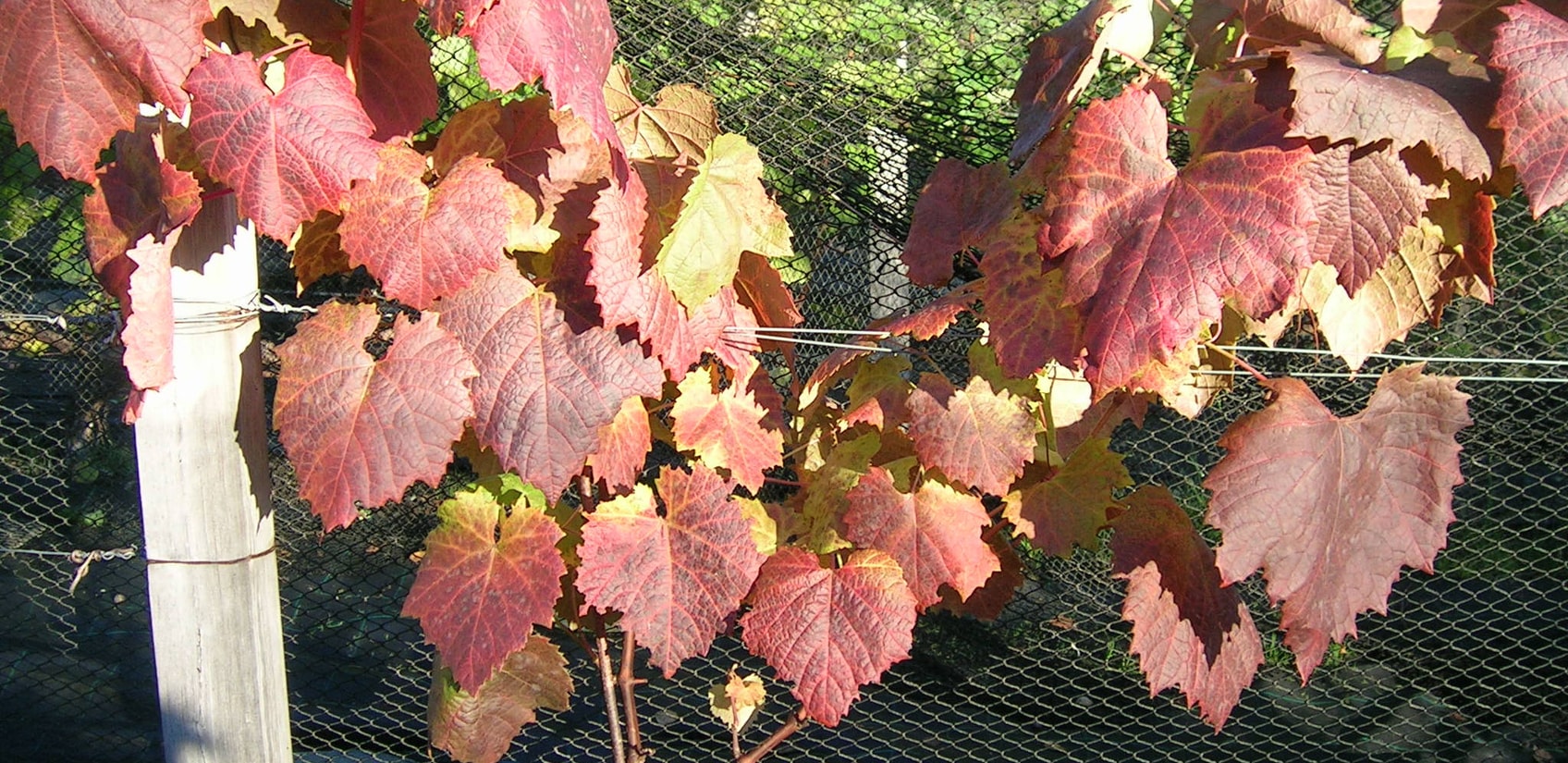
The photo above shows Negritionok with beautiful autumn colors.
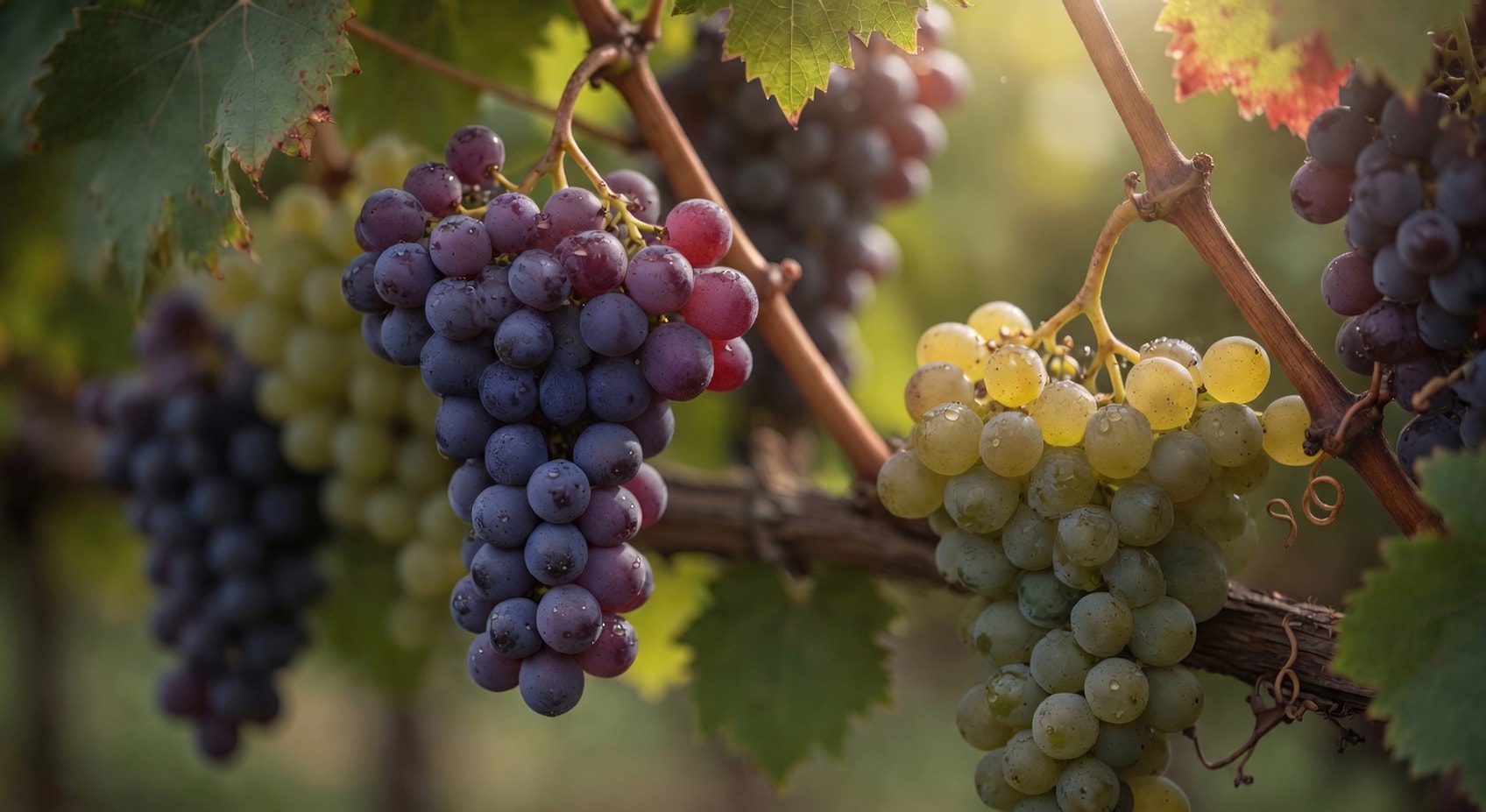
Early in the autumn, as a rule the second half of August, the blue grapes change color. It then takes four to five weeks before they are ripe. The grapes can often be ready to eat before they are mature enough for wine. We want the highest possible sugar content in the grapes for the wine. There is also the matter of the balance between sugar and acid. But in our cool climate, too low acidity in the grapes is never a problem. Incidentally, there is a big difference between the different grape types in acid content. An example of one with high acid is Michurinetz. But it suits us here for dessert wines, where we have residual sugar so that they become sweet. Most muscat grapes are also well suited for dessert wine. The earliest varieties ripen here with us in the middle of September. Otherwise, grapevines can be beautiful ornamental plants against a wall. After all, wild vines are planted against house walls, why not real grape? Then you get the grapes thrown in for free.
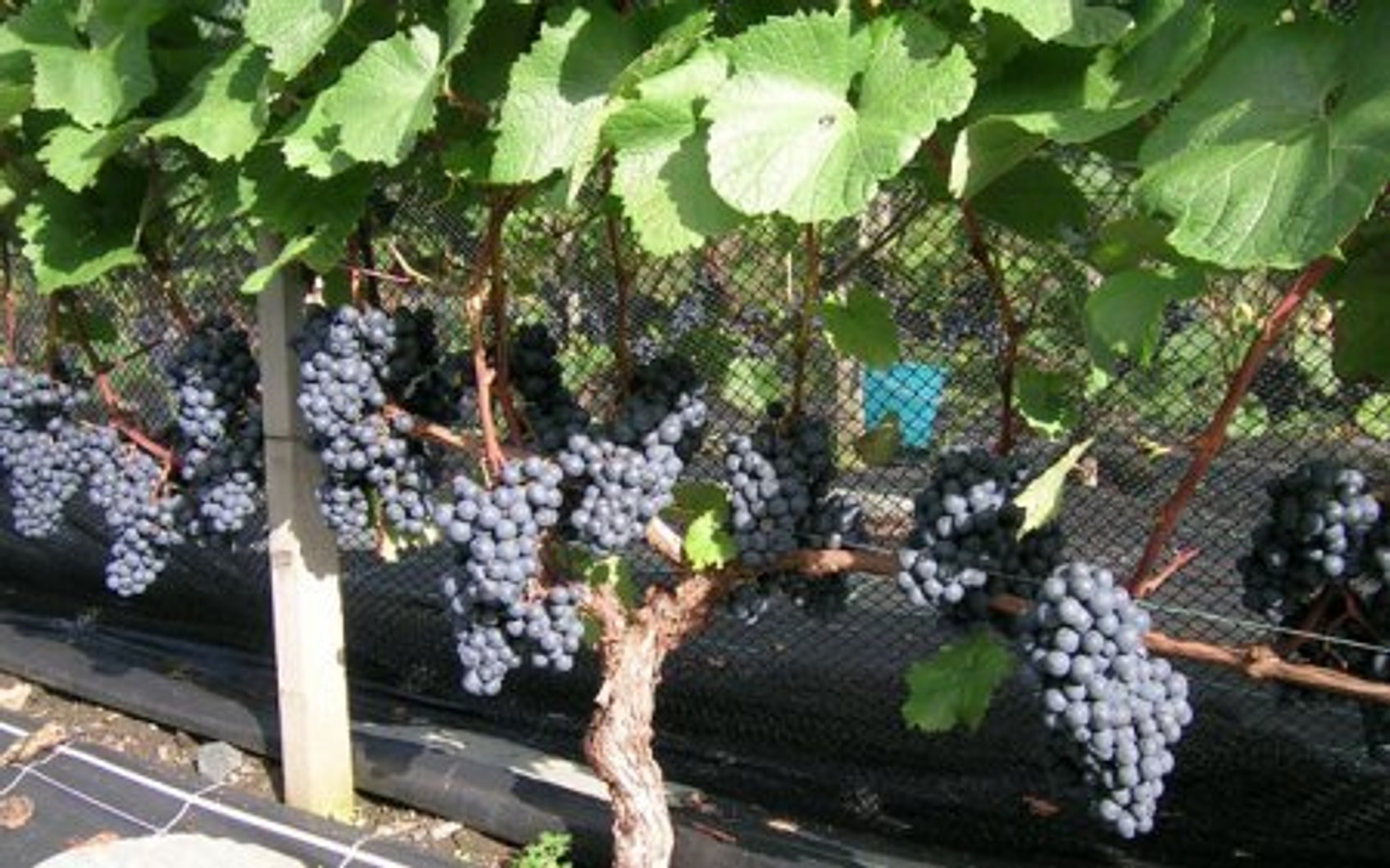
Rondo late in September