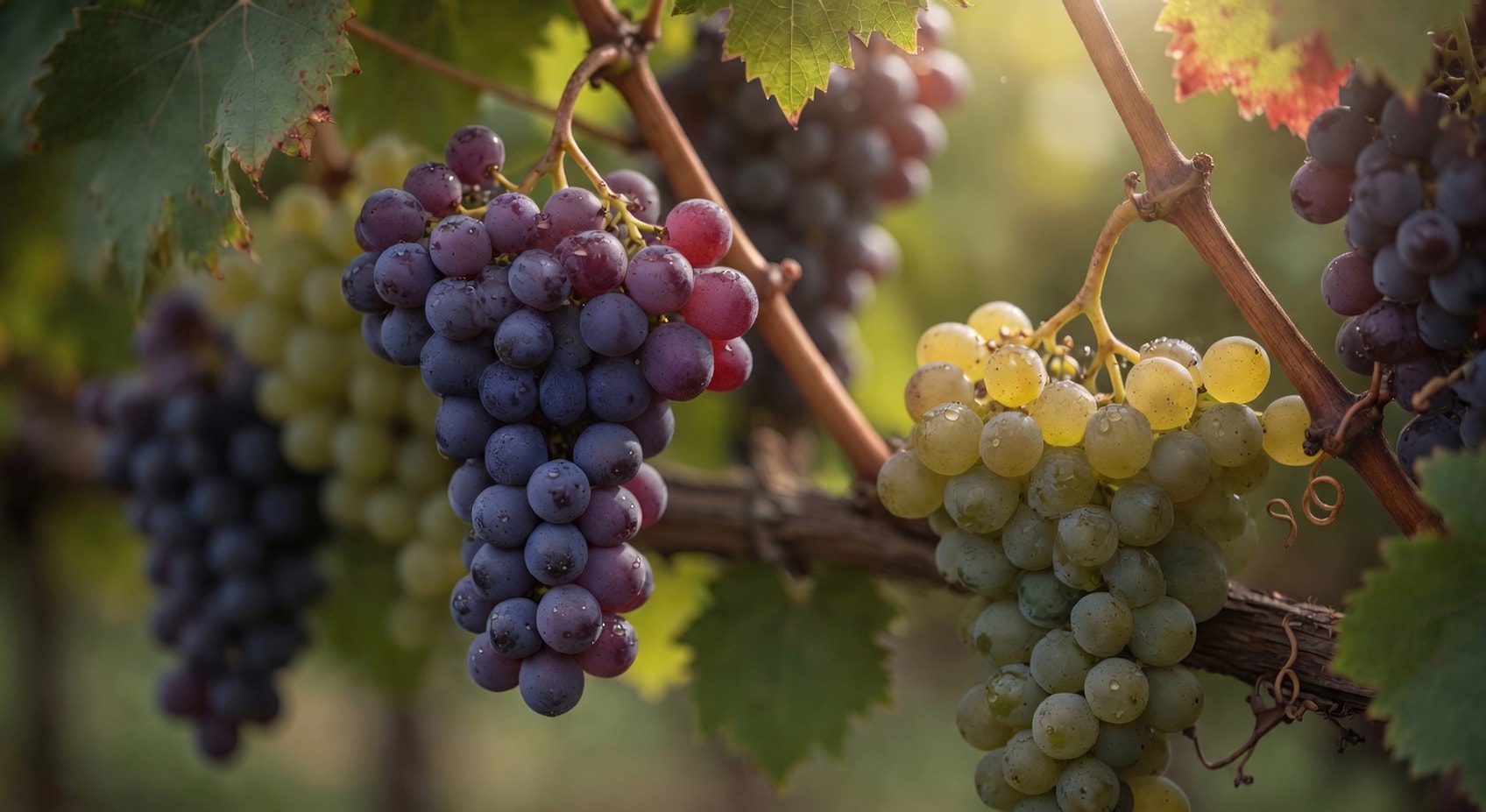
Spring
Author: Knut Sætrevik
When the temperature rises above 10 degrees, the grapevines awaken to life. If frost returns, this will damage the new shoots. The buds begin to grow in late April/early May. This can also be the time to plant out new small plants — if the danger of night frost is over.
In late May, shoots and buds that come too close can be pinched off. There should be no less than 15-20 cm between each fruiting shoot. If double buds appear, the secondary bud is removed. The growth rate of the shoots increases with the temperature. The plants need something to hold onto as they grow. The vines grip well around string or netting, but often need a little help. This plant was pruned too late. We can see this from the drop of sap that immediately appeared after pruning. The plant should be pruned before the bud swells up, preferably before the end of March. Otherwise the bleeding will be very extensive, and this can weaken the plant. It is nevertheless normal for sap to drip from the pruning point when the sap begins to rise in March/April. This is called “Vinens tåre” (the tears of the vine) in France.
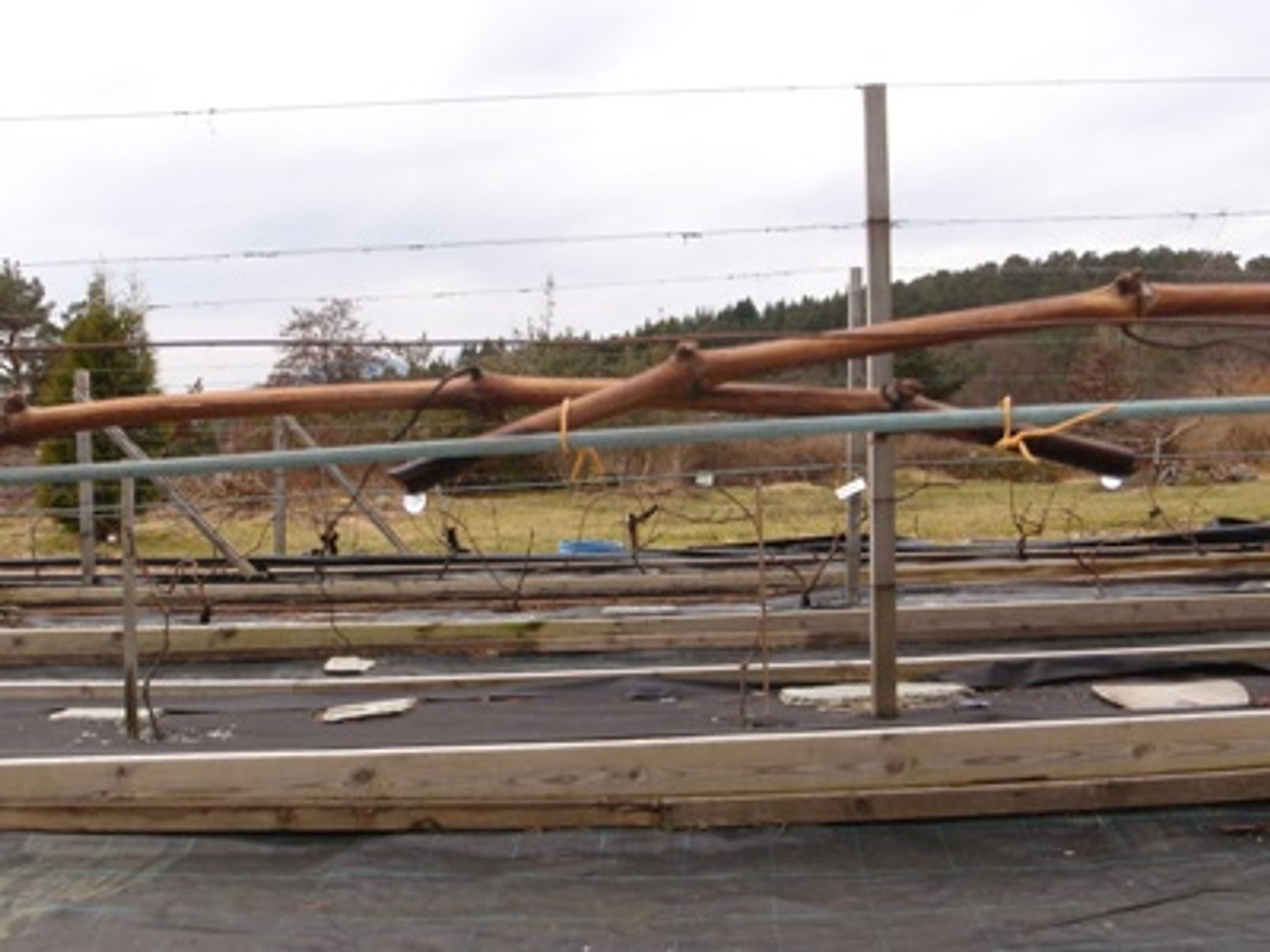
Figure: Vinens tåre