Latest news 2021
Author: Knut Sætrevik
Winter pruning was finished during January.
There is then very little bleeding when the sap rises in March.
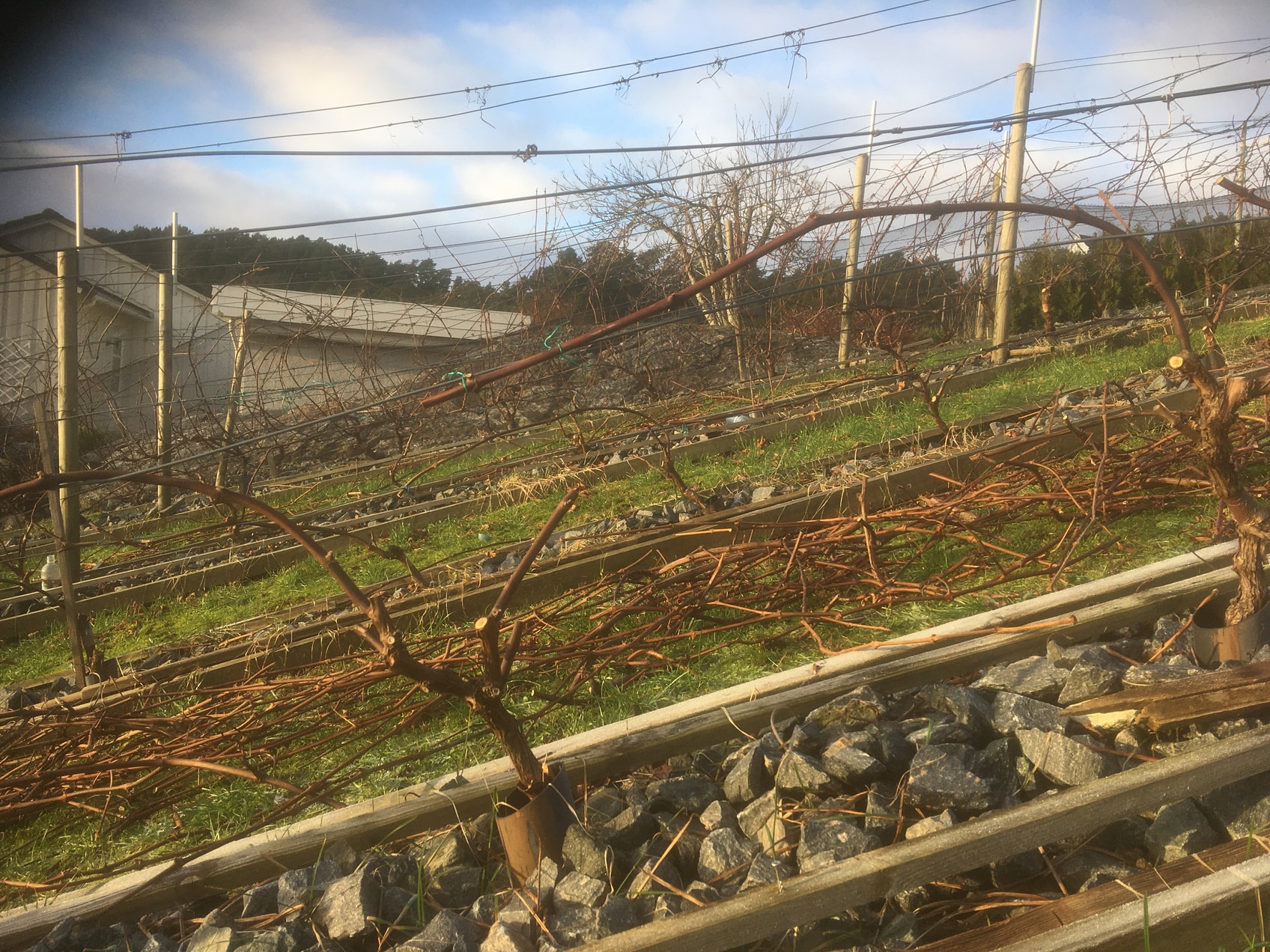
Photo: Knut Sætrevik
The winter this year has been unusually cold here in the west, with minus 13
at its coldest. The spring was also cool, but in the middle of May
there was a change to more spring-like weather with a decent temperature.
In the picture a grapevine in spring dress, photo 14 May.
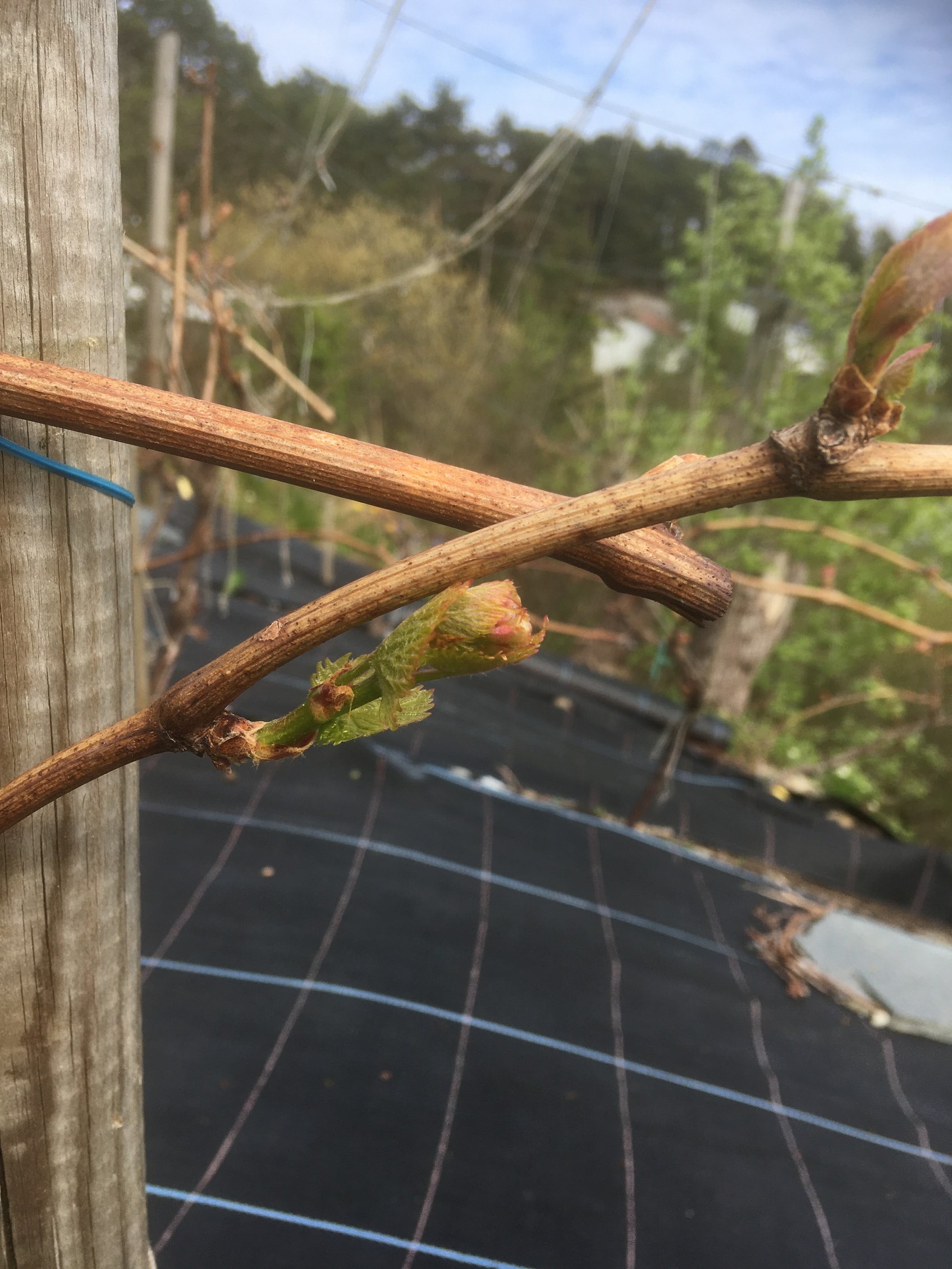
Photo: Knut Sætrevik
The rest of spring and early summer was fine and warm, and pollination turned out well.
Here we see one of my own crosses, 1-10-1. The picture is from 15 July.
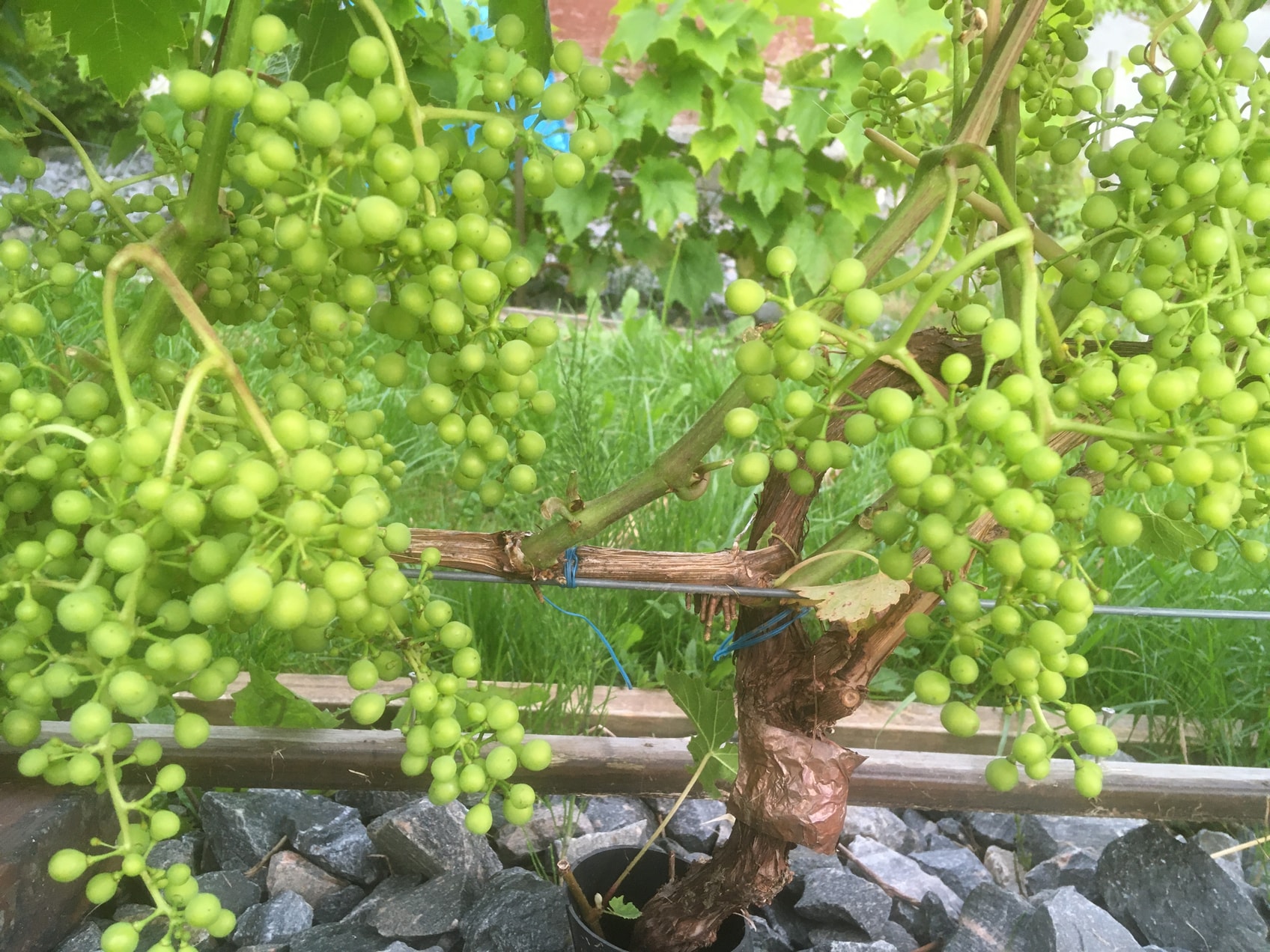
Photo: Knut Sætrevik
What is Knut studying here?
Could it be grapes on a new cross?
Always exciting!
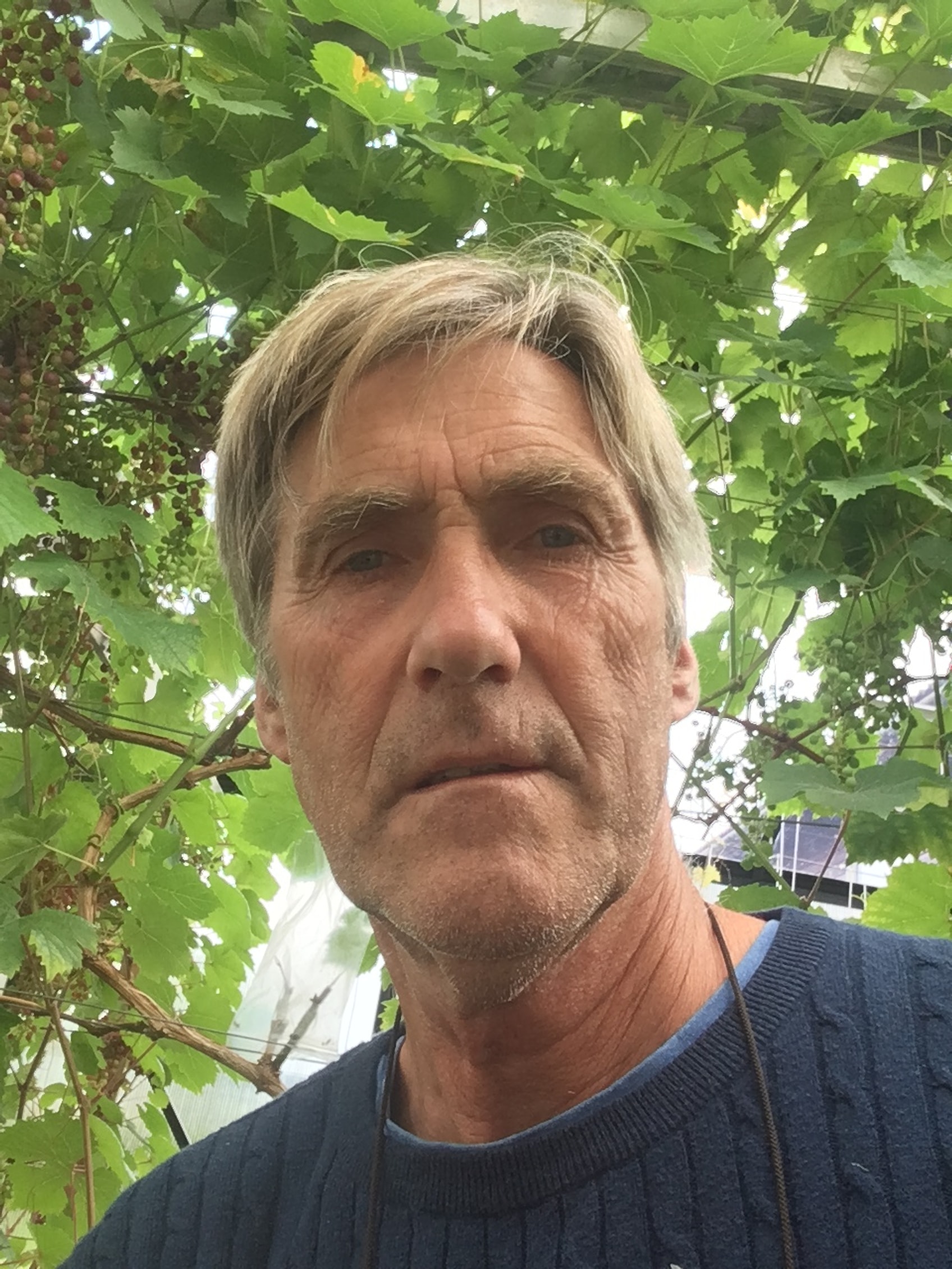
Photo: Knut Sætrevik
The table grape Sibaya in the greenhouse roof
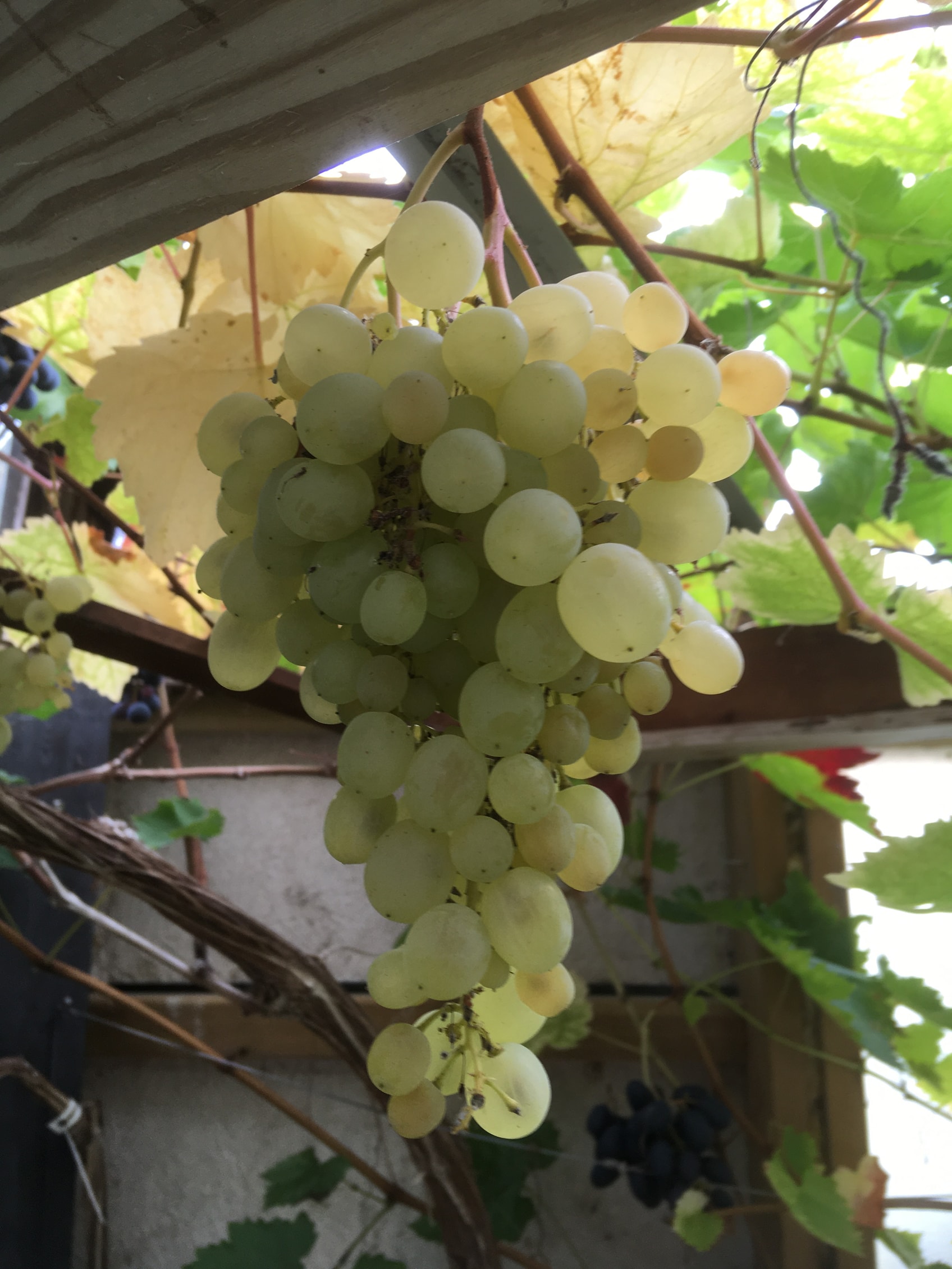
Photo: Knut Sætrevik
Already on 15 August, cross number 4 – 15 – 6,
Severny X Sibaya is so sweet that the blackbird
has stripped several clusters.
Now the net is in place.
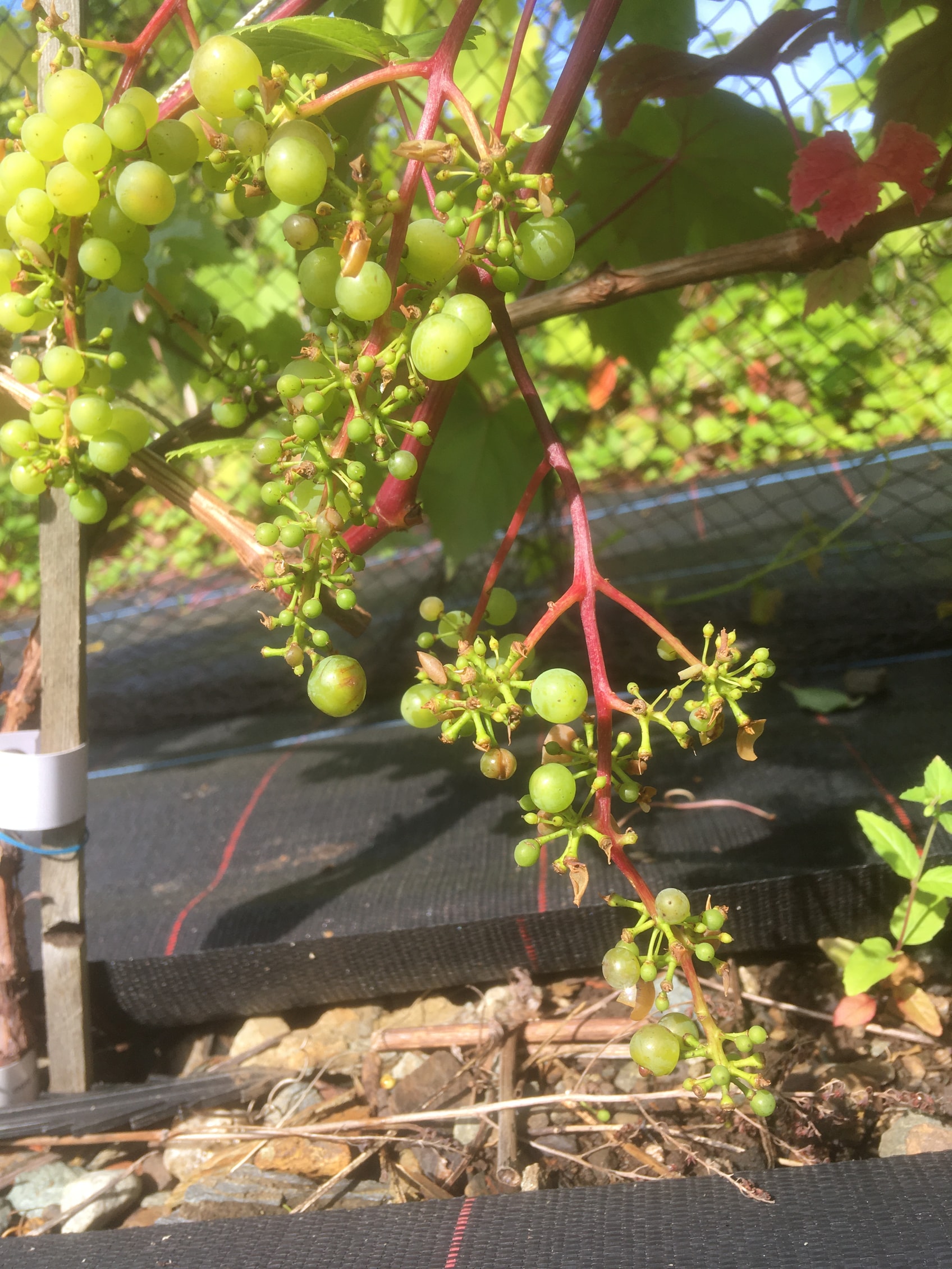
Photo: Knut Sætrevik
Fortunately a little is left, so that one can follow the further development.
Sugar on 2 September is 88 Oe. On 15 September it has risen to 99 Oe. 21 Brix. 100 to 110 Oe 23.5 Brix.
This is a very early white variety, which is to be used in further crossing work.
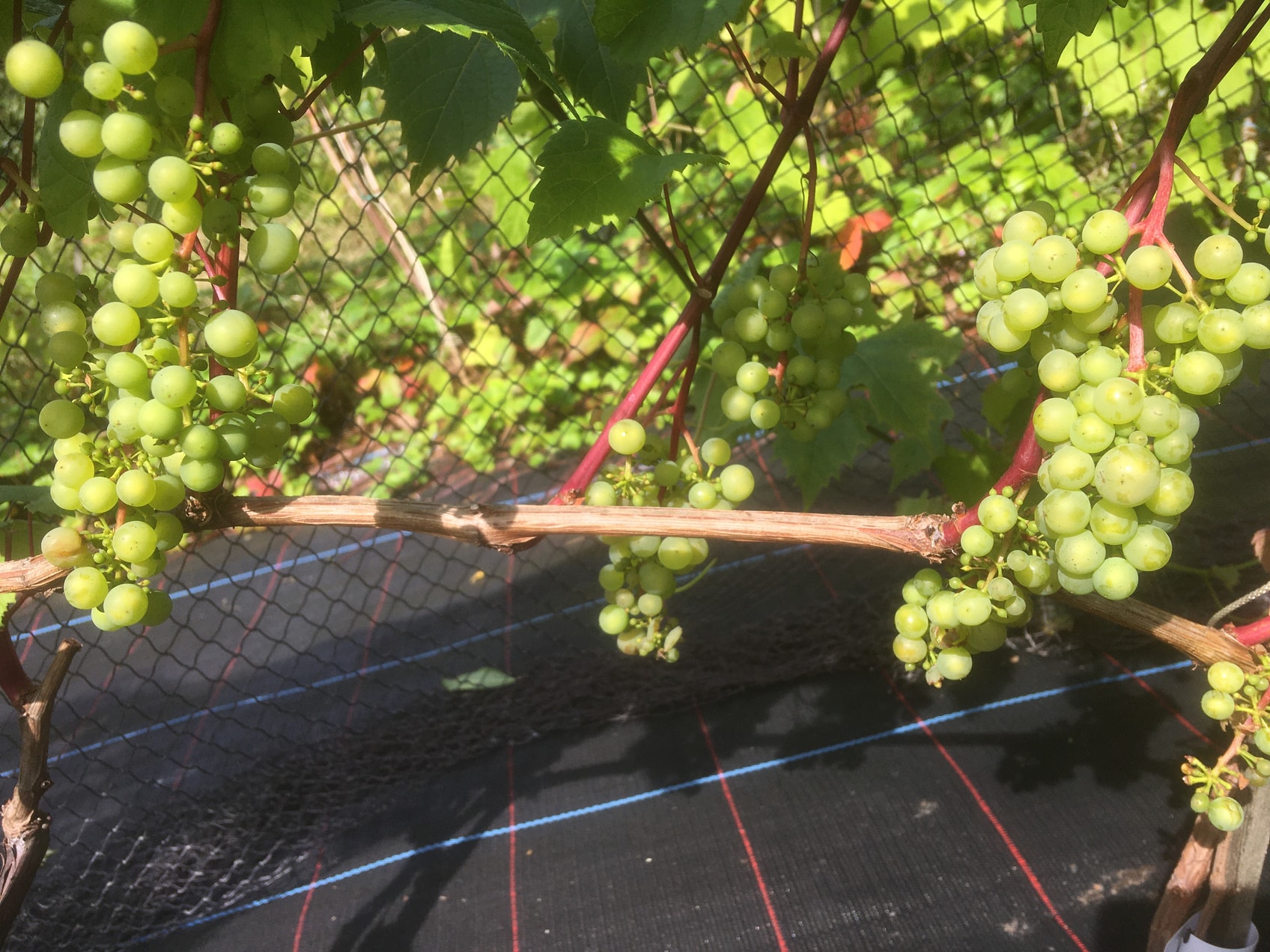
Photo: Knut Sætrevik
Dublyanski from Ukraine is a promising white wine variety.
It gets a little help from covering with Agryl fleece here for 4 -5 weeks in May/June.
At full ripeness it turns pink.
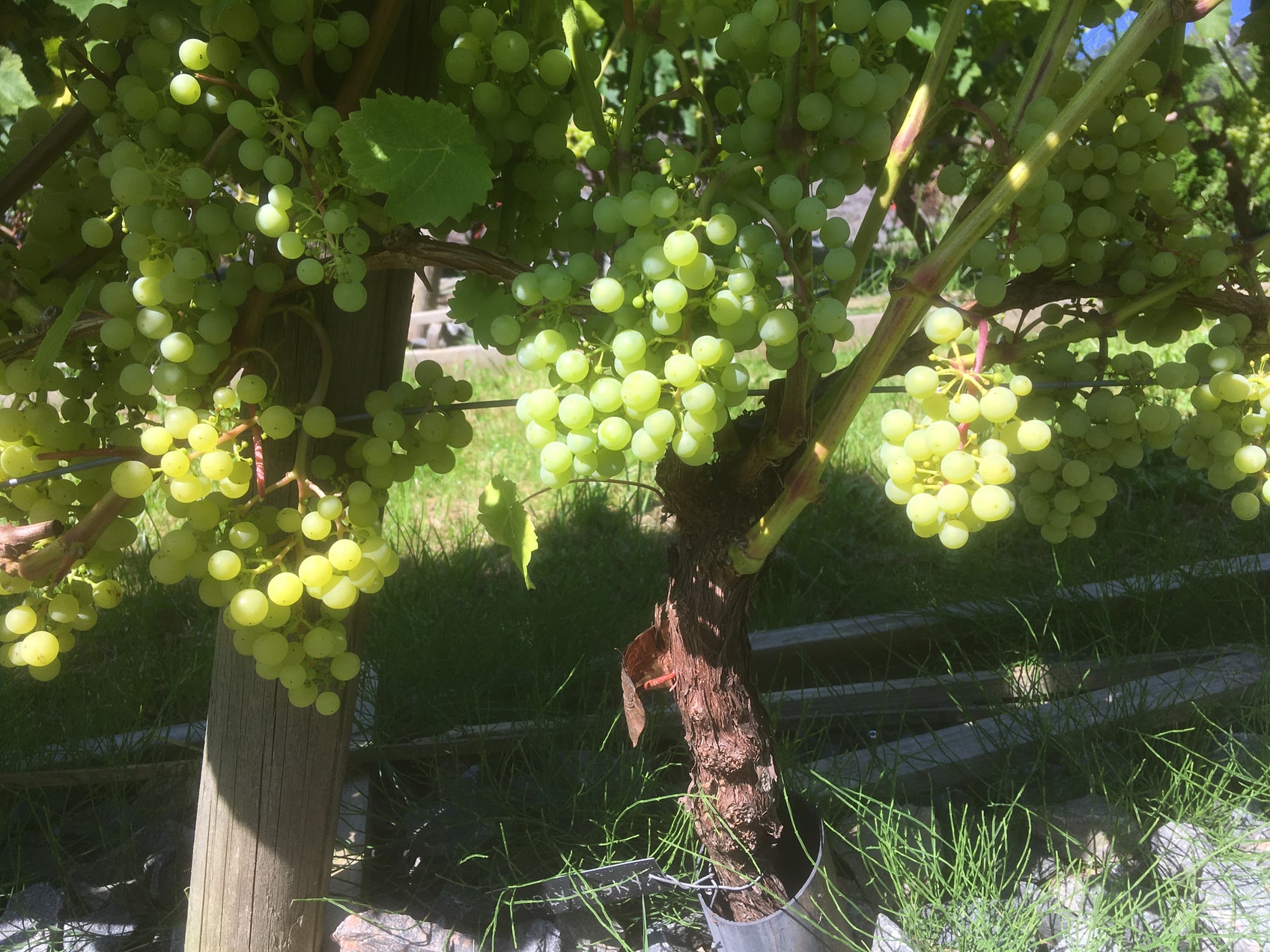
Photo: Knut Sætrevik
Platovsky towards full ripeness.
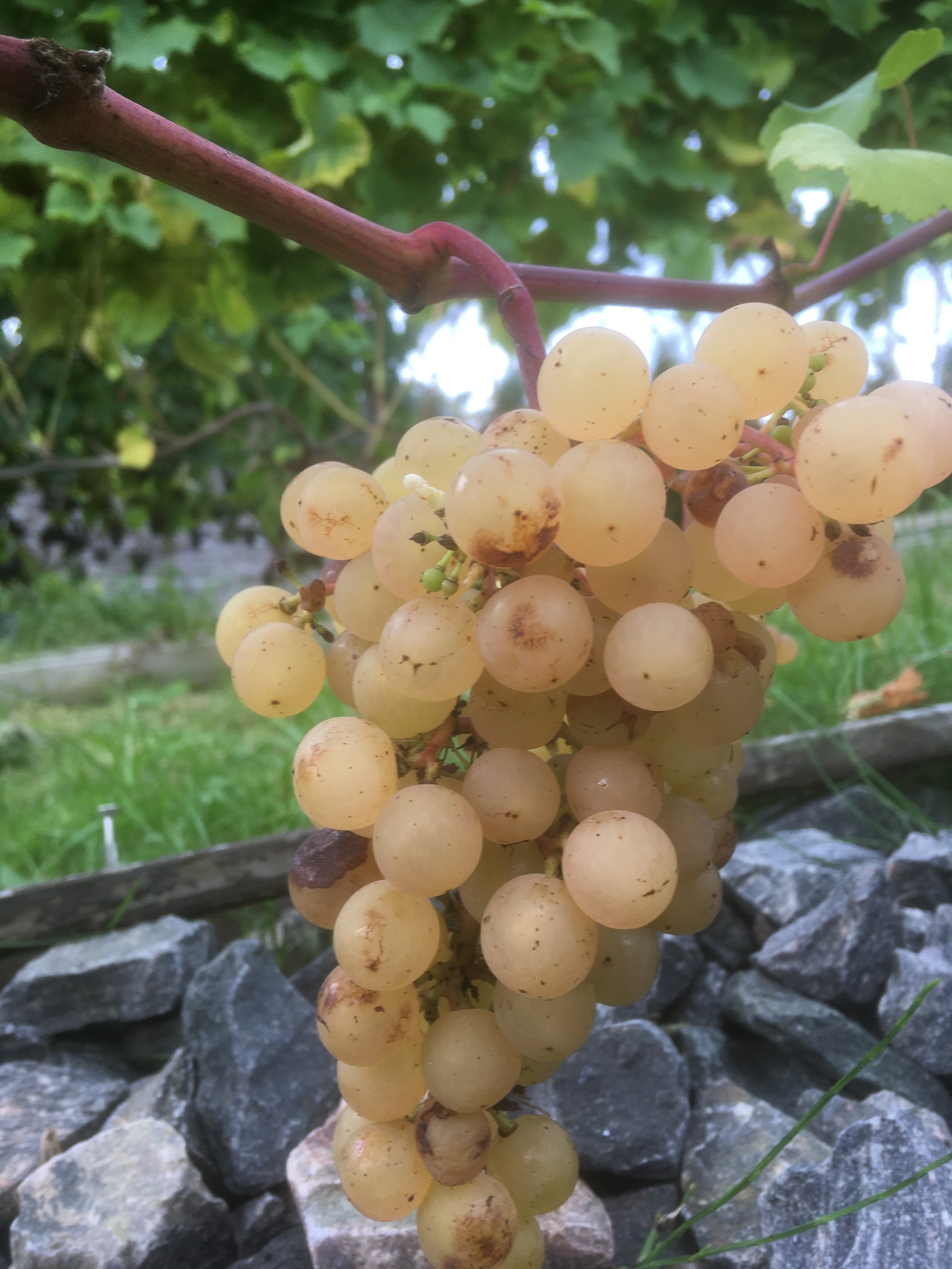
Photo: Knut Sætrevik
Solaris is approaching ripeness at the end of September.
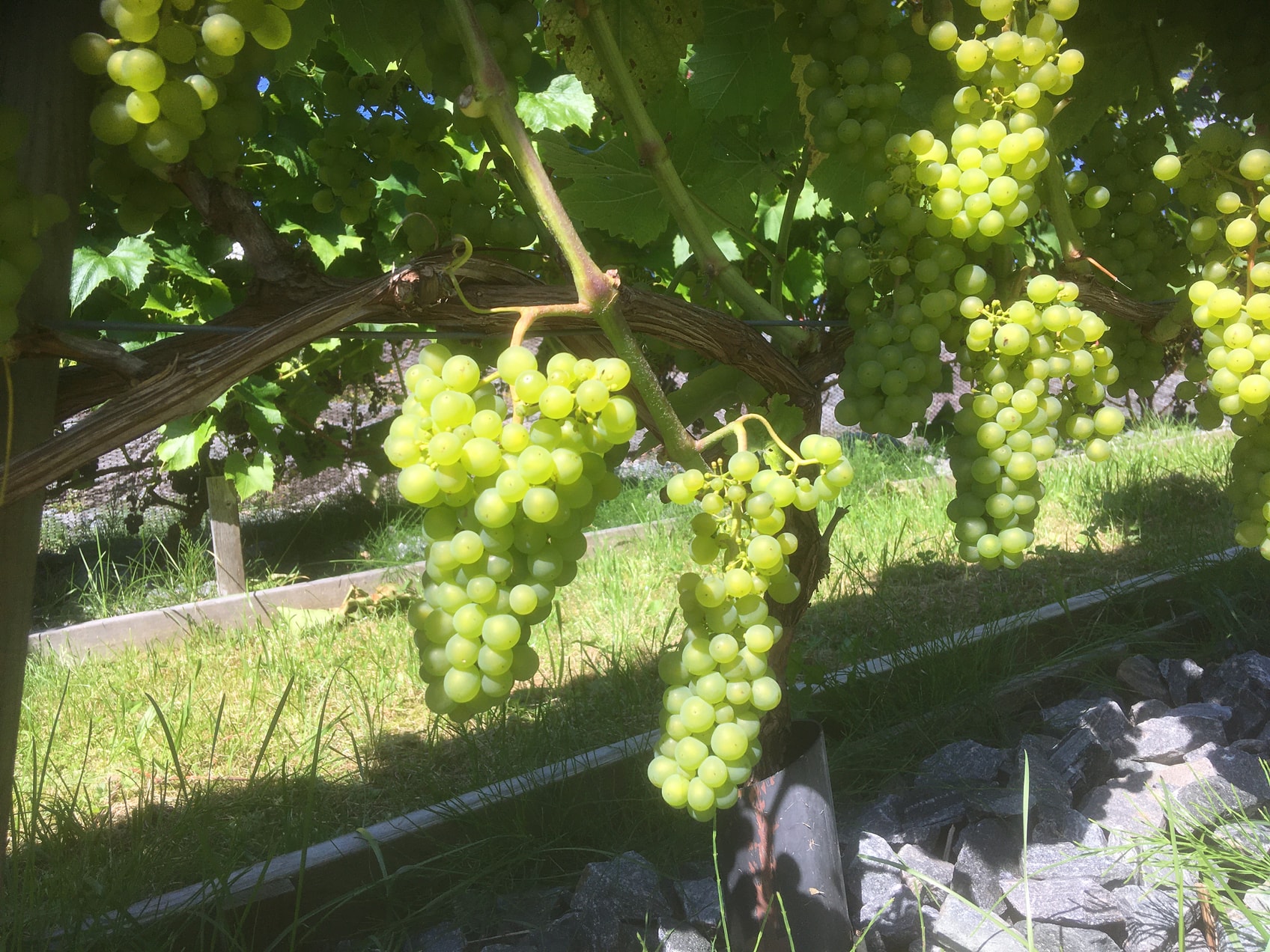
Photo: Knut Sætrevik
Dekorativ Sergeev has, on 1 October, 95 Oe. 22.5 Brix. Has also ripened.
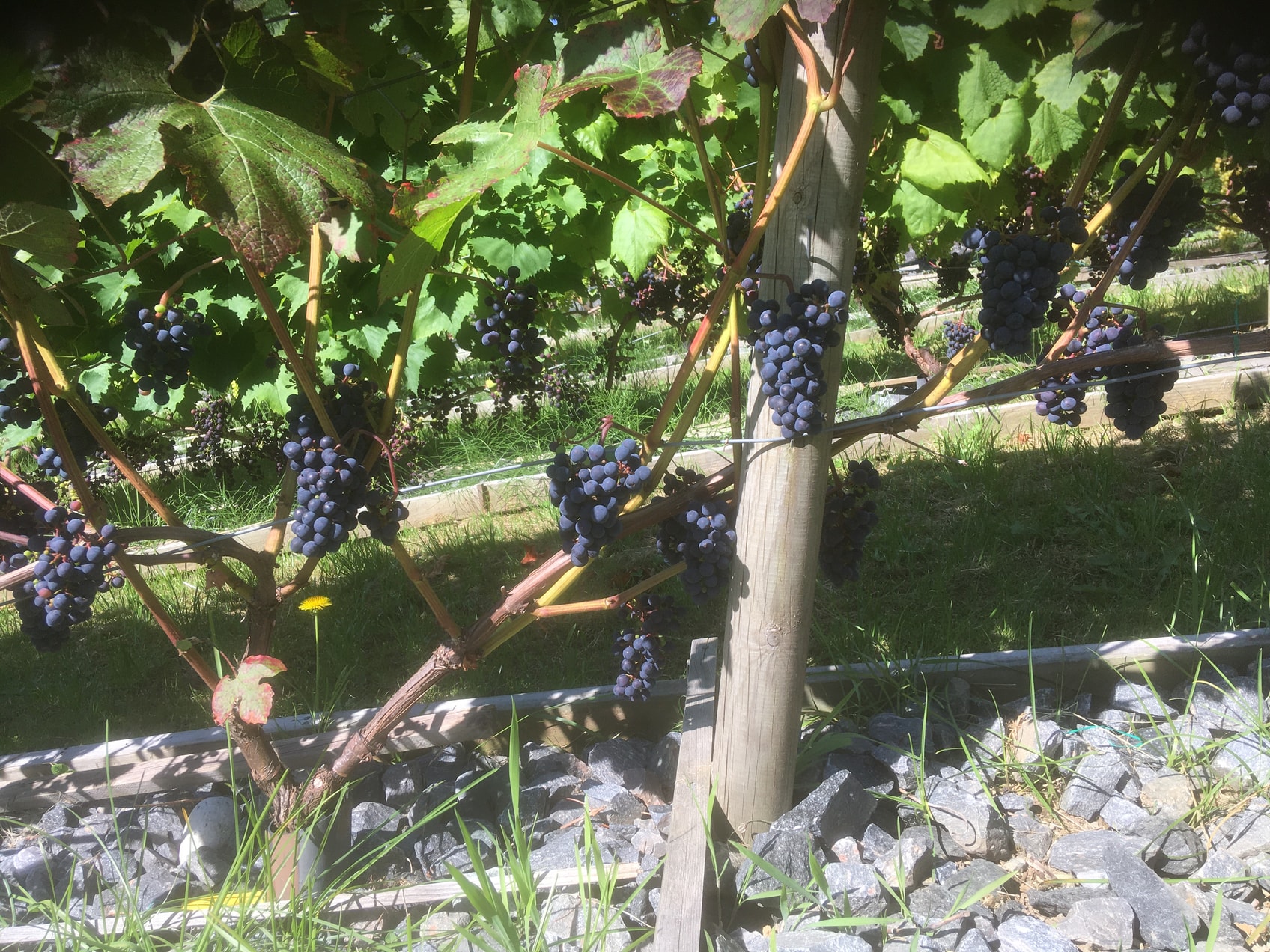
Photo: Knut Sætrevik
Negritionok.
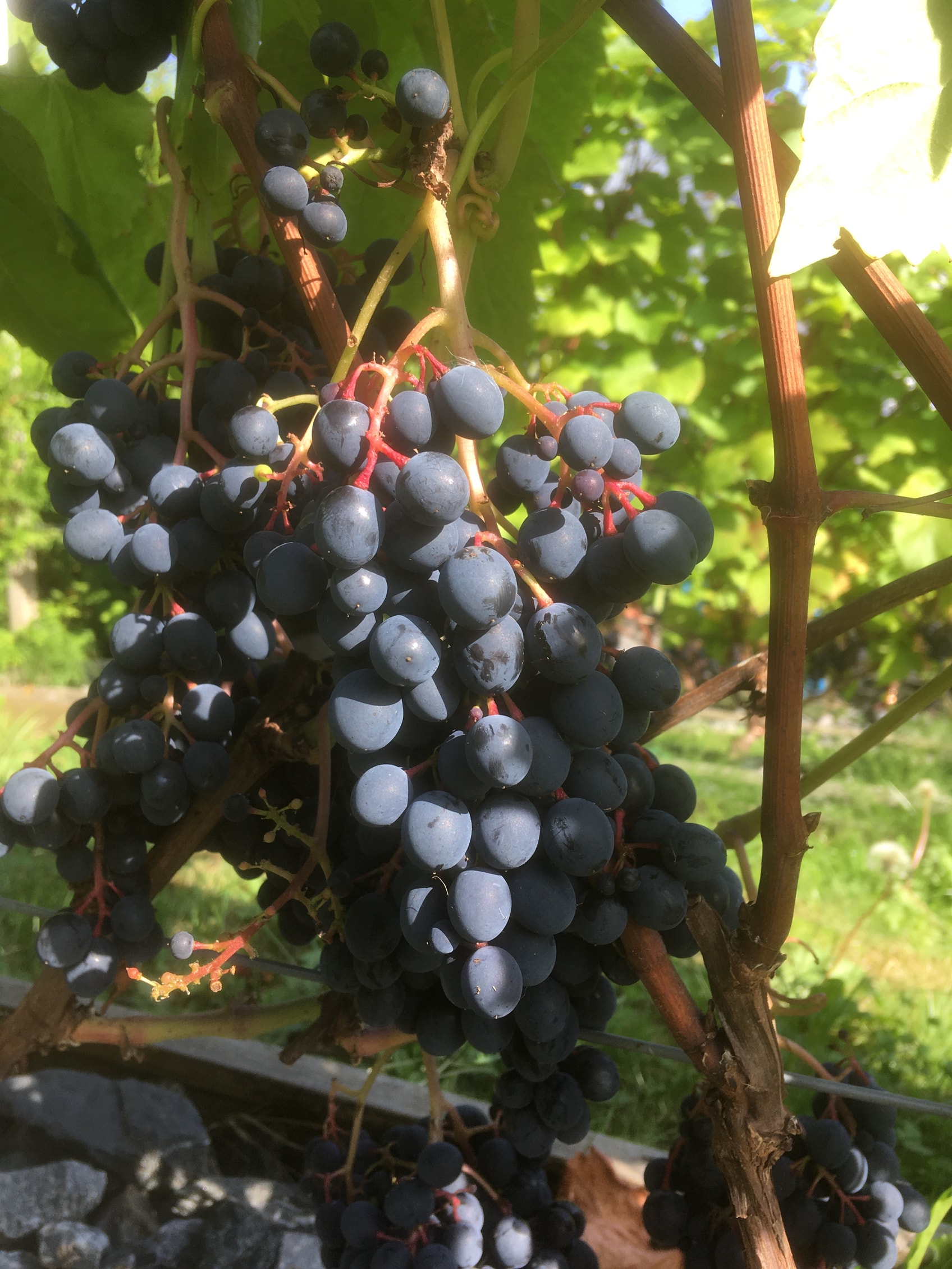
Photo: Knut Sætrevik
Rondo.
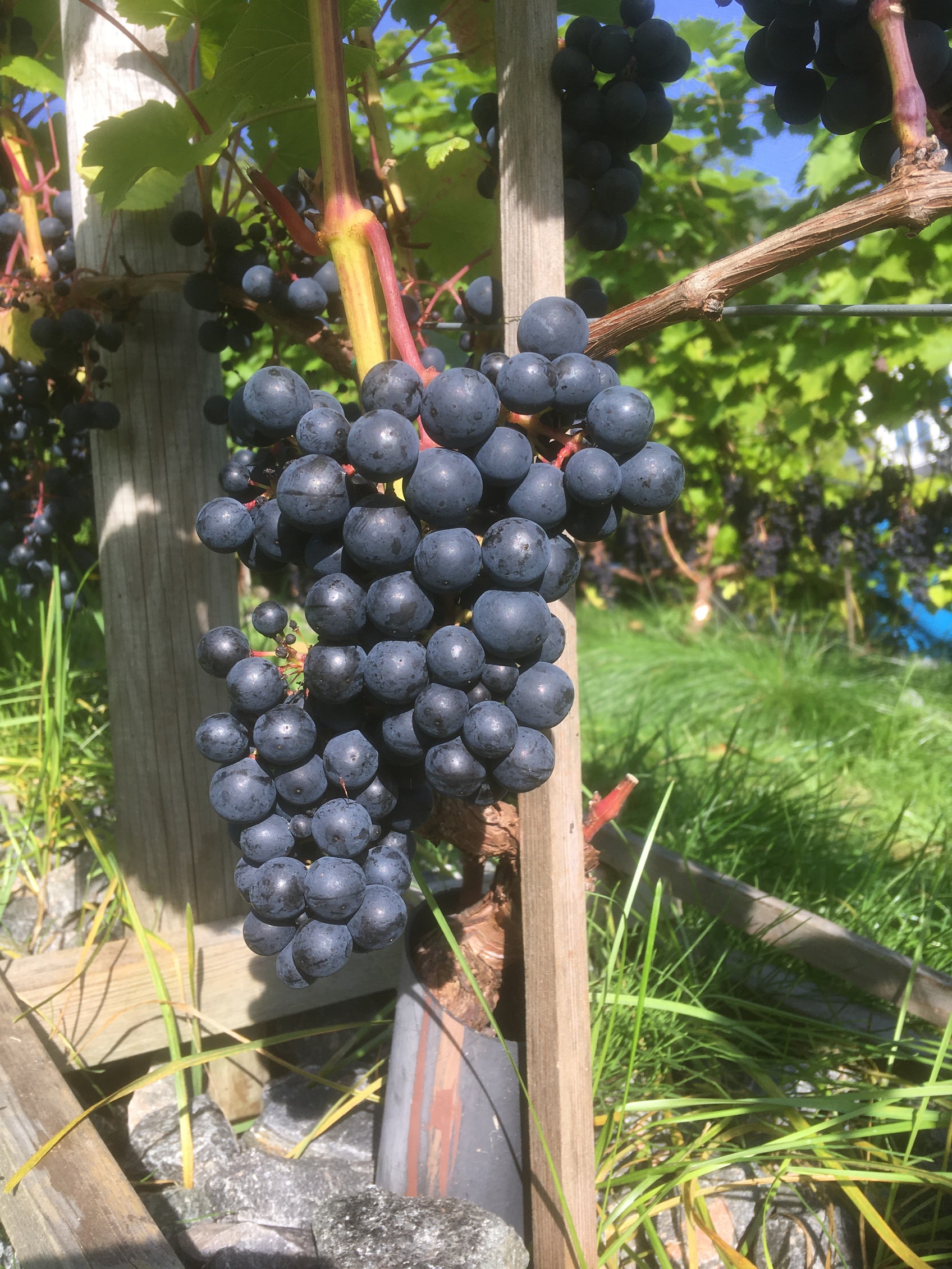
Photo: Knut Sætrevik
This is 1 – 10 – 1.
23 August Tempranillo X Cheremushka.
A little more of this one is to be planted out.
It has loose, but rather large, clusters.
Good crop, and it looks to be strong against grey mould / mould.
It unfortunately has little colour, but can be used in a blend with varieties that have good colour
such as 20% Negritionok or Rondo.
Will be tested for red wine with several types of yeast strains.
It has white juice, and can suit rosé wine.
Further testing. Looks promising.
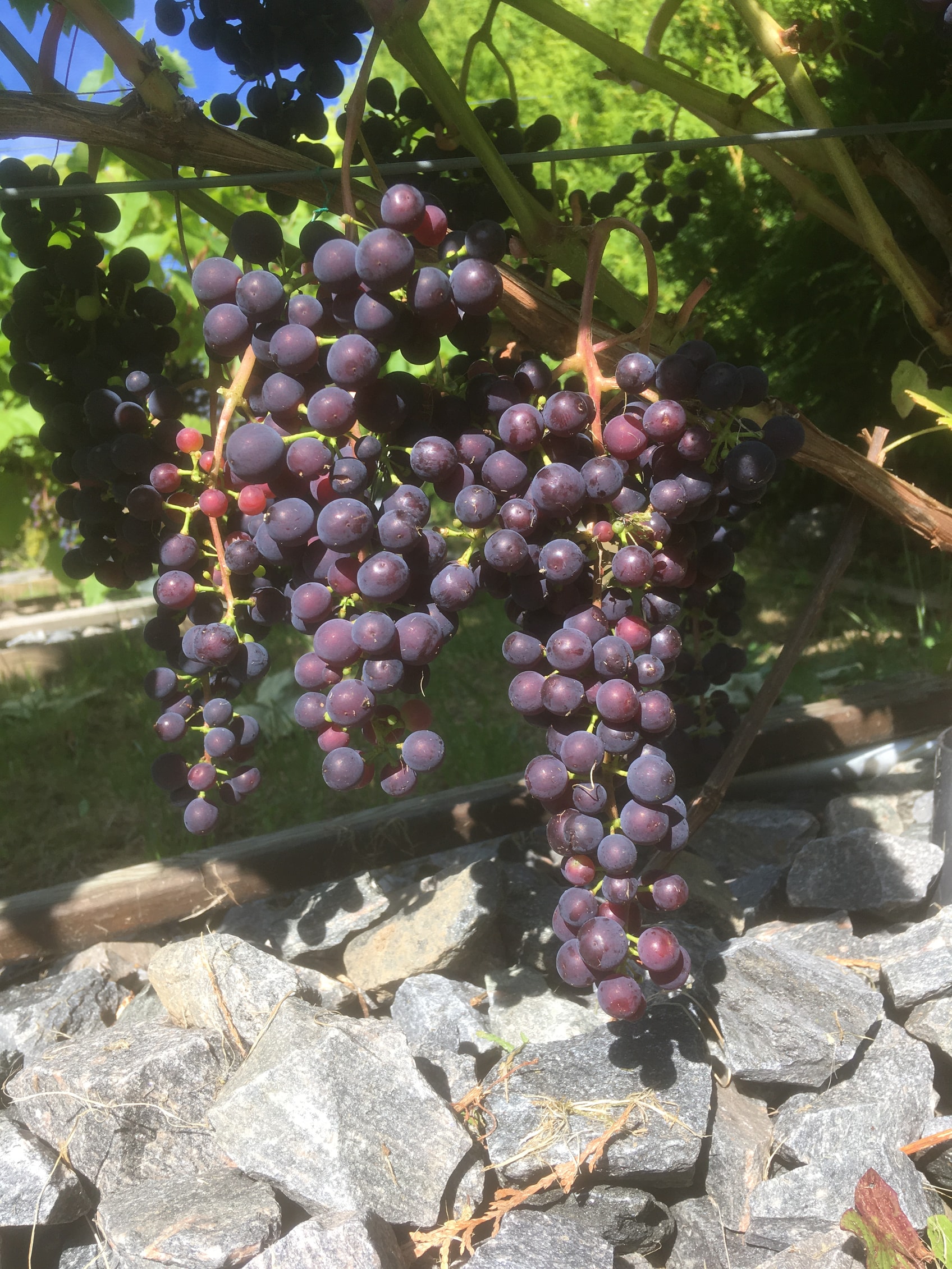
Photo: Knut Sætrevik
This is 1 – 10 – 1
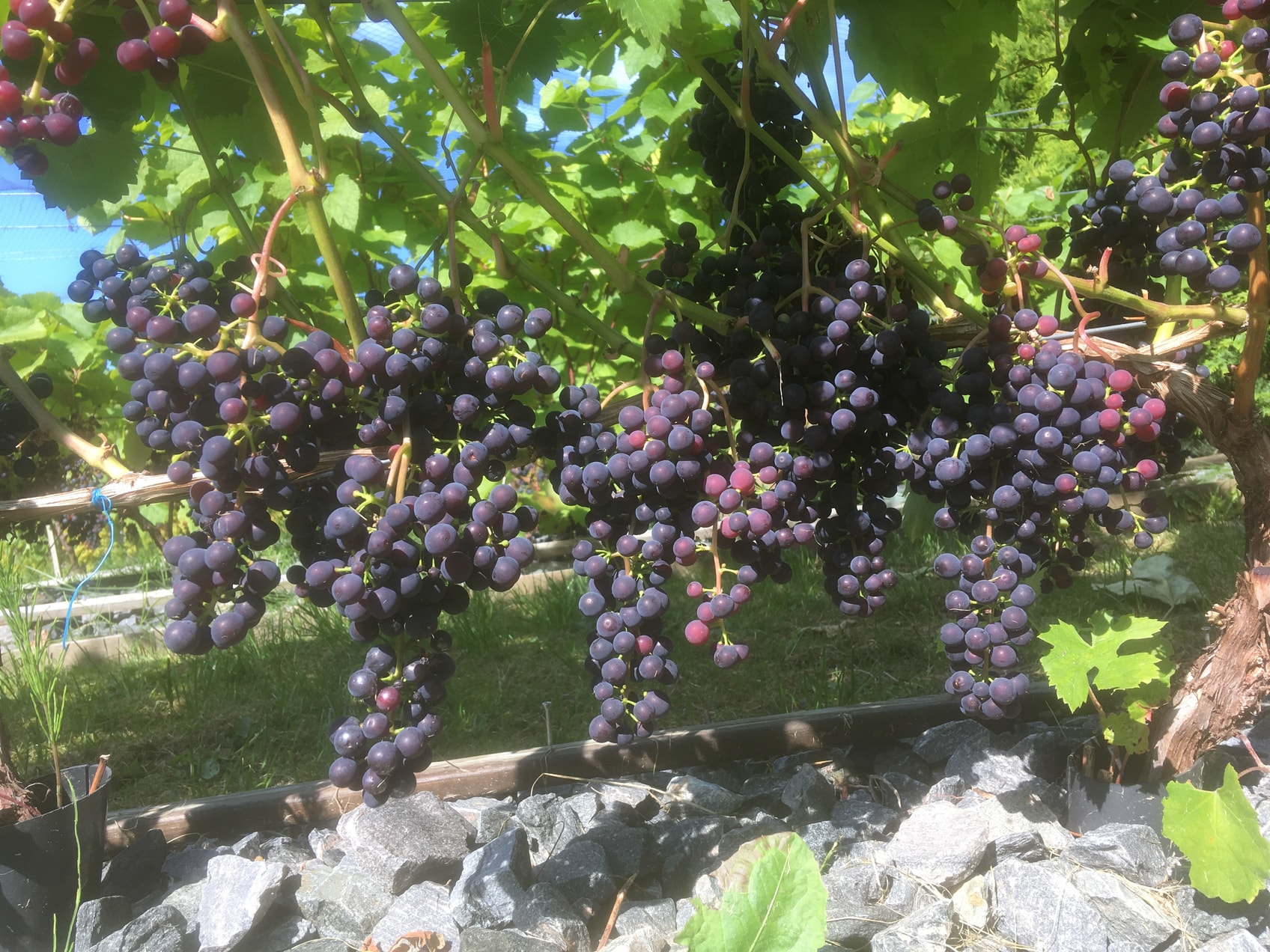
Photo: Knut Sætrevik
This is 1 – 10 – 1
23 September
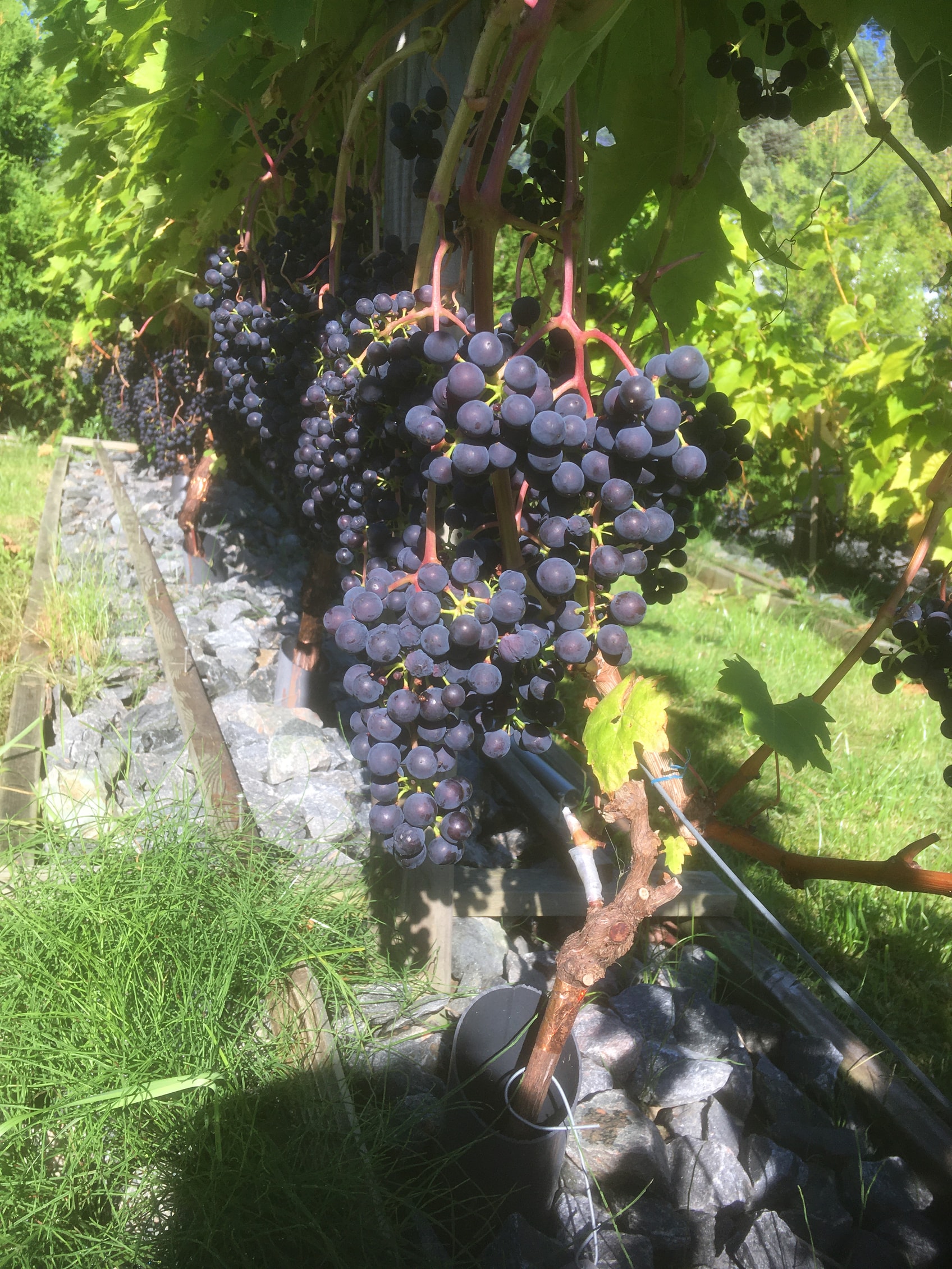
Photo: Knut Sætrevik
This is 1- 10 – 1.
24 September, evening sun.
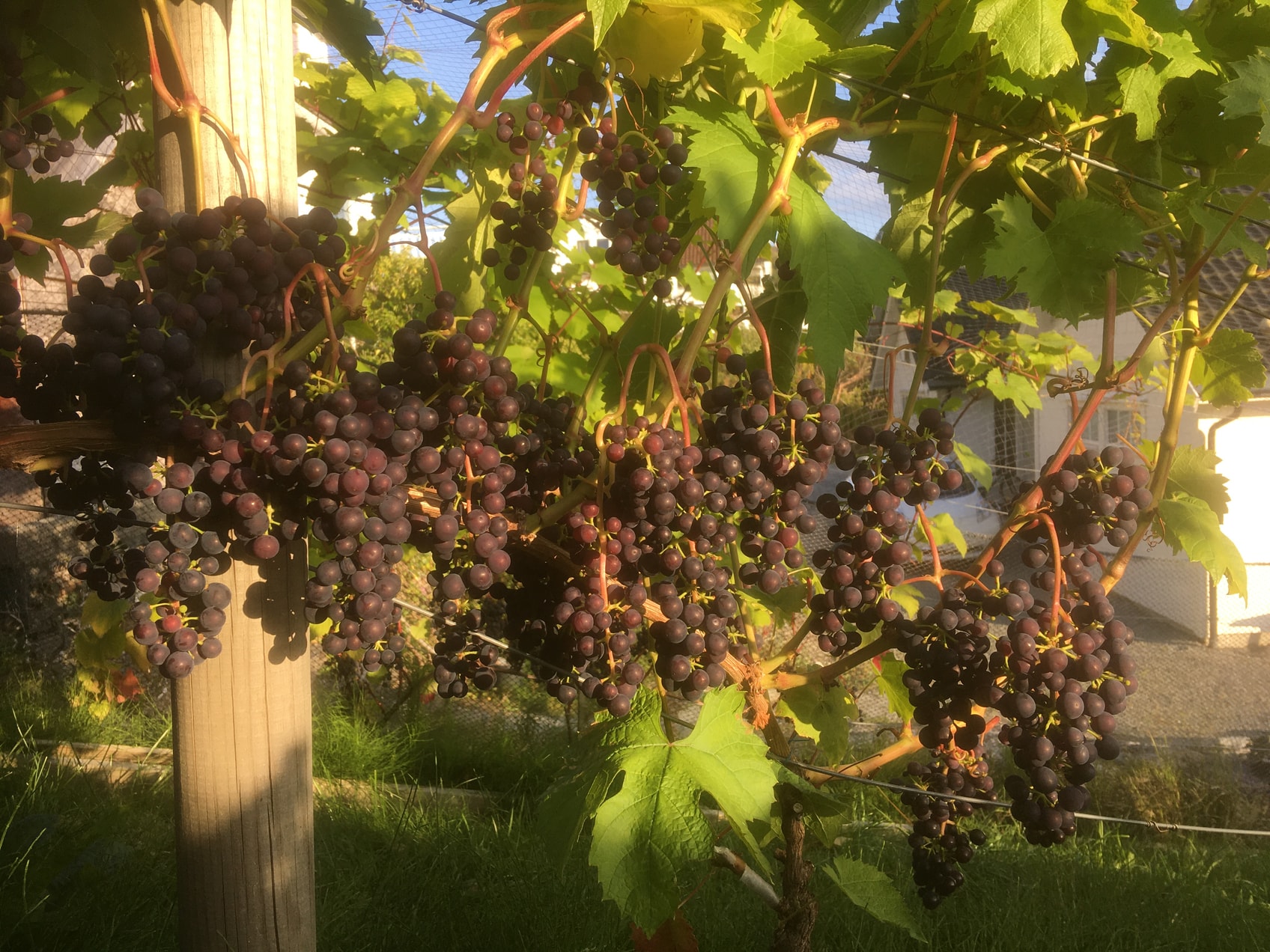
Photo: Knut Sætrevik
This is Tempranillo x Hasansky. The grapes were harvested on a pergola with a glass roof above
15 September. This one has better colour, but the acid is perhaps a little high.
Will get grapes on open ground on this one on a scion next season. 2022.
Ripened before Teremok on the pergola.
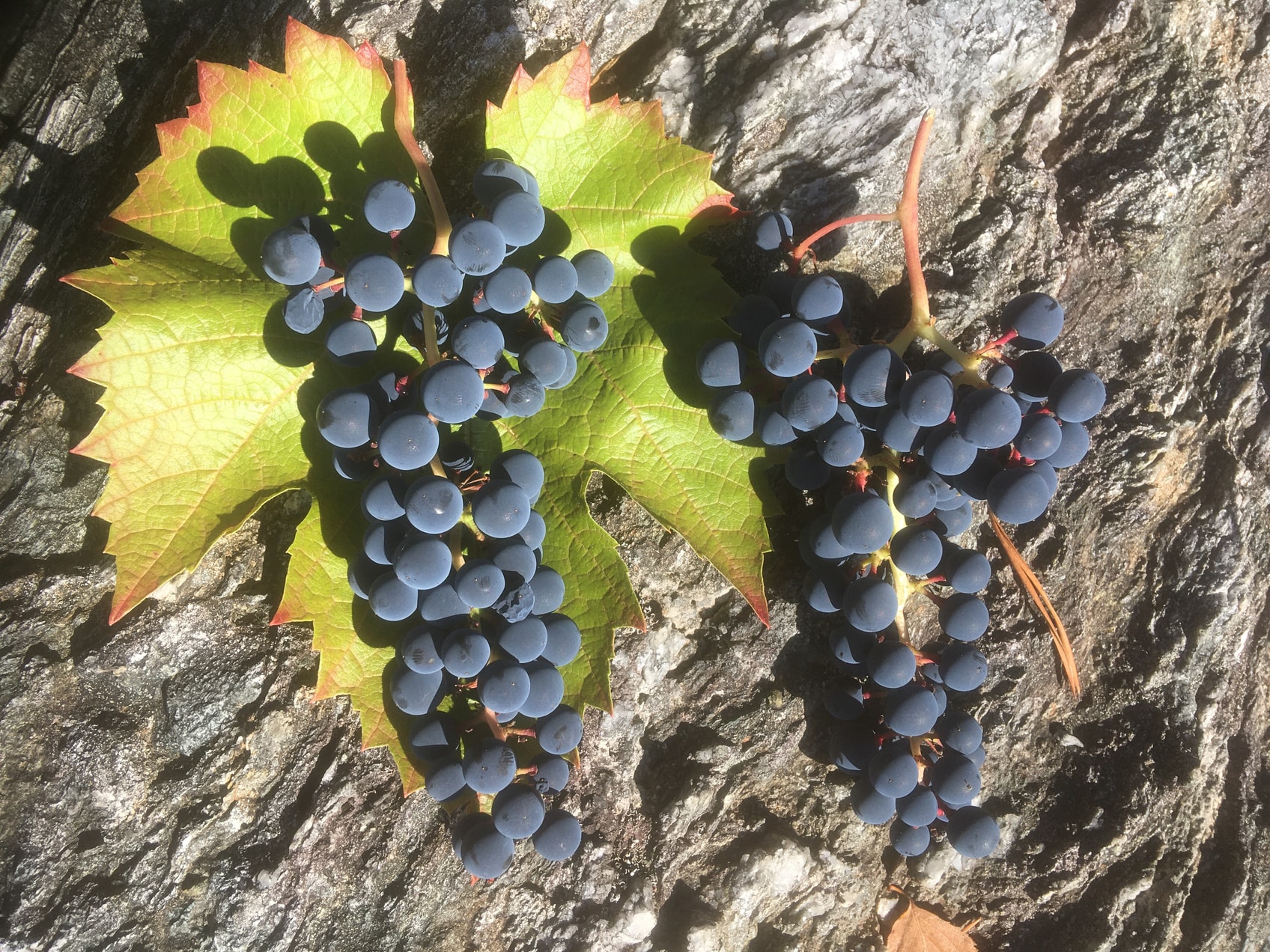
Photo: Knut Sætrevik
Tempranillo x Caucasian Wild.
This one has taken a long time to become sexually mature even though it stands in the greenhouse.
Caucasian Wild is a white variety. Only one in this x turned white.
It was fully ripe in the greenhouse with dark seeds
and over 100 Oe on 5 September. Must be tested outdoors.
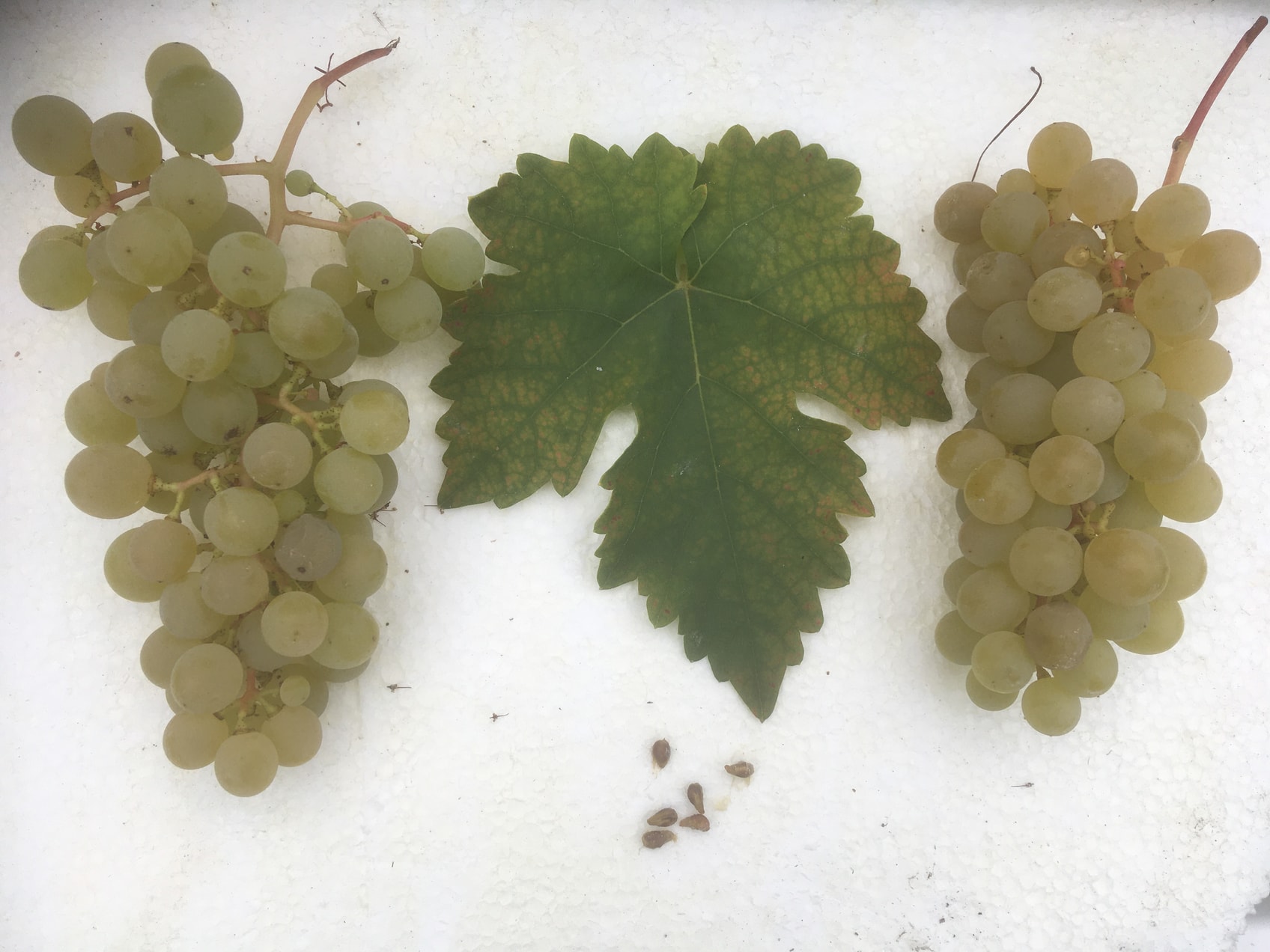
Photo: Knut Sætrevik
Express is a test variety. Early ripening and plenty of sugar
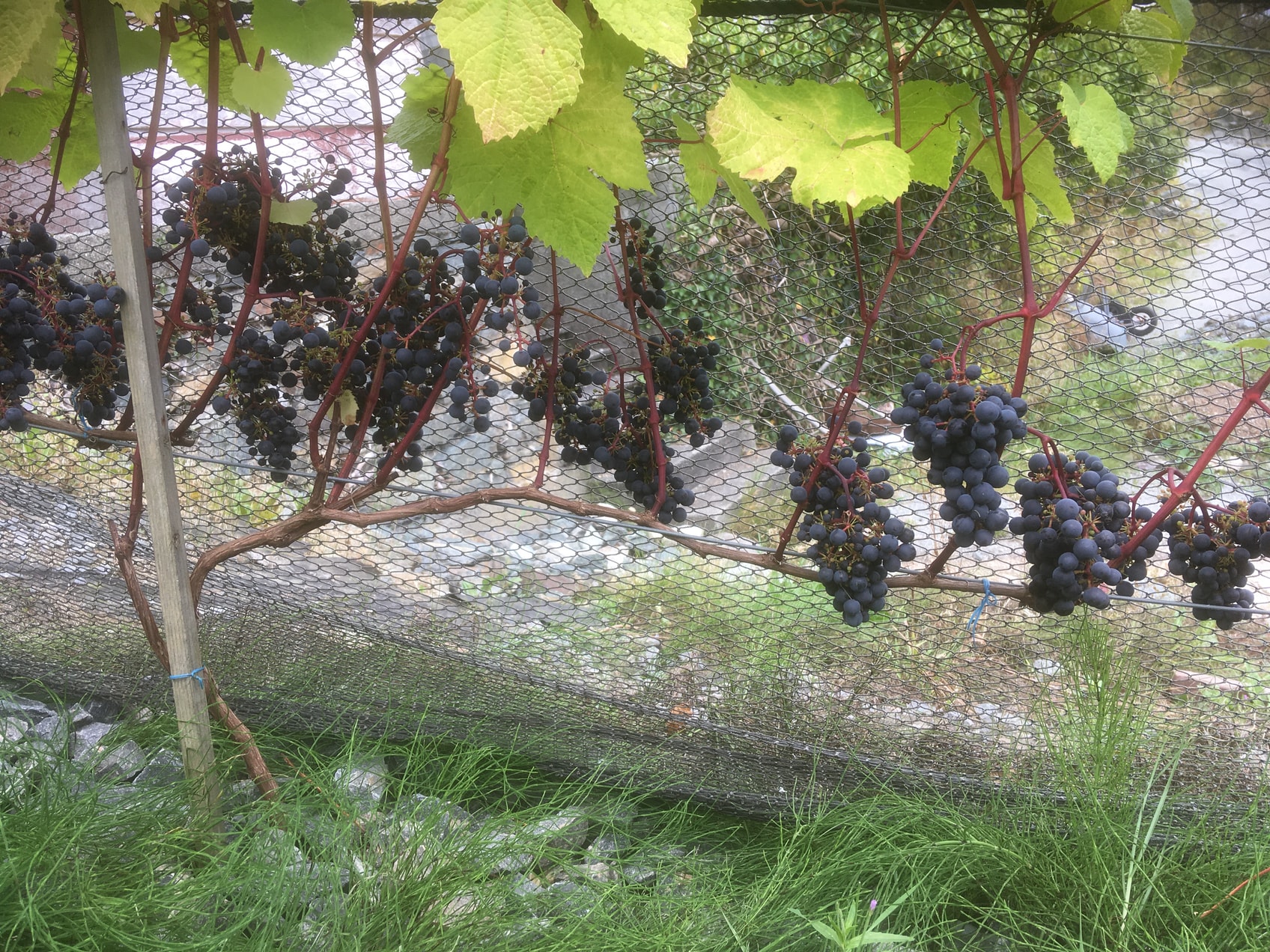
Photo: Knut Sætrevik
Lilac is enjoying the autumn sun.
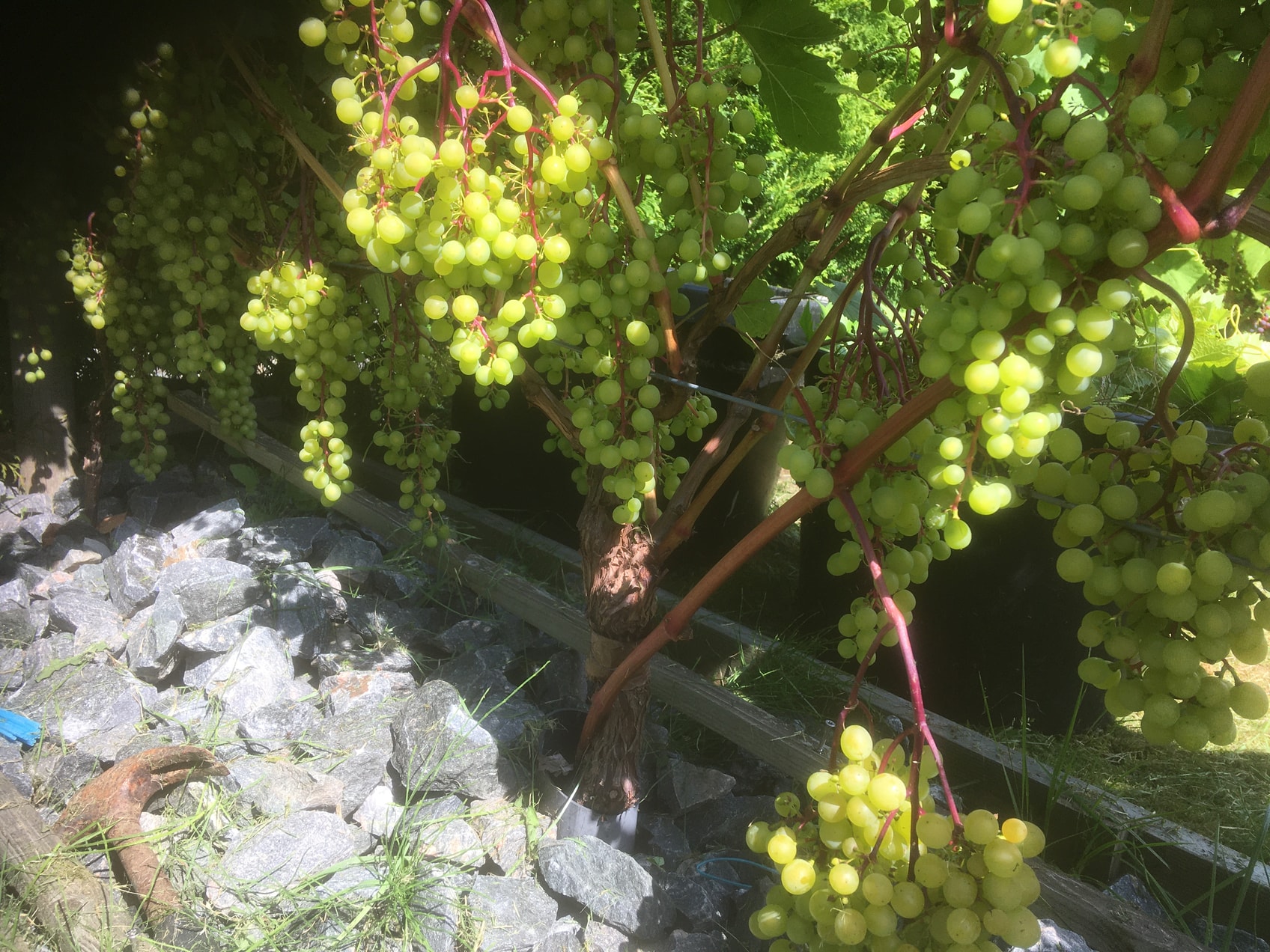
Photo: Knut Sætrevik
Lilac ready for harvest with a faint pink tinge.
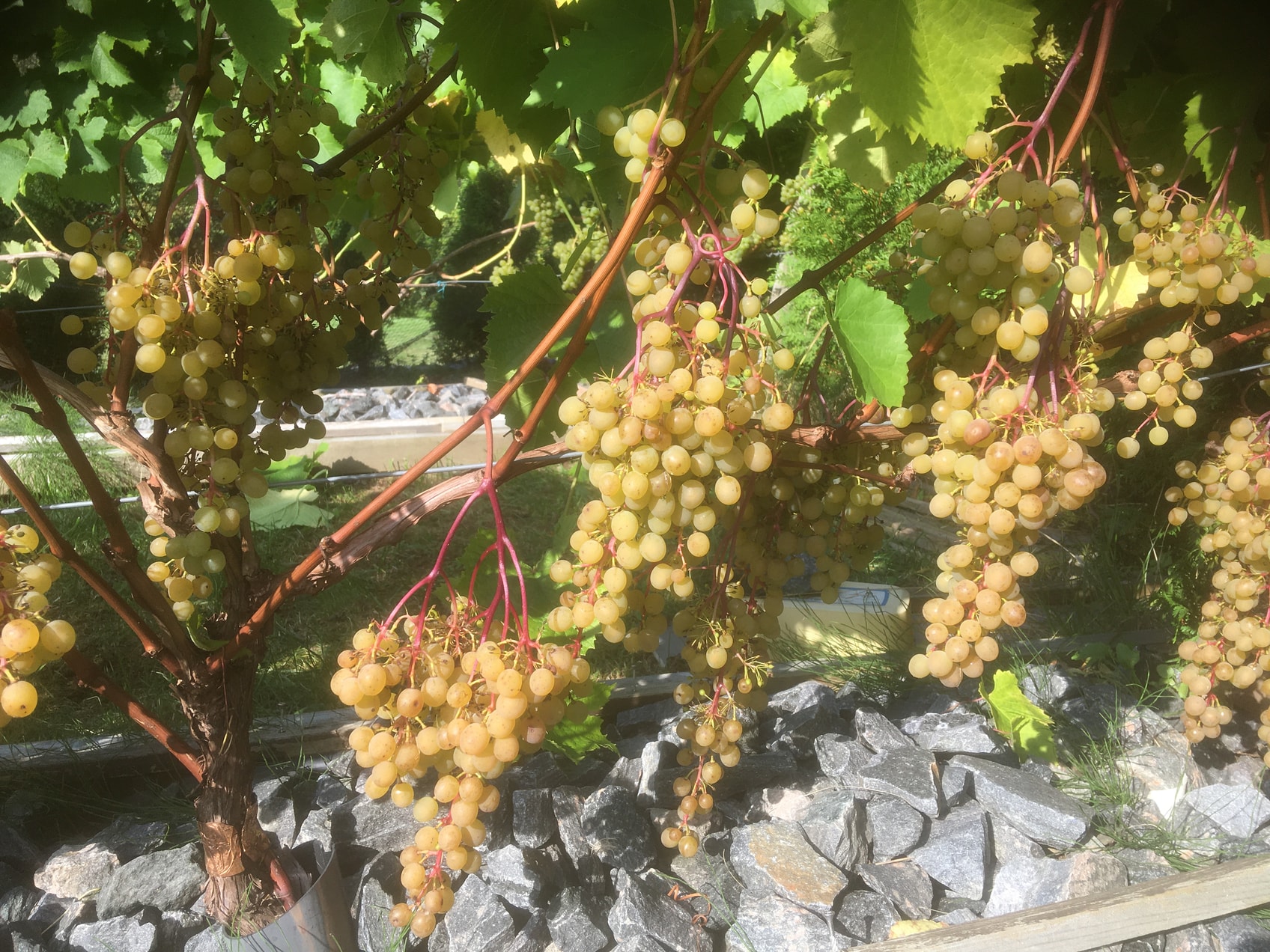
Photo: Knut Sætrevik
Nice to have a small tractor during the harvest of Solaris on 27 September.
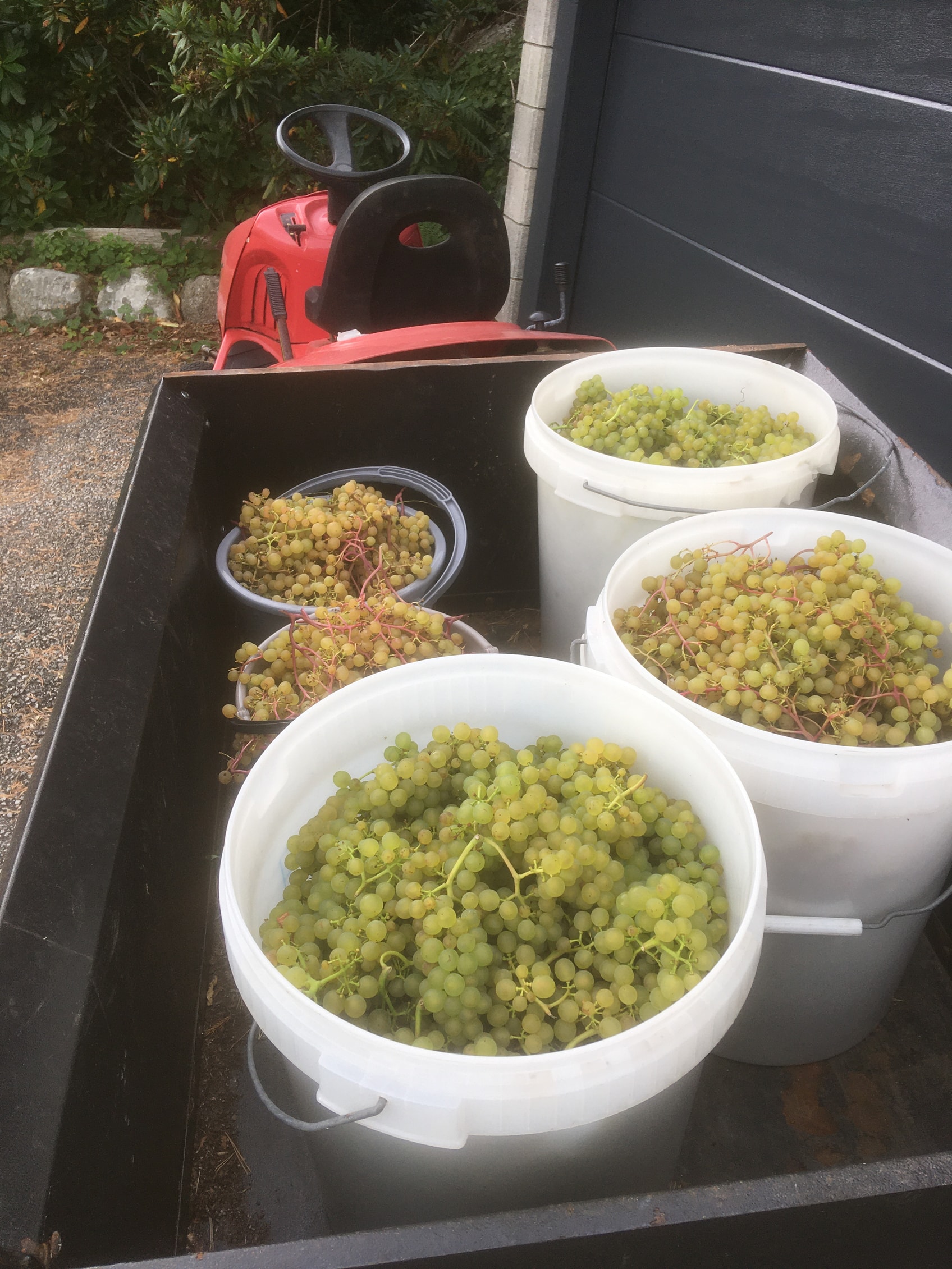
Photo: Knut Sætrevik
The Solaris grapes go into the wine mill.
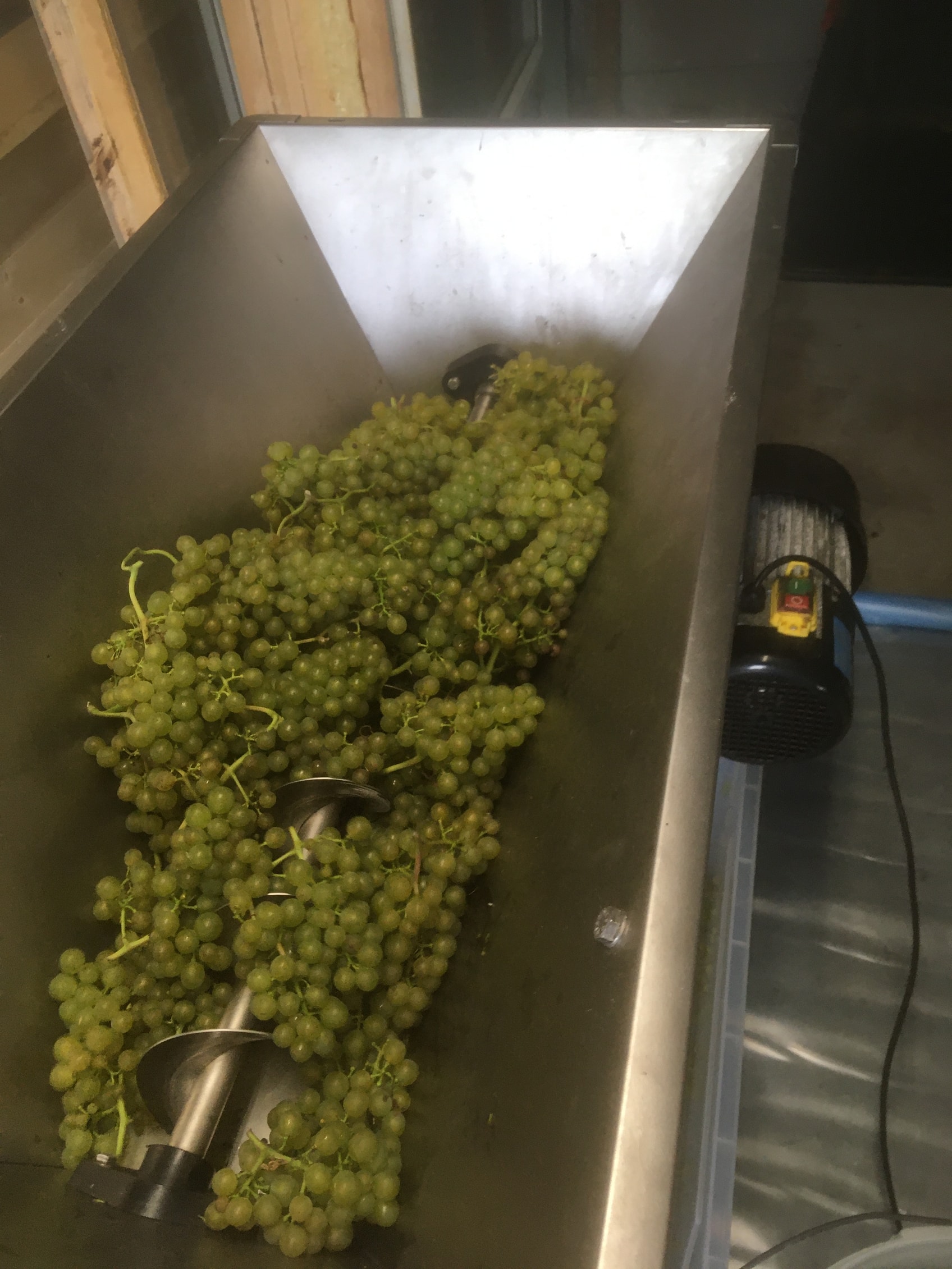
Photo: Knut Sætrevik
Afterwards the grapes go on to the press.
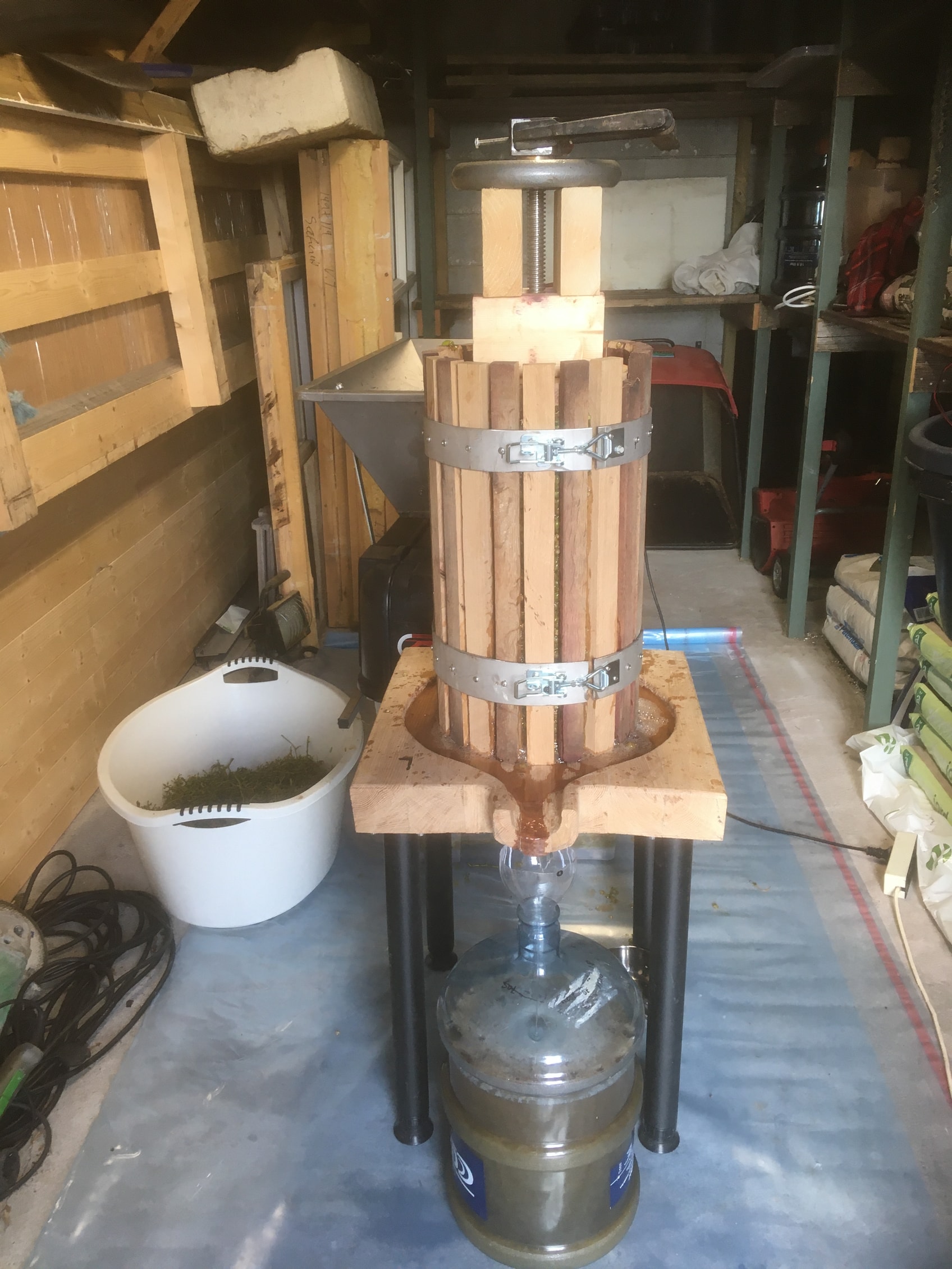
Photo: Knut Sætrevik