Latest news 2019
Author: Knut Sætrevik
In February I did a little rootstock grafting.
The variety to be grown is then grafted onto a rootstock with a more winter-hardy root.
In southern Europe this is done to get clear of phylloxera.
Rootstocks of American wild grapes, and crosses of these, which phylloxera does not attack, are used.
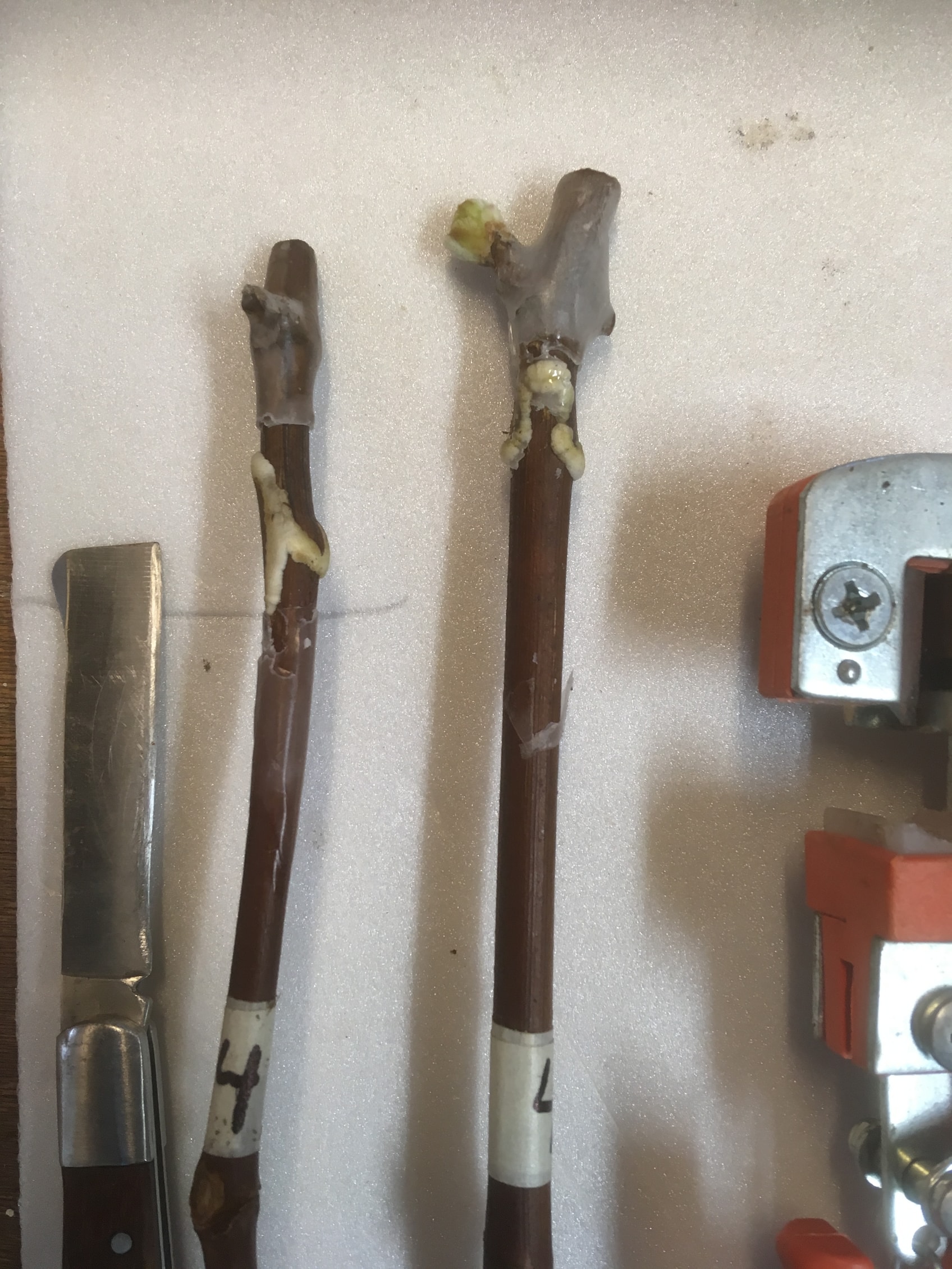
Photo: Knut Sætrevik
The cane on the left is grafted with a knife, an oblique whip-and-tongue graft.
The one on the right is grafted with Omega grafting pliers.
At the beginning of March it is over 7 degrees,
and the plants bleed a little where they were pruned in January.
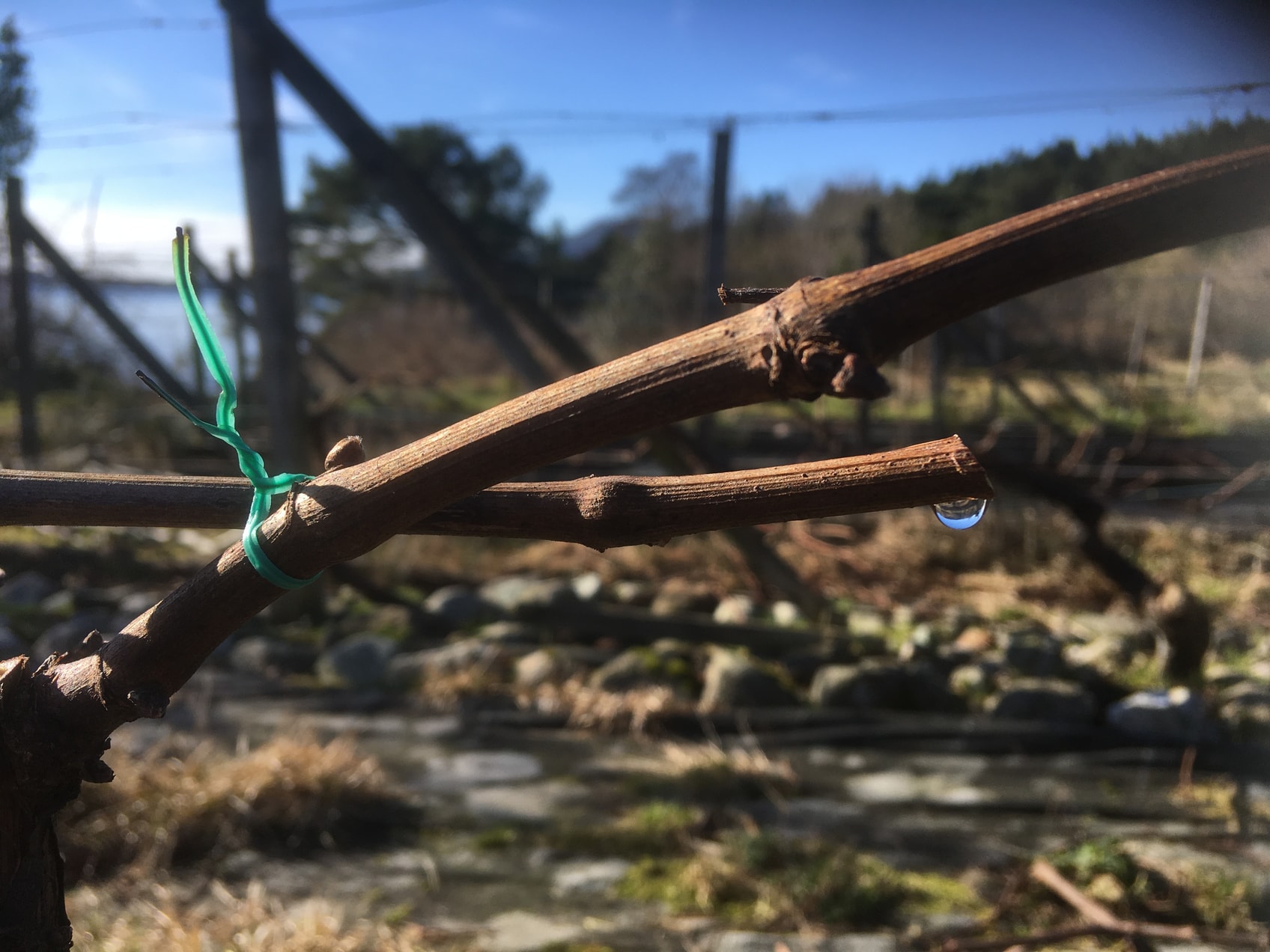
Photo: Knut Sætrevik
At the end of March the buds swell.
At this stage the bud tolerates -3 to -5 °C.
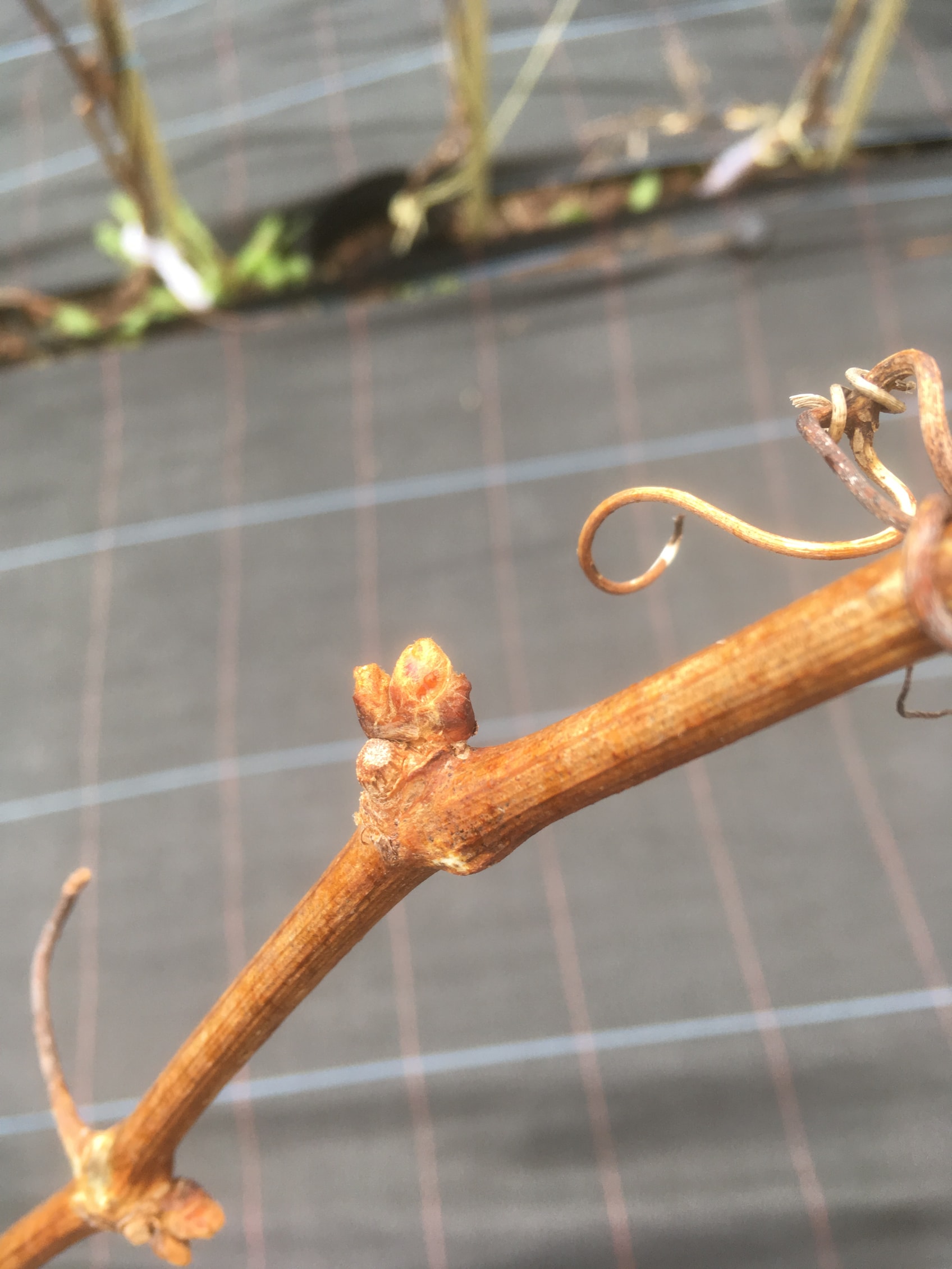
Photo: Knut Sætrevik
A warm and sunny spell in April means that shoot growth is under way a little earlier than usual.
Now it is 3 May, and the weather forecast warns of wind from the north and a risk of night frost.
It went well. About 0 degrees at night, and rime on the ground, but the shoots came through.
The picture is one of my own crosses, Rondo X Thumbelina 3.
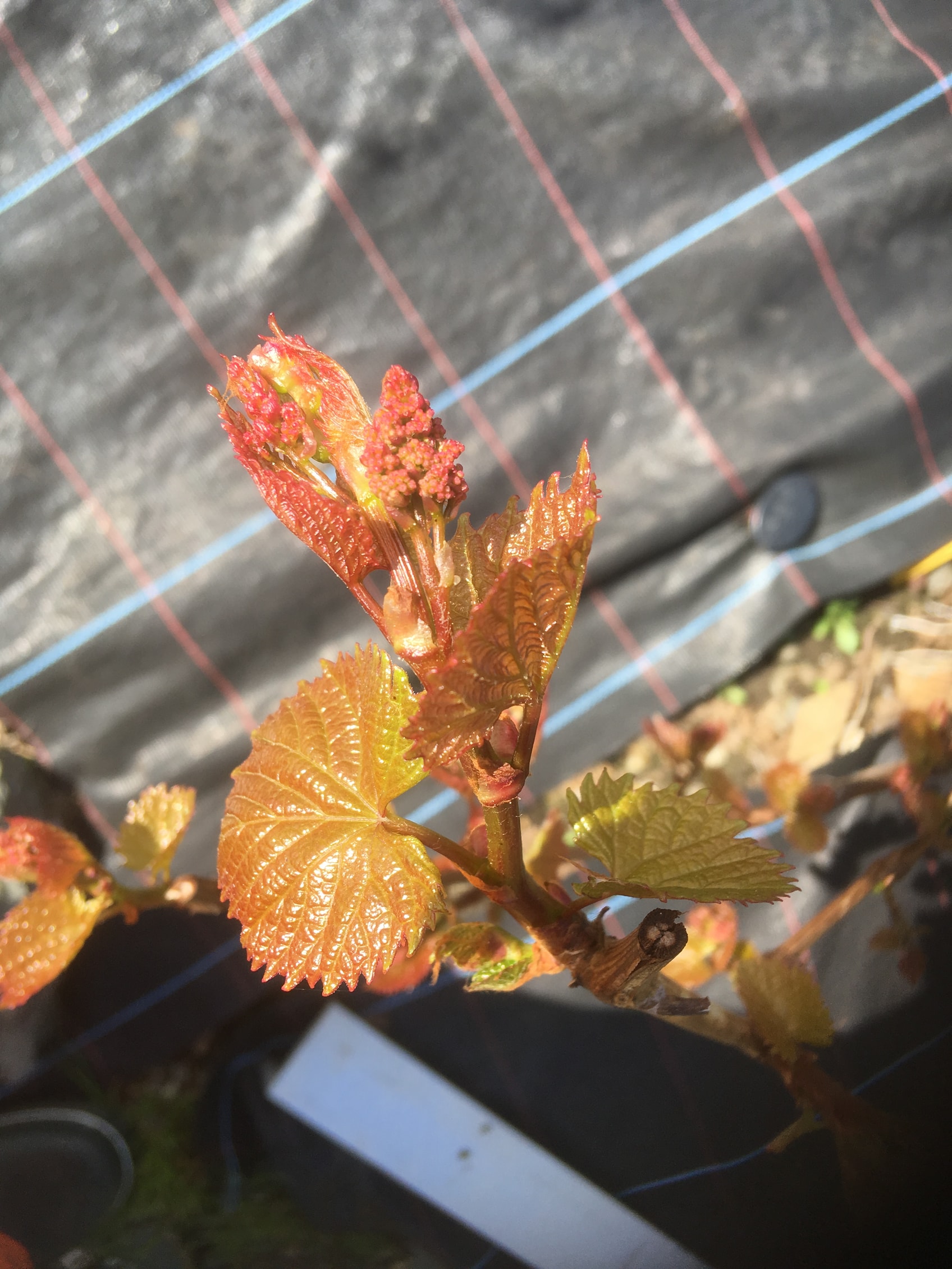
Photo: Knut Sætrevik
Through the summer there are many that want a bit of the grapevines,
such as brown slugs and this giant larva, 5 cm long and as thick as a little finger.
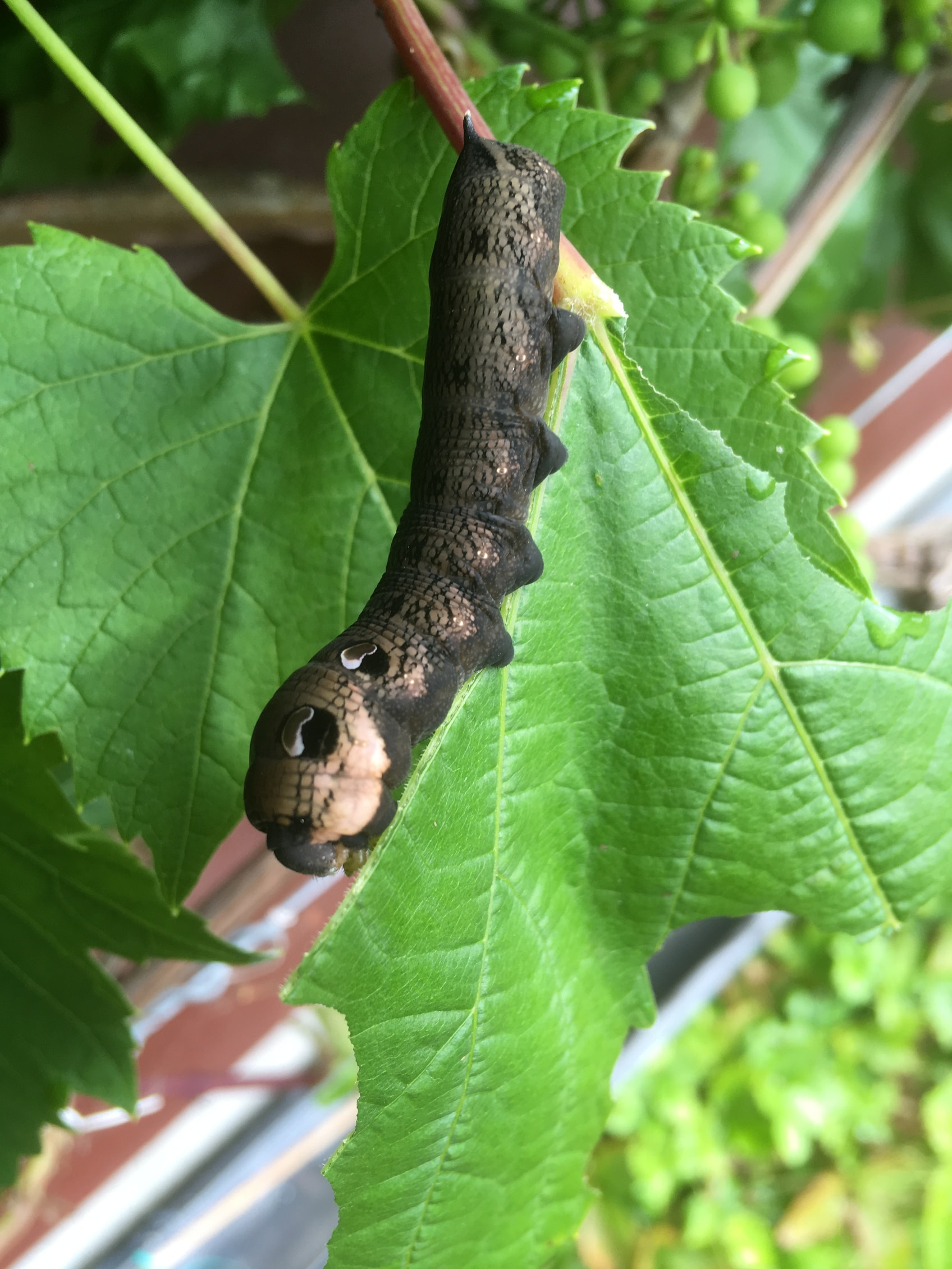
Photo: Knut Sætrevik
In late summer the white wine grape Dublyanski is almost ripe in the greenhouse.
It turns a little more pink at full ripeness.
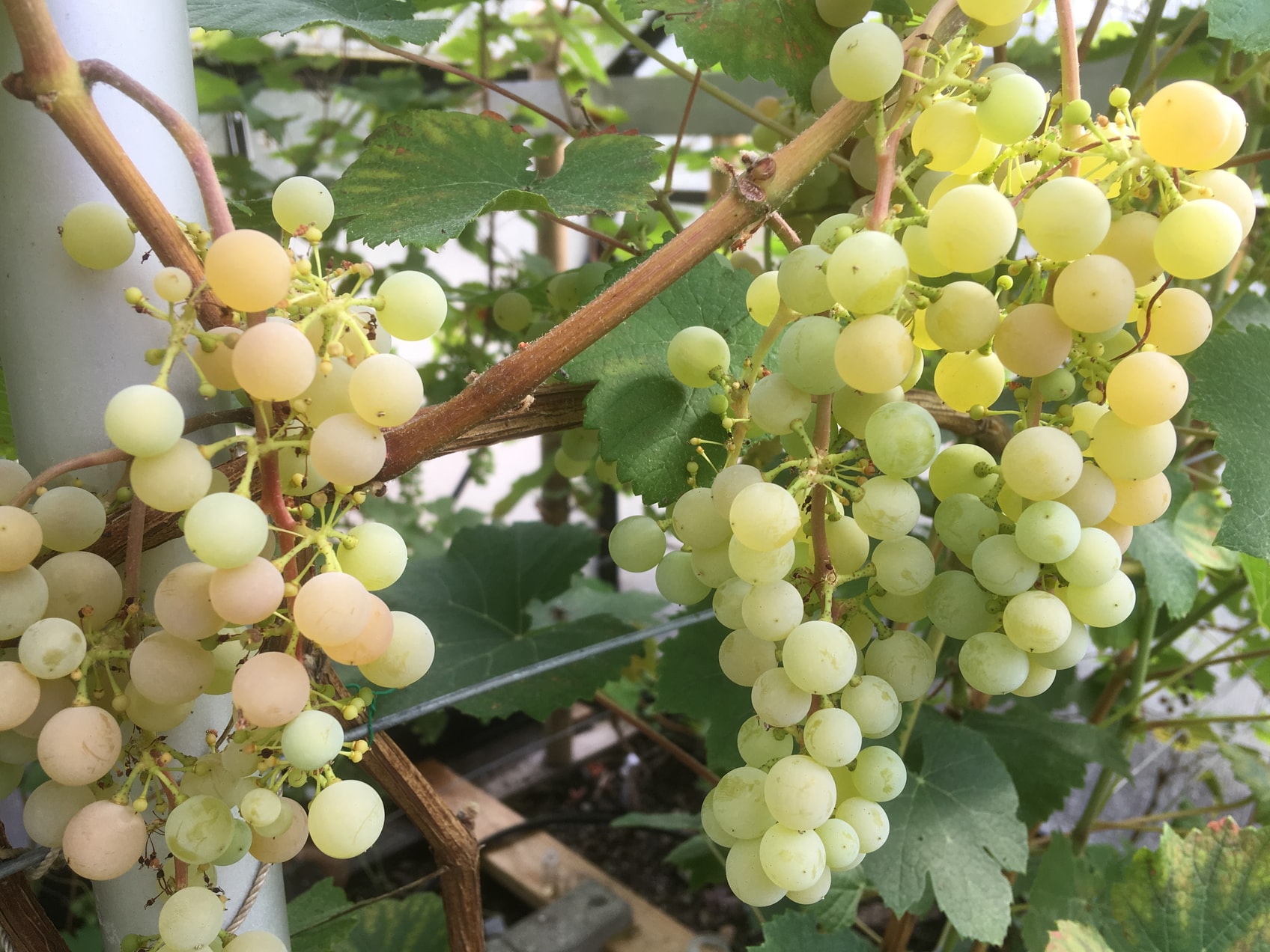
Photo: Knut Sætrevik
Here is the red wine grape Negritionok in the greenhouse roof.
It gets very sweet here. Over 100 Oe. Degrees.
It is a little marginal outdoors, but with a covering of Agryl fleece for 5 weeks in spring it does fine.
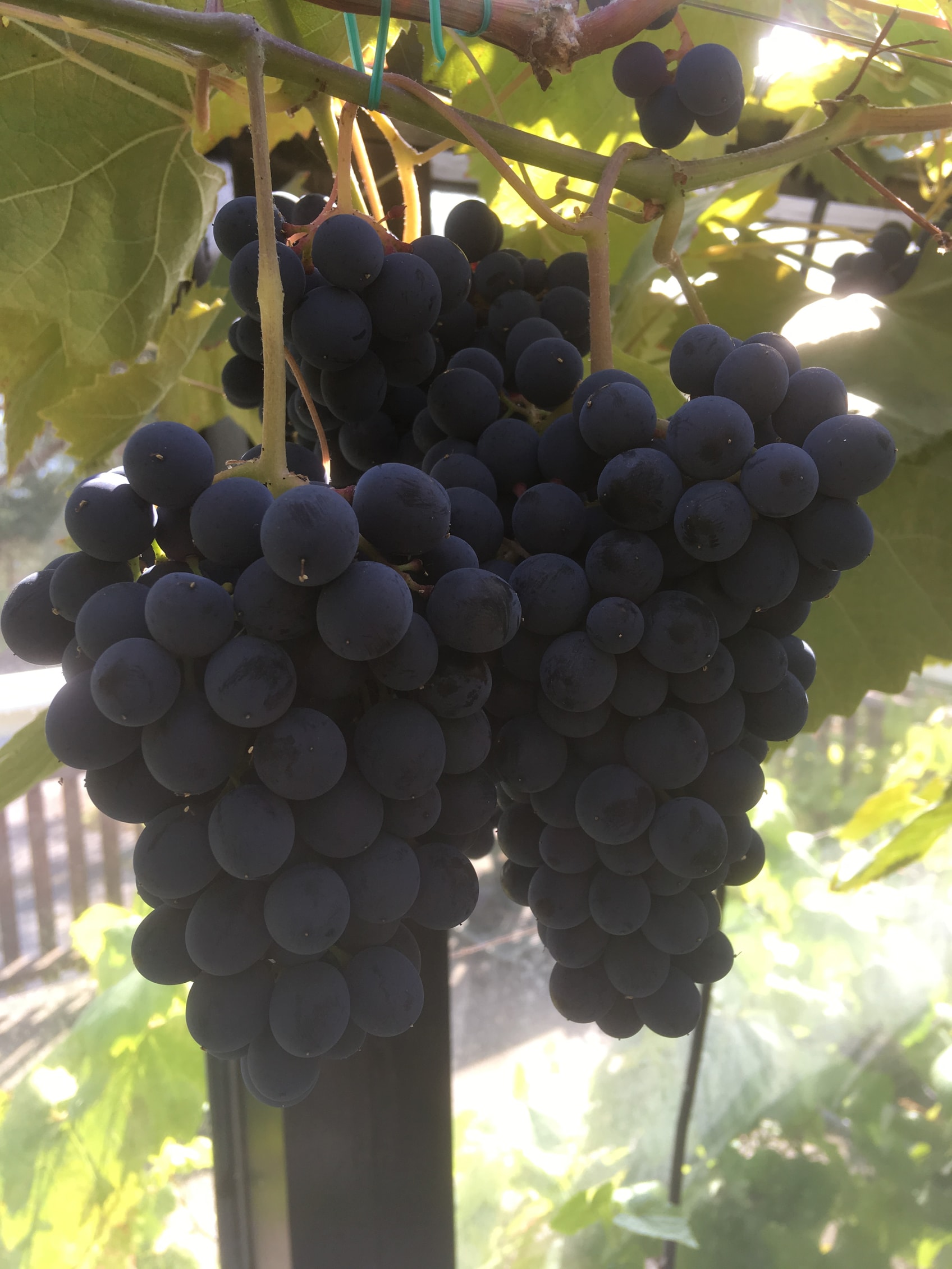
Photo: Knut Sætrevik
It is the first week of September, and out in the ground Lilac on the left and Solaris on the right are waiting
for warm days and plenty of sun. That has been in short supply in the latter part of the summer.
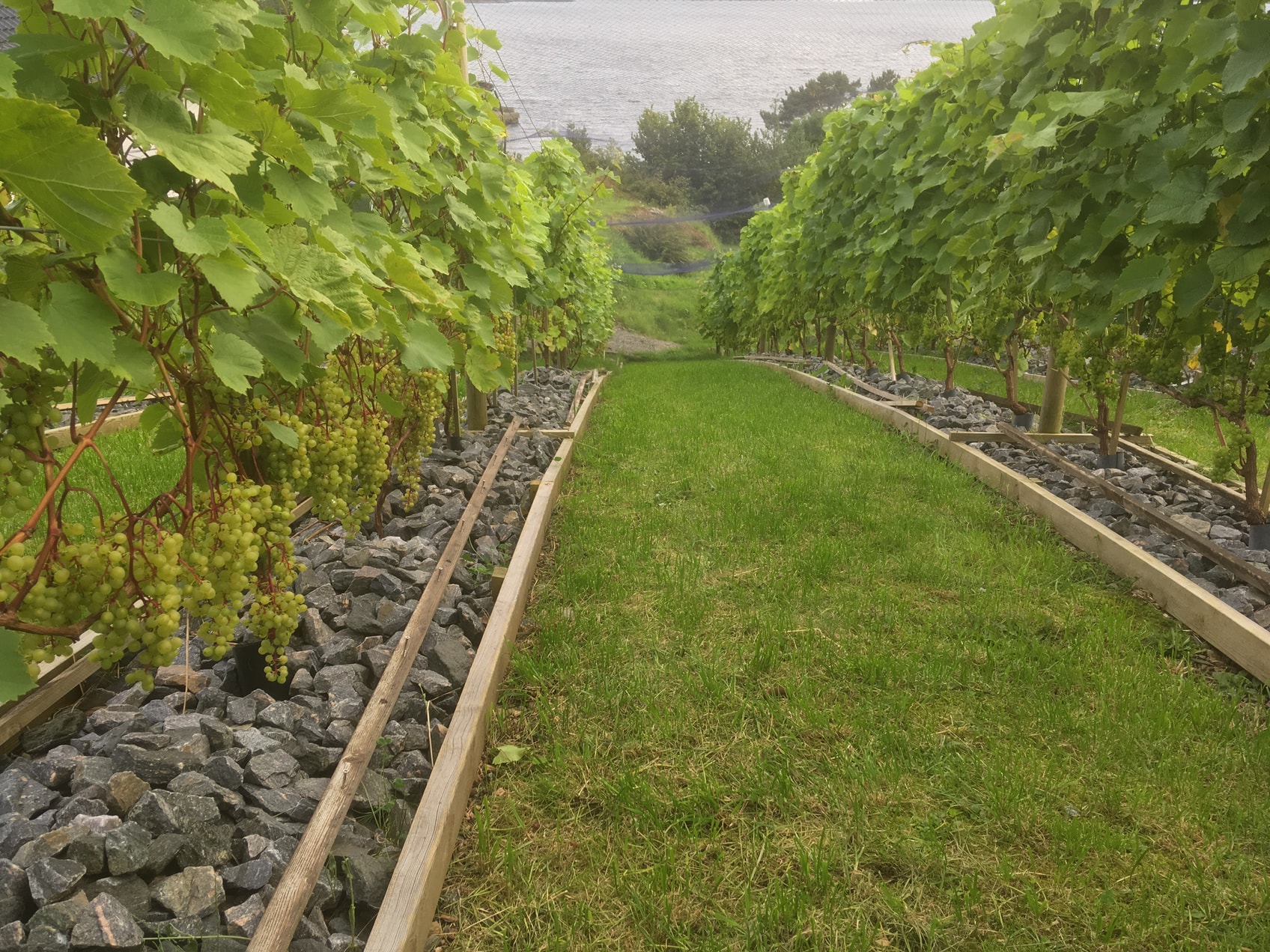
Photo: Knut Sætrevik
Here a trial variety. The white wine grape Platovsky.
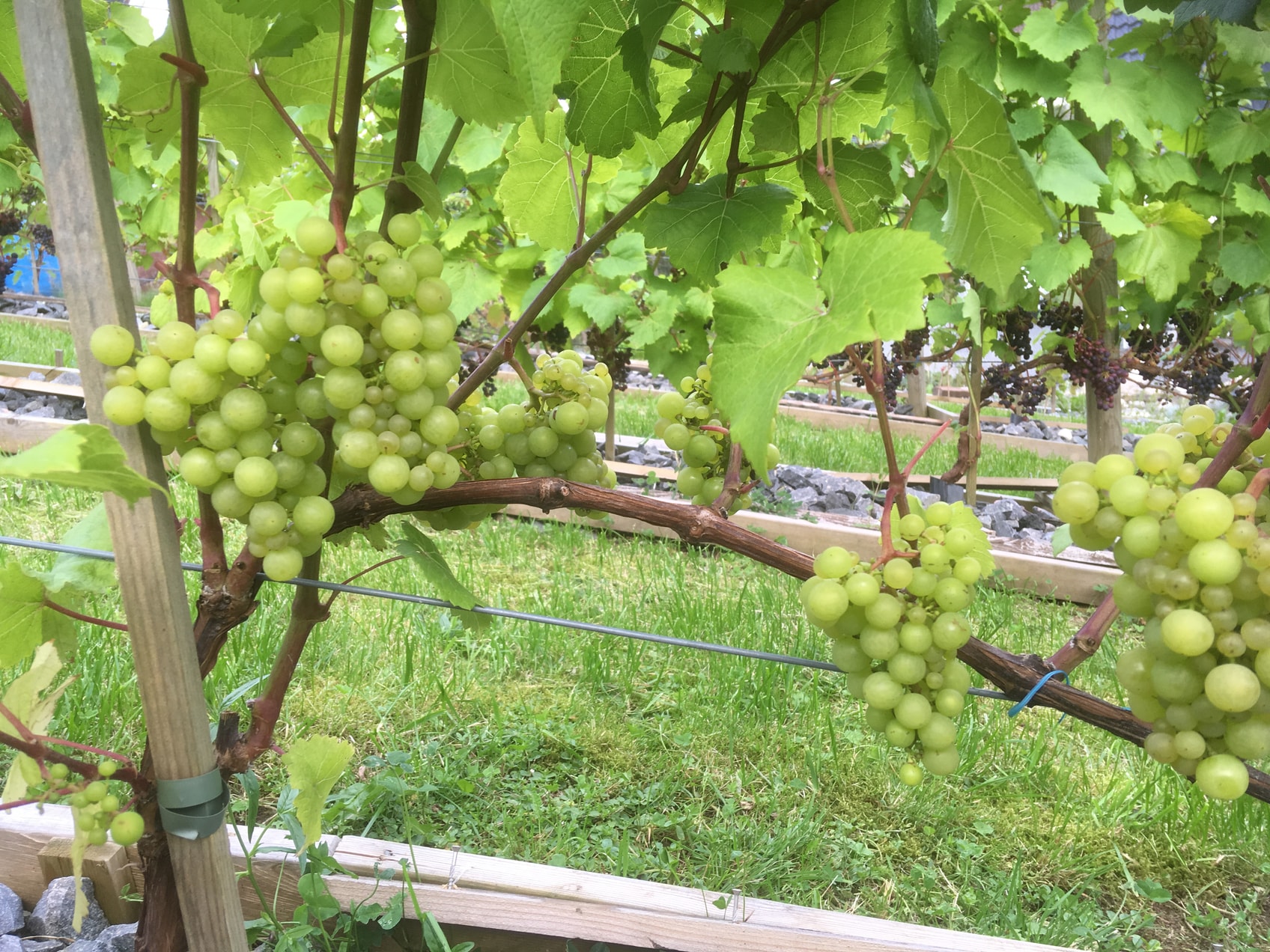
Photo: Knut Sætrevik
The German white wine grape Solaris is also waiting for sun and warmth.
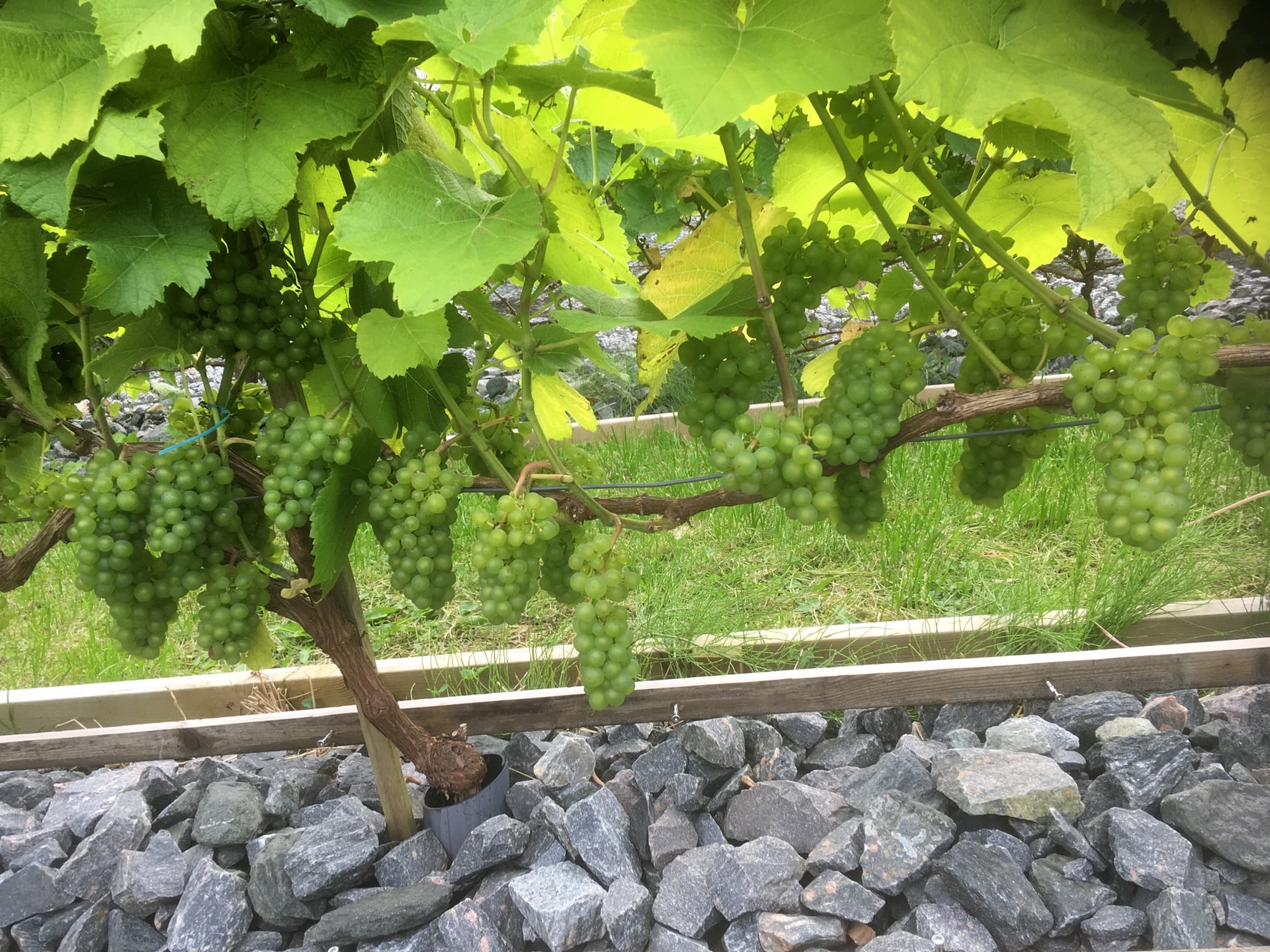
Photo: Knut Sætrevik
This is a blue seedless grape from Russia that can also be grown outdoors against a south-facing wall.
It is called Tamara seedless.
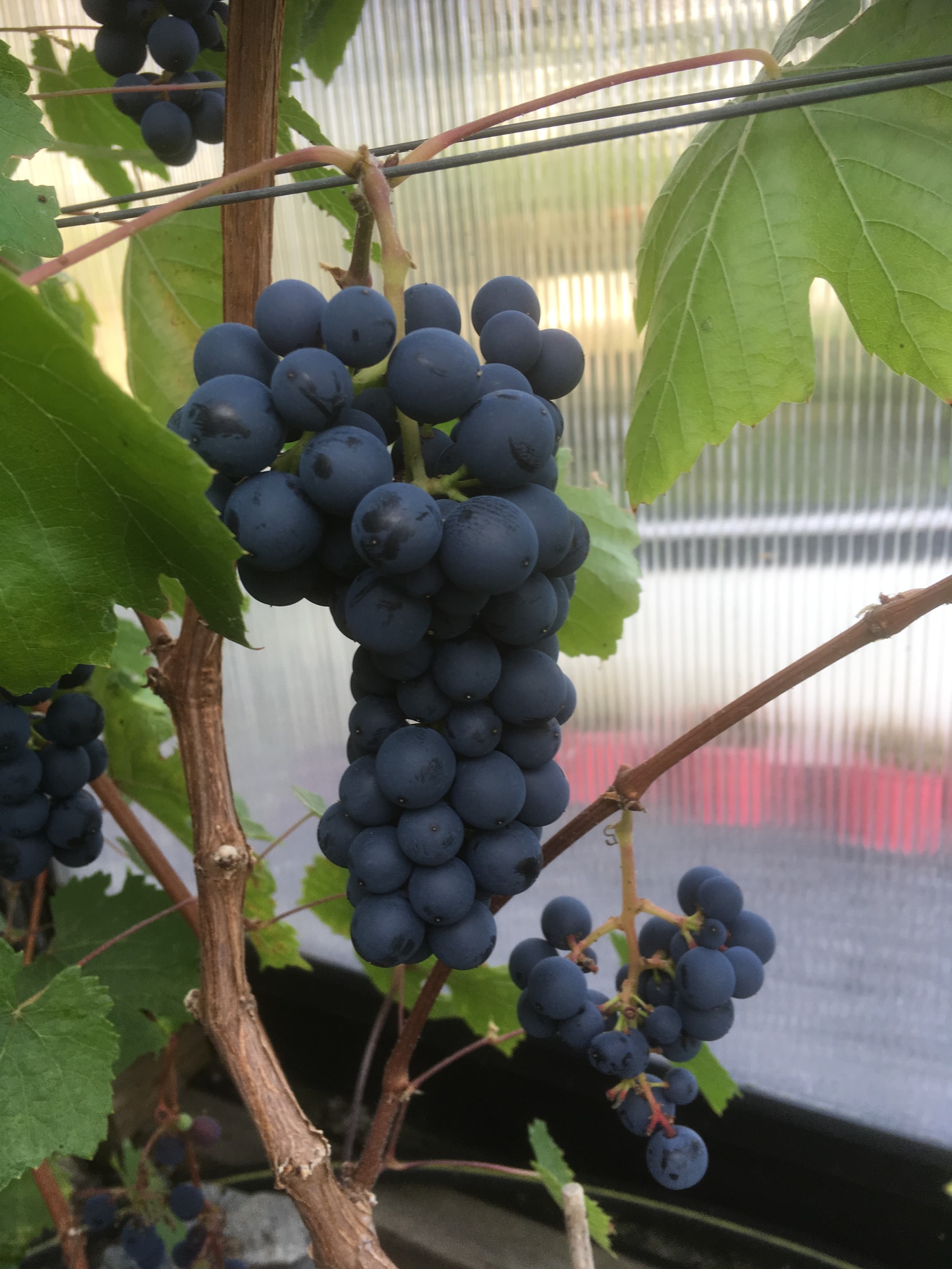
Photo: Knut Sætrevik
Lilac gives a good crop.
This year it is to be tried in a blend with other trial varieties, where this one makes up about 50%.
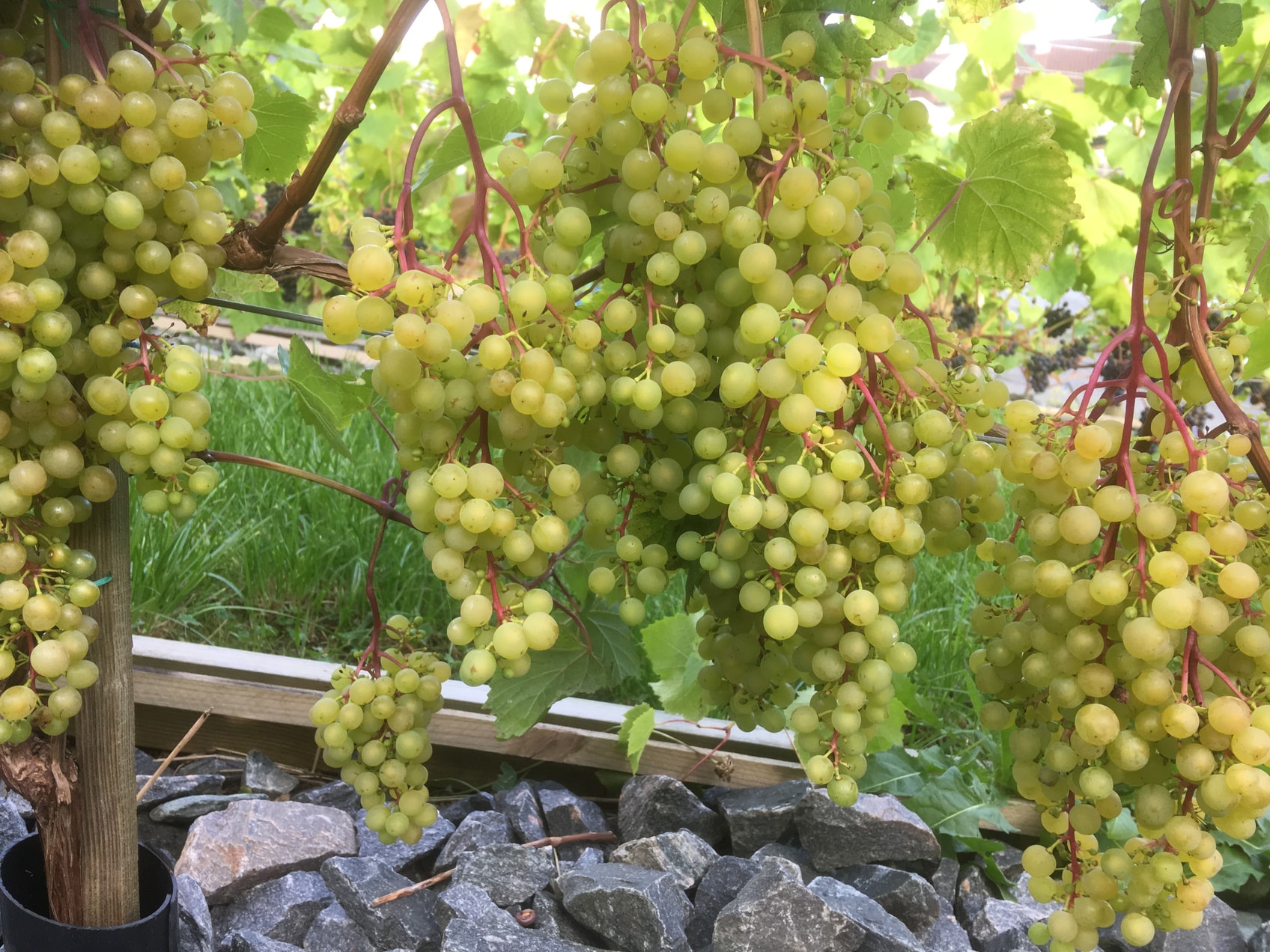
Photo: Knut Sætrevik
One of my own varieties. Tempranillo X sheremushka. The working title is 1-10 -1.
Good cluster size, but a little sparse between the grapes.
A small red-wine trial will be made from this one this year.
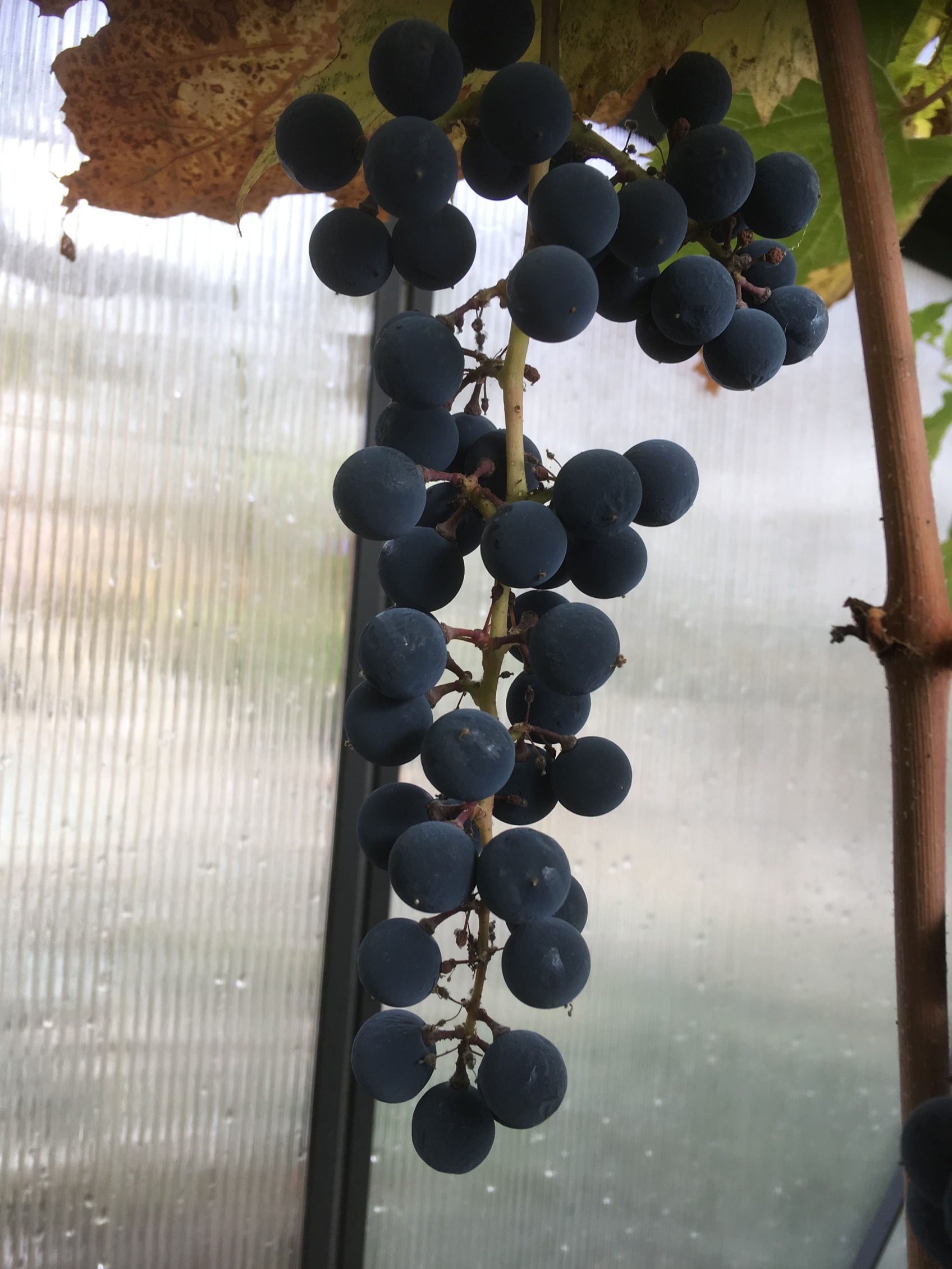
Photo: Knut Sætrevik
Fine autumn colours on the leaves.
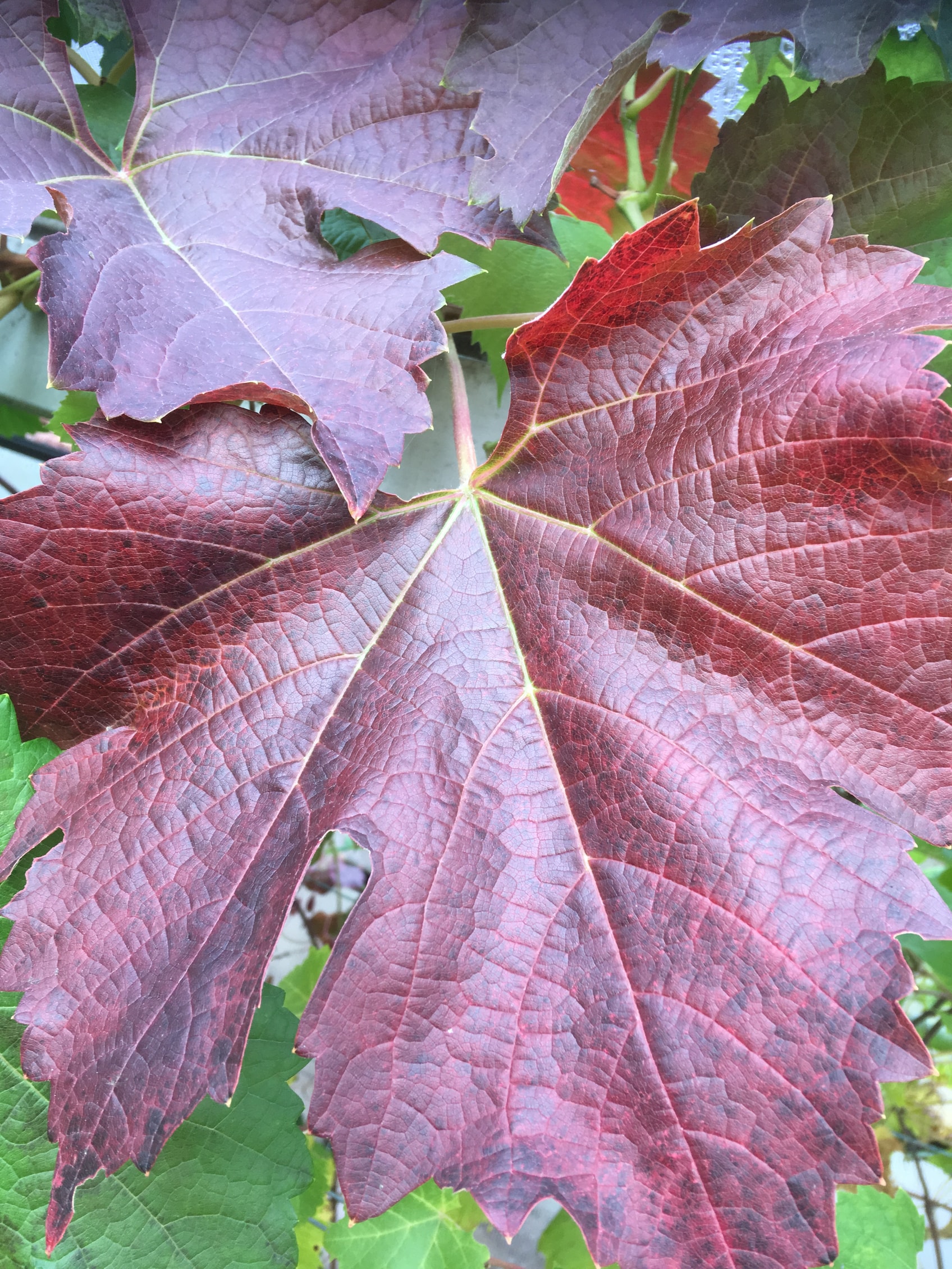
Photo: Knut Sætrevik
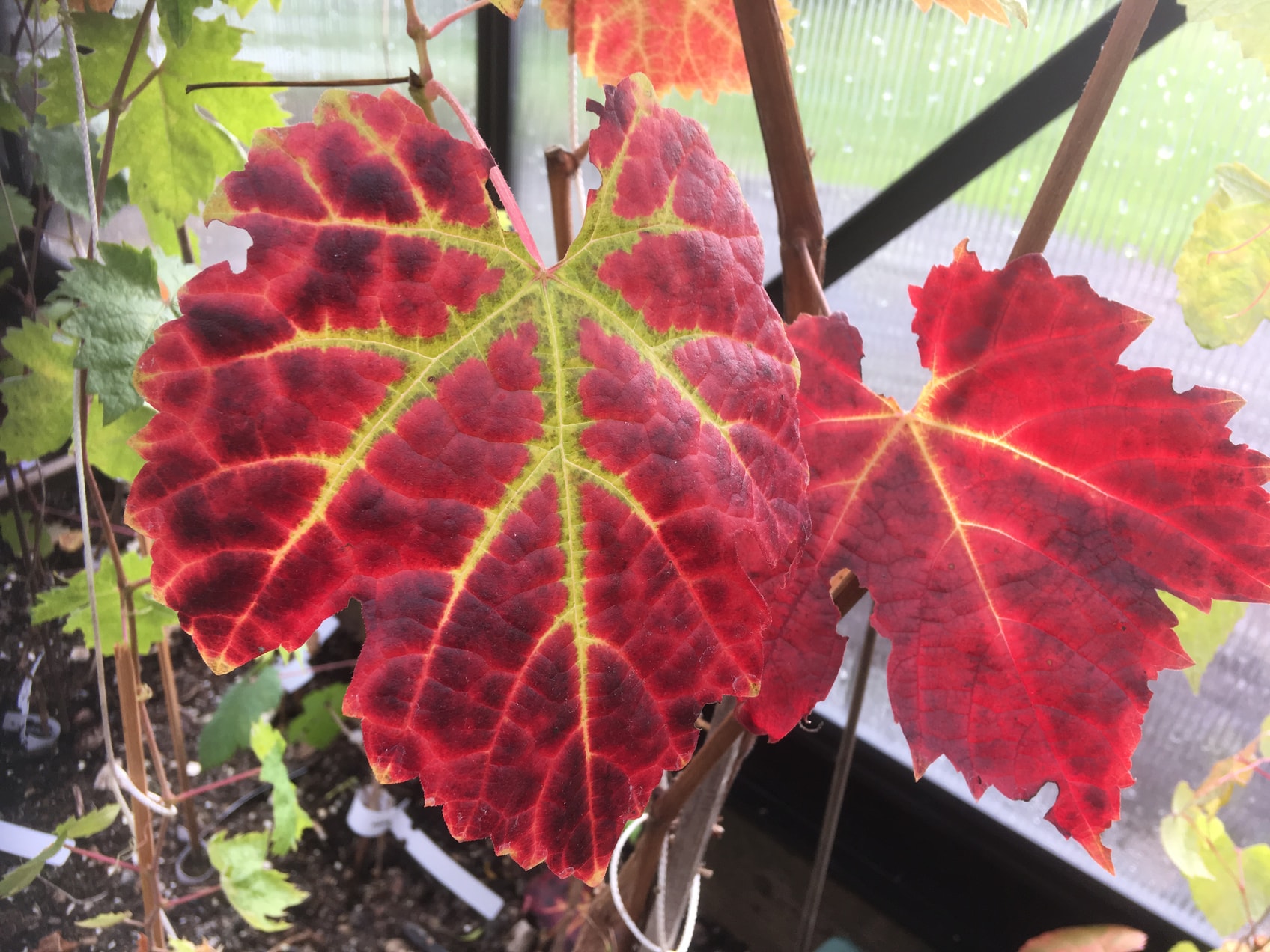
Photo: Knut Sætrevik
Negritionok on open ground was harvested on 13 and 14 October together with the other outdoor wine varieties.
It came to 120 kg of grapes, from which wine has now been made. Split between red wine, white wine and rosé.
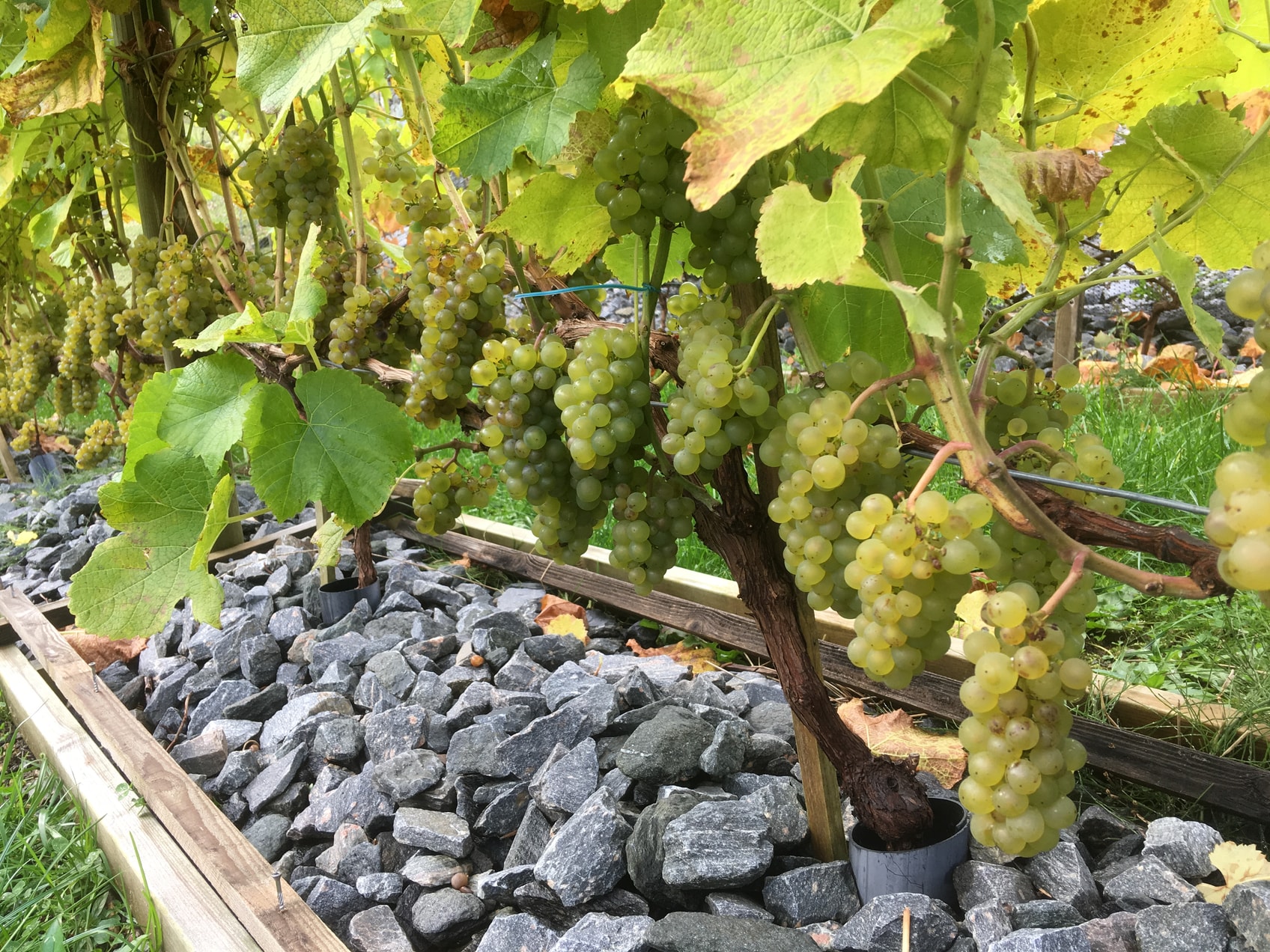
Photo: Knut Sætrevik
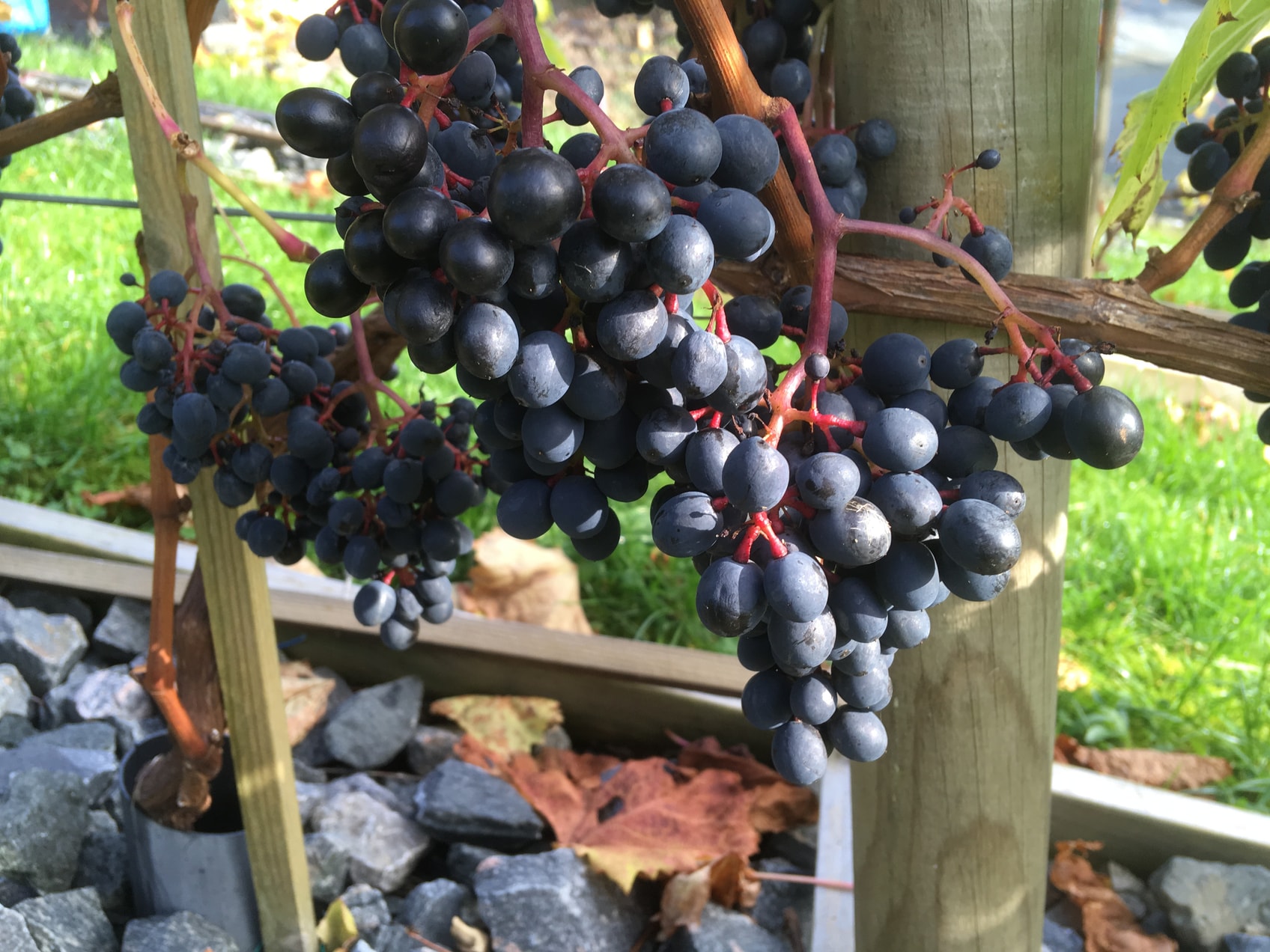
Photo: Knut Sætrevik