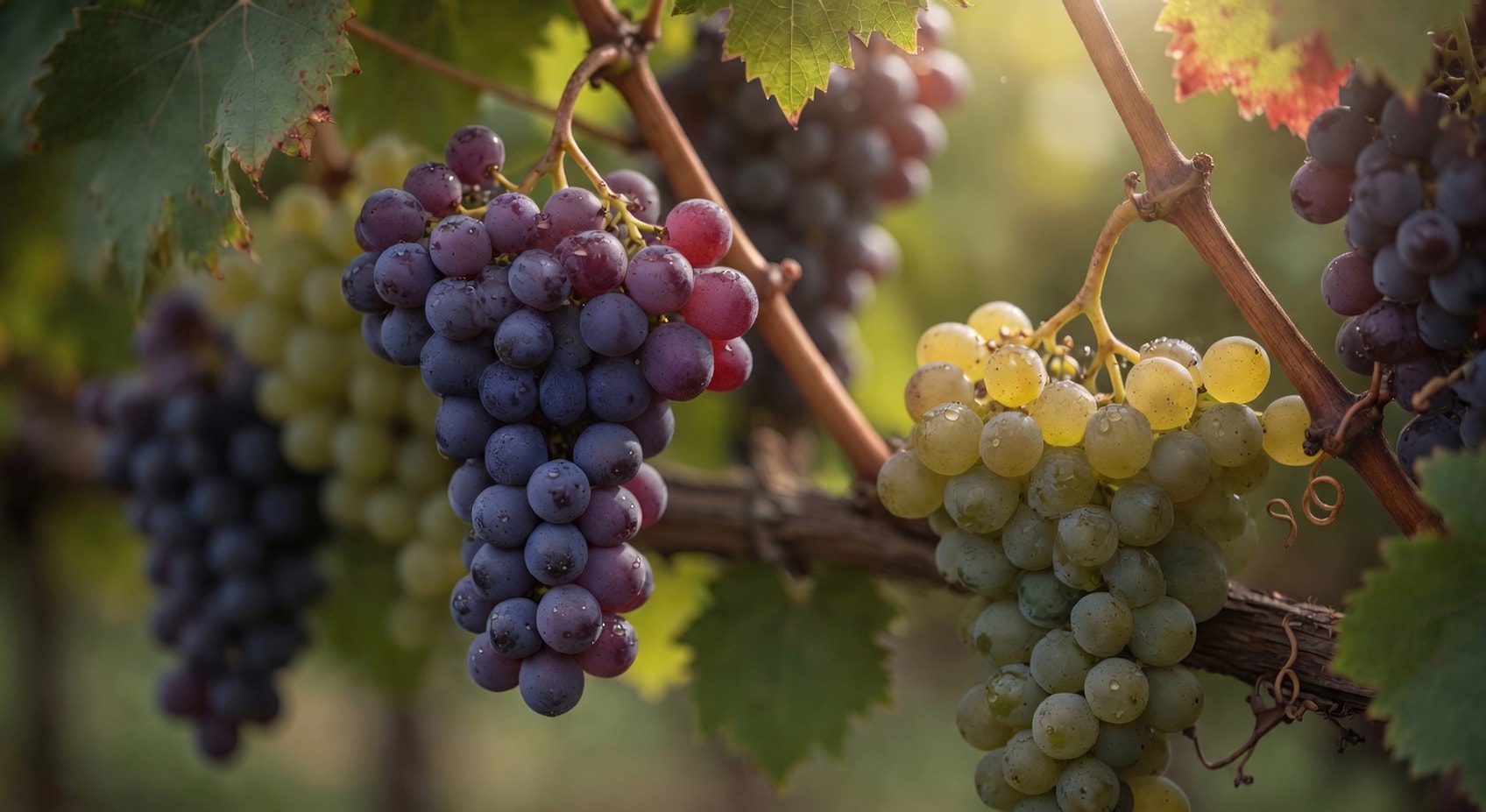
Latest news 2014
Author: Knut Sætrevik
2014 was one of the very best years for grape growing in southern Norway.
The spring was warm and early, but with night frost on the night of 1 May.
That caused a little frost damage on new shoots.
It stayed free of frost locally until the night of 24 to 25 December.
With this picture of the low December sun I wish everyone a fine winter.

Photo: Knut Sætrevik
The wine was divided into 30 litres of red wine, 10 litres of sweet dessert wine and
15 litres of rosé wine and a few litres of red wine from trial varieties.
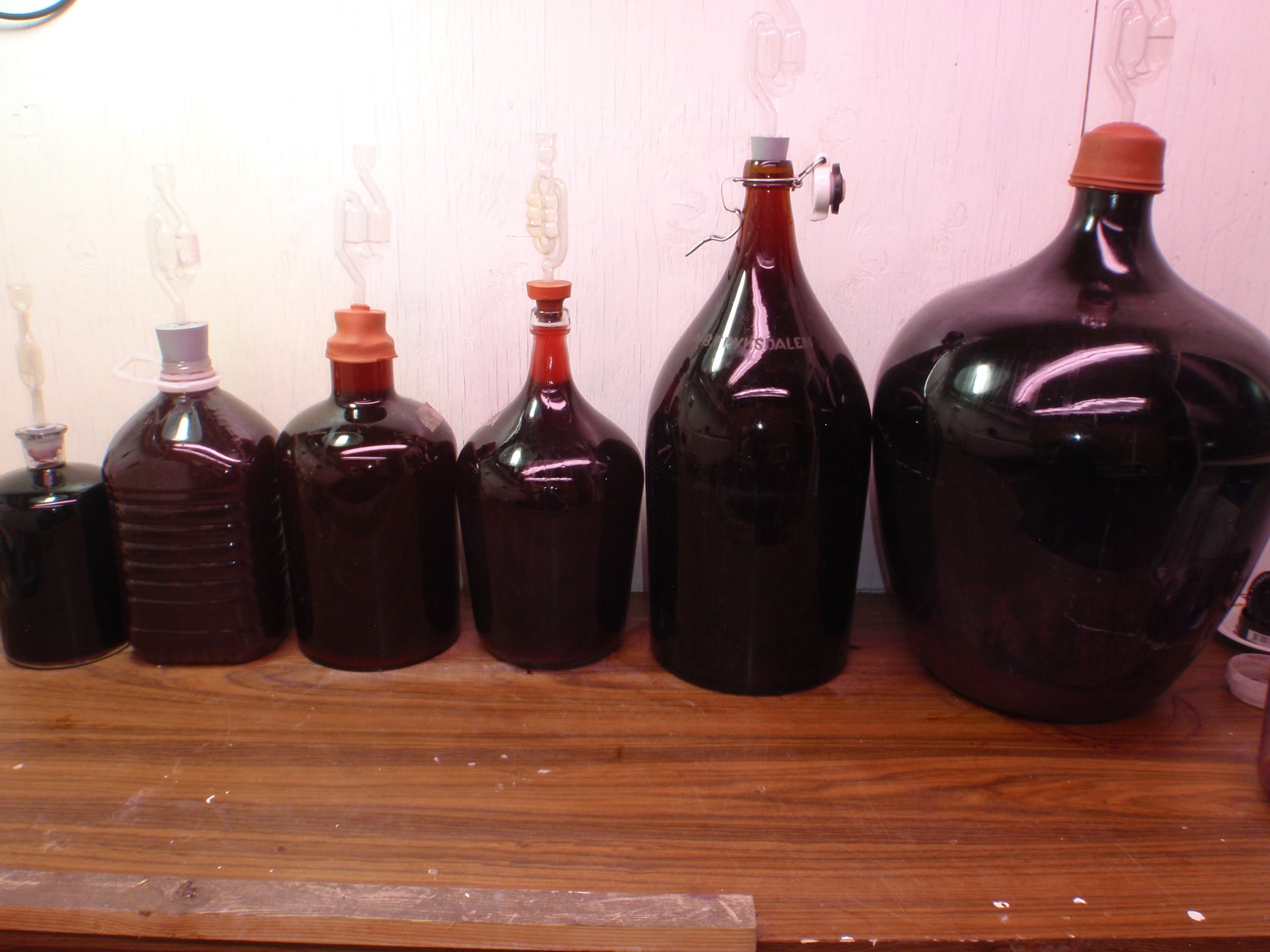
Photo: Knut Sætrevik
A total of about 80 kg of grapes was harvested.
Most of this was pressed into wine.
Then it was fermentation on the skins and further pressing.
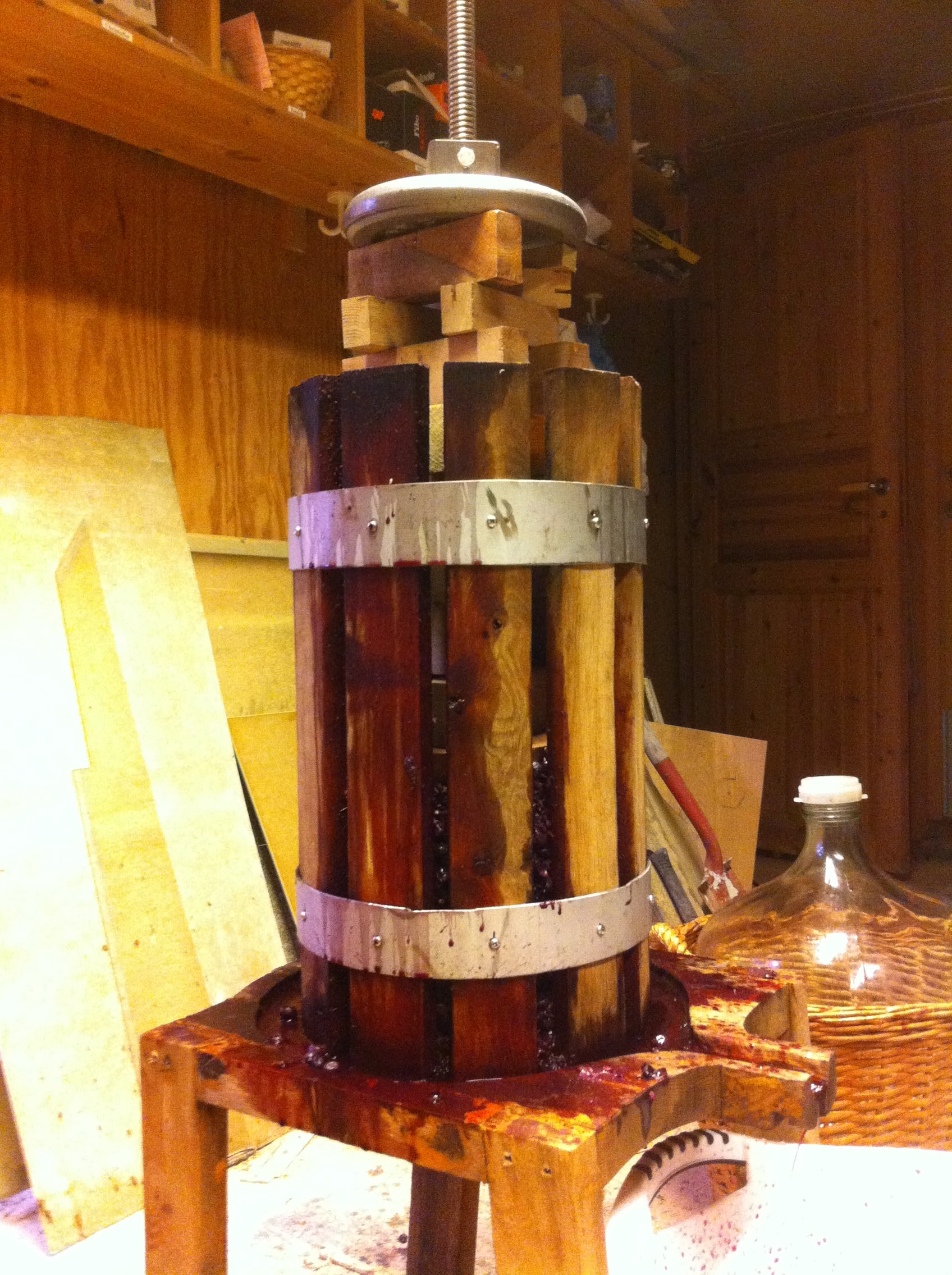
Photo: Knut Sætrevik
28 September
On 28 September the Rondo grapes were harvested.
They had then been attacked by stem necrosis, and then the stems between the grapes in the cluster rot and they
fall off. I was then going on a trip for 2 weeks and the loss would have been great.
Rondo is the most susceptible to this of the varieties I have. Here is some of it in the mill.
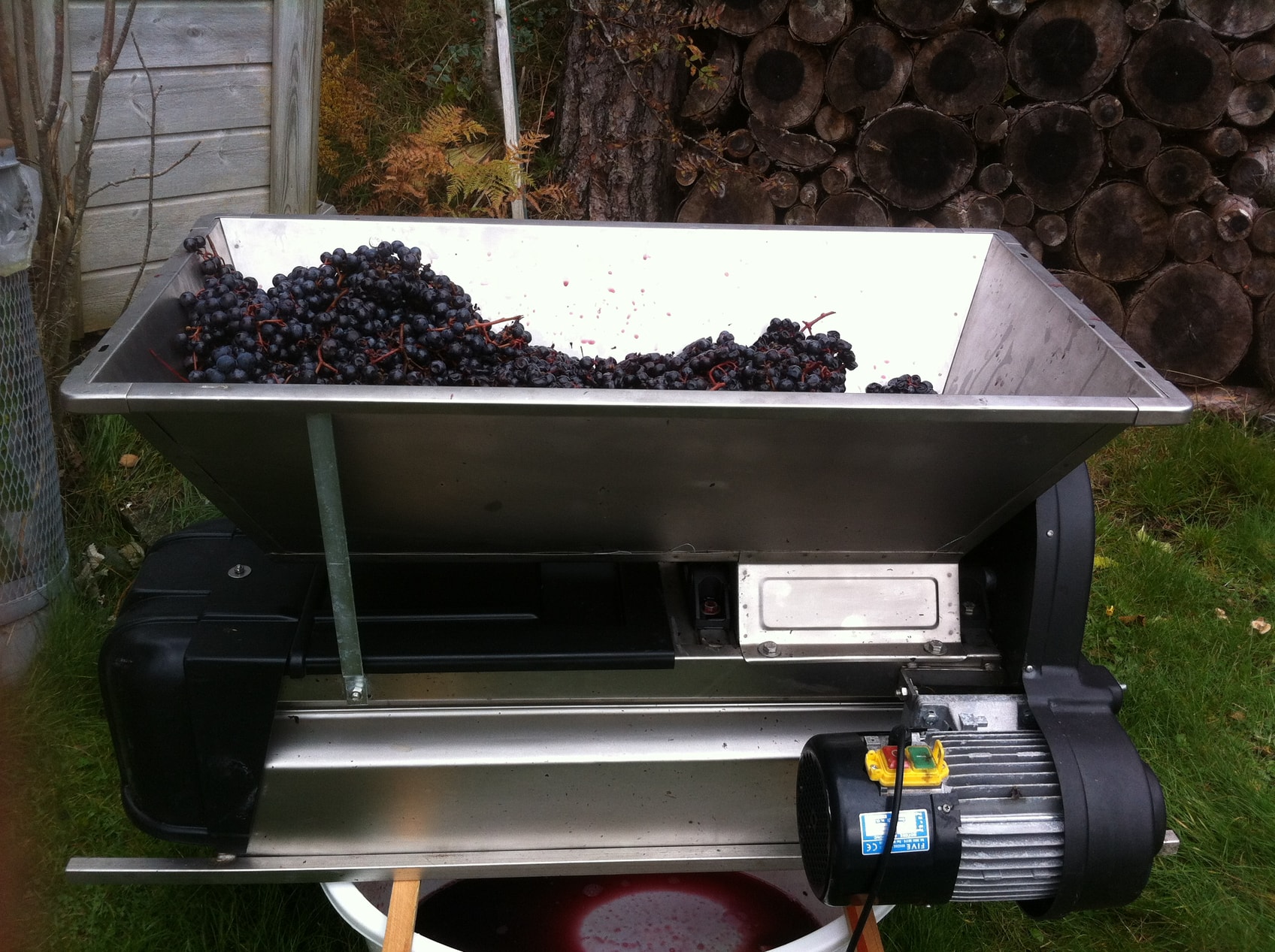
Photo: Knut Sætrevik
10 September
Lilac
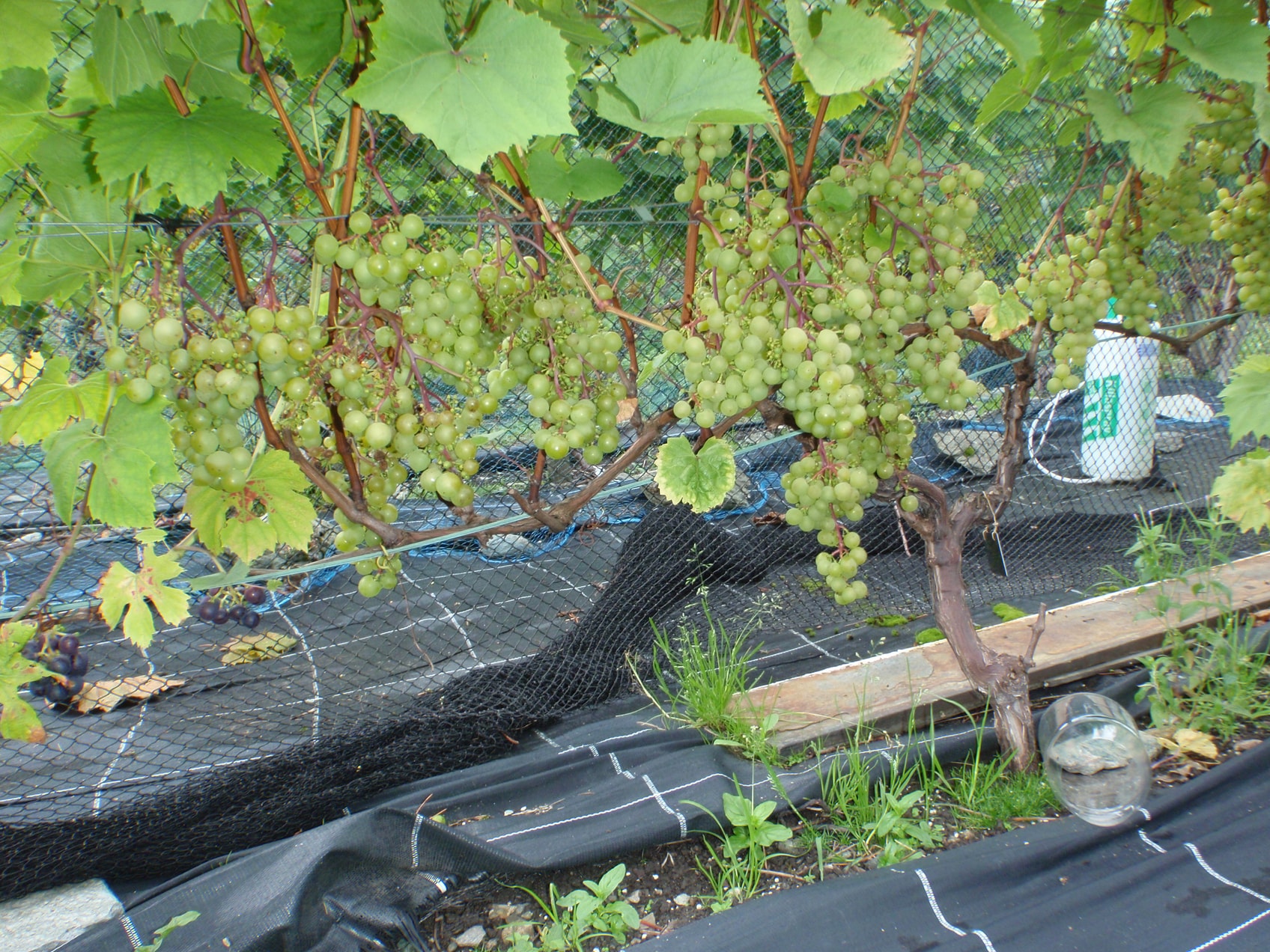
Photo: Knut Sætrevik
10 September
Rondo.
Notice small clusters higher up than the others.
It is cluster no. 3, which unfortunately should have been removed during the thinning work,
but which was passed over.
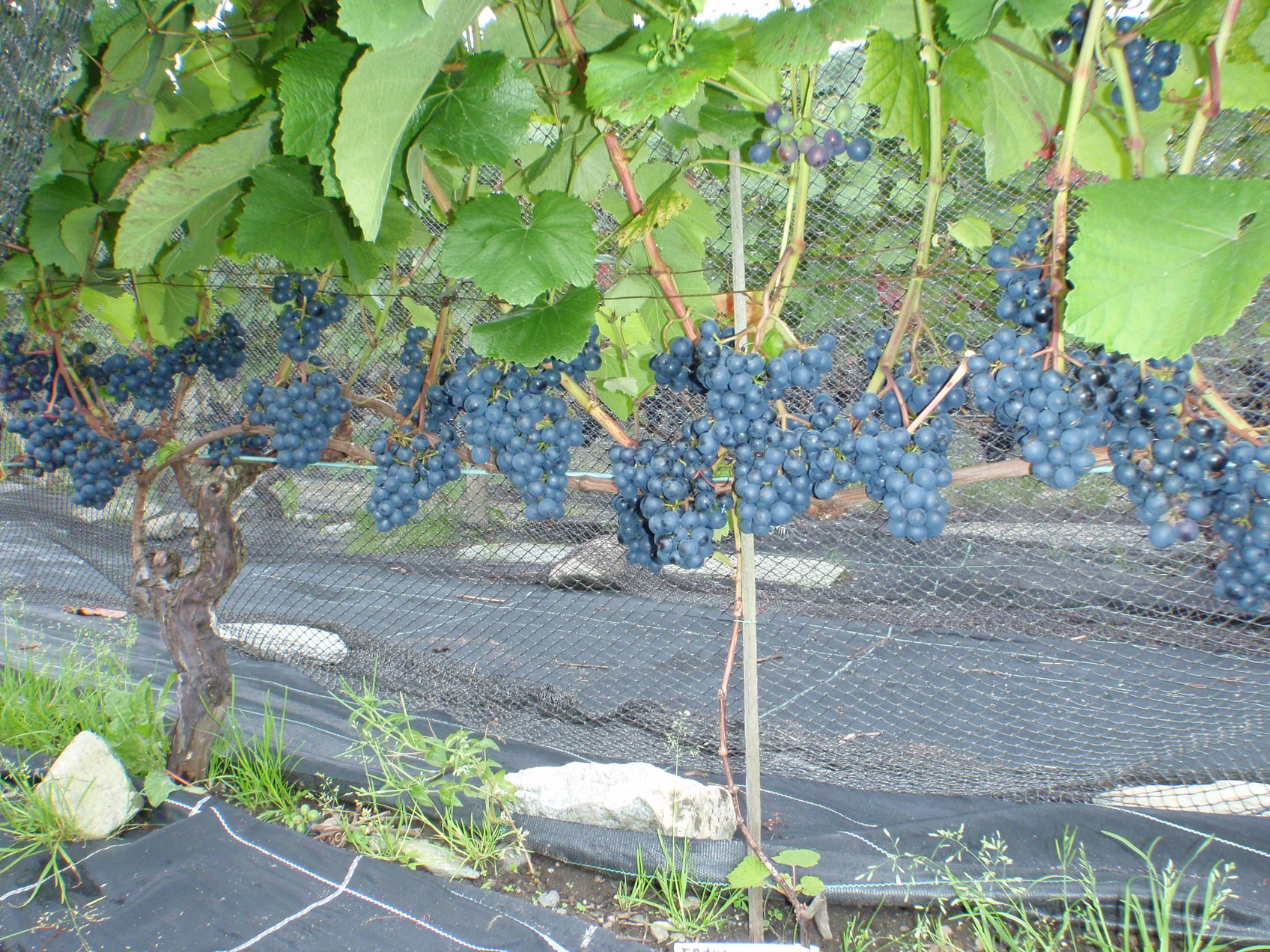
Photo: Knut Sætrevik
Negro at the end of August.
A good wine variety, but marginal in ripening here.
But in years like this year it goes well.
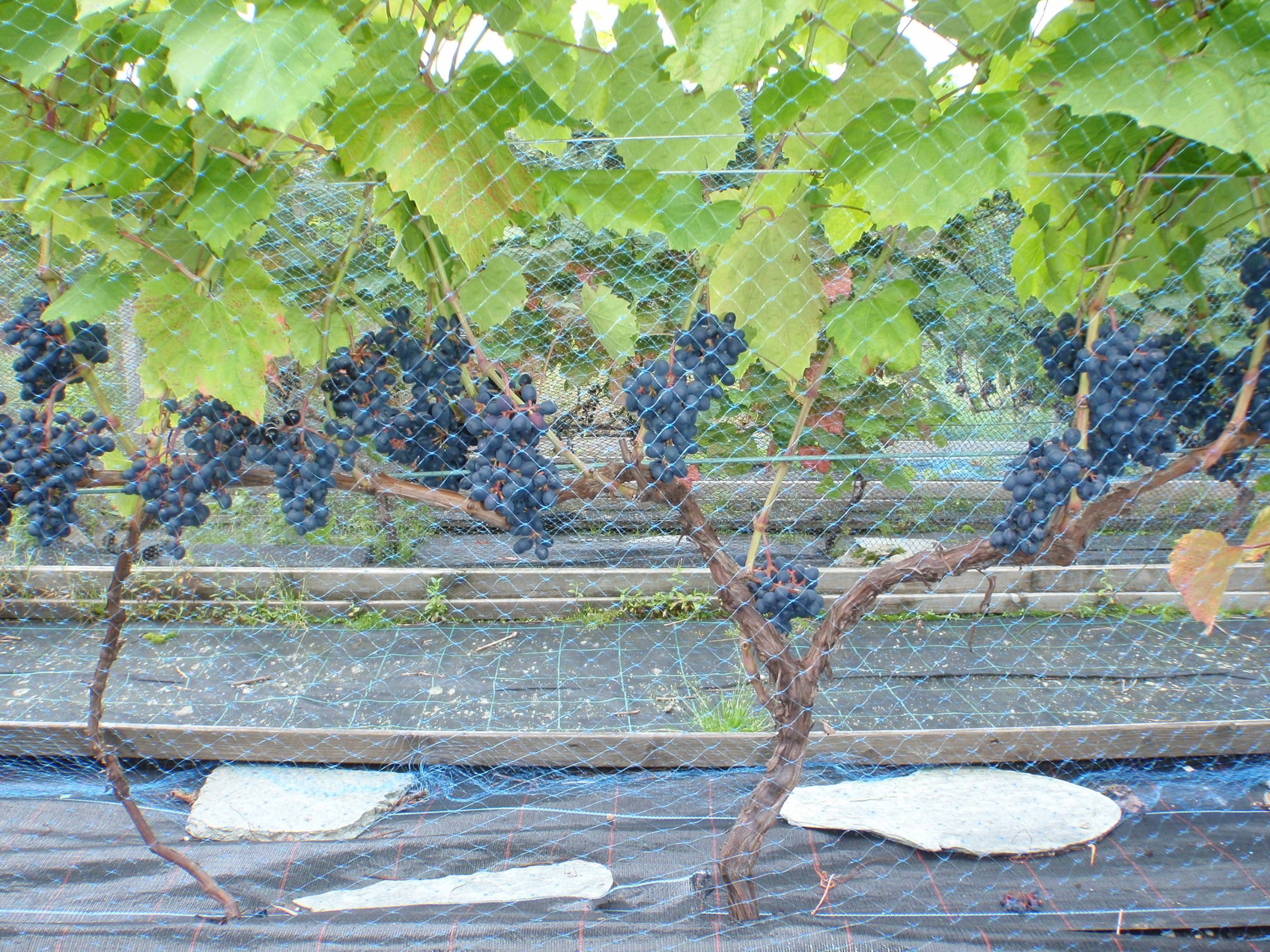
Photo: Knut Sætrevik
Julie is proud of the fine grape cluster we have harvested.
It came to 10 kg of grapes on this wall.
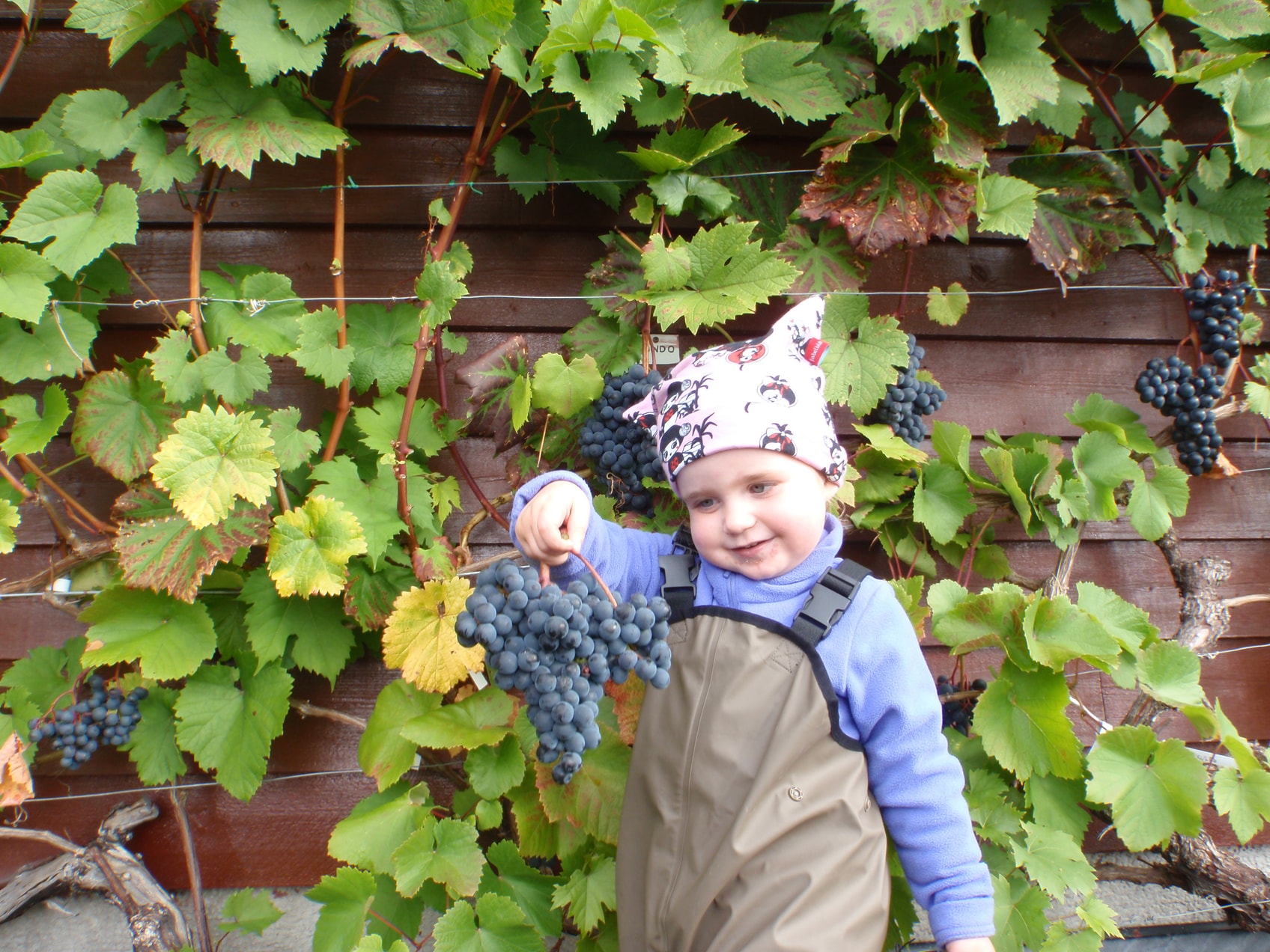
Photo: Knut Sætrevik
Don Muskat against the outbuilding wall.
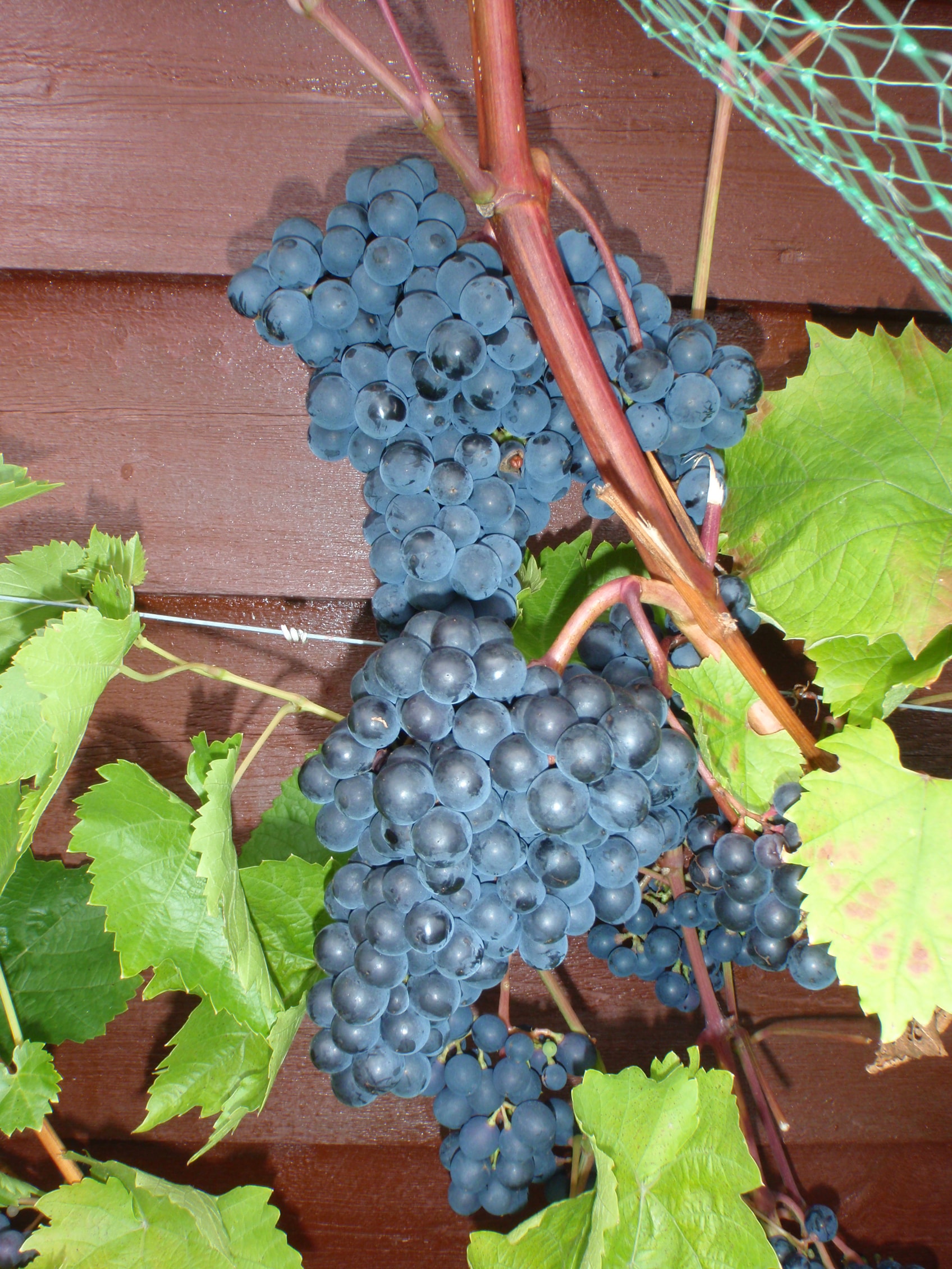
Photo: Knut Sætrevik
31 August
This is also one of my own crosses from 2002.
Blå Donau X Zilga. Still too small clusters to have
any cultivation value. The picture is from 31 August.
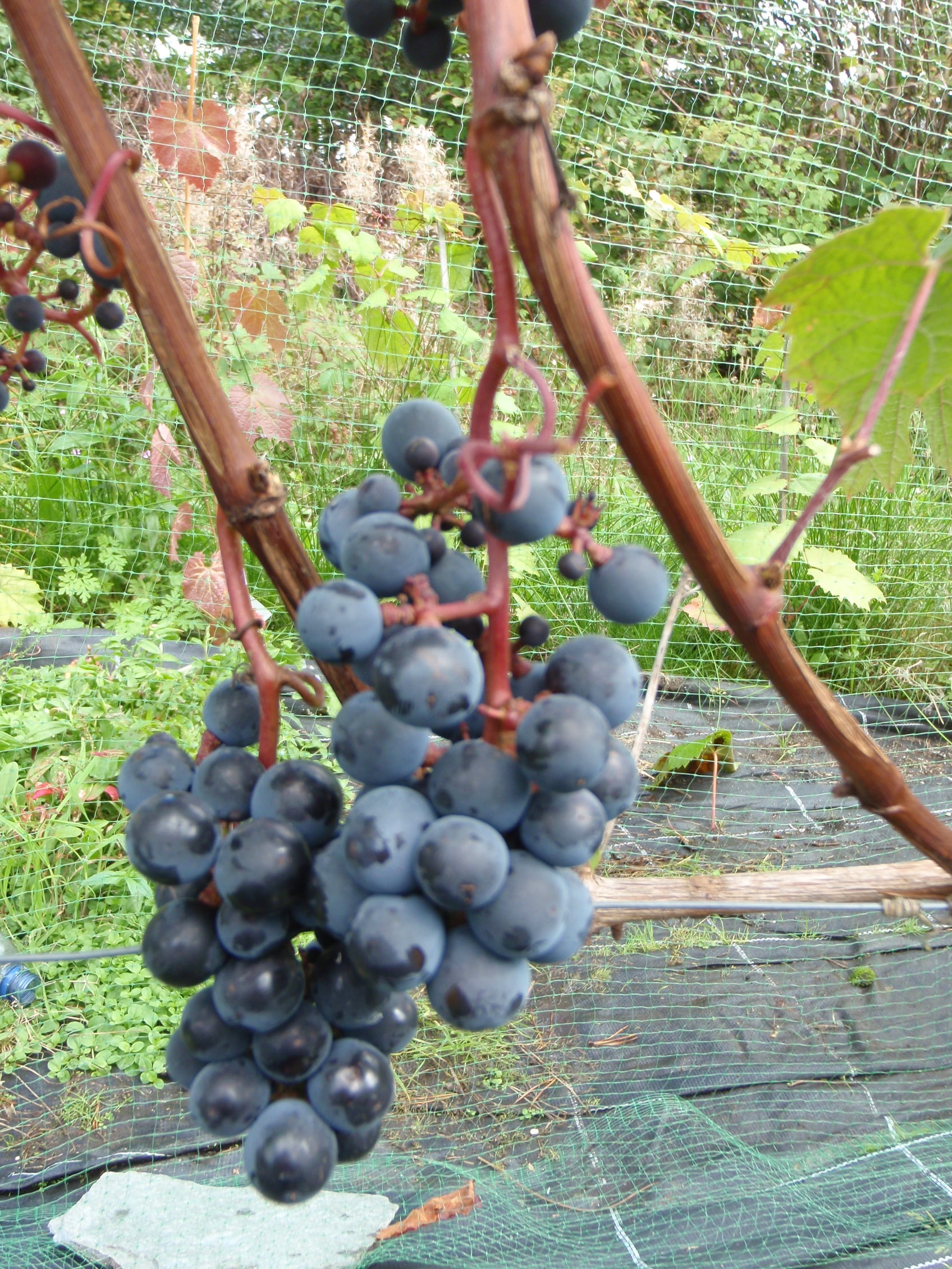
Photo: Knut Sætrevik
Hasansky is really a variety that suits our latitudes.
On 20 August it is fully coloured this year.
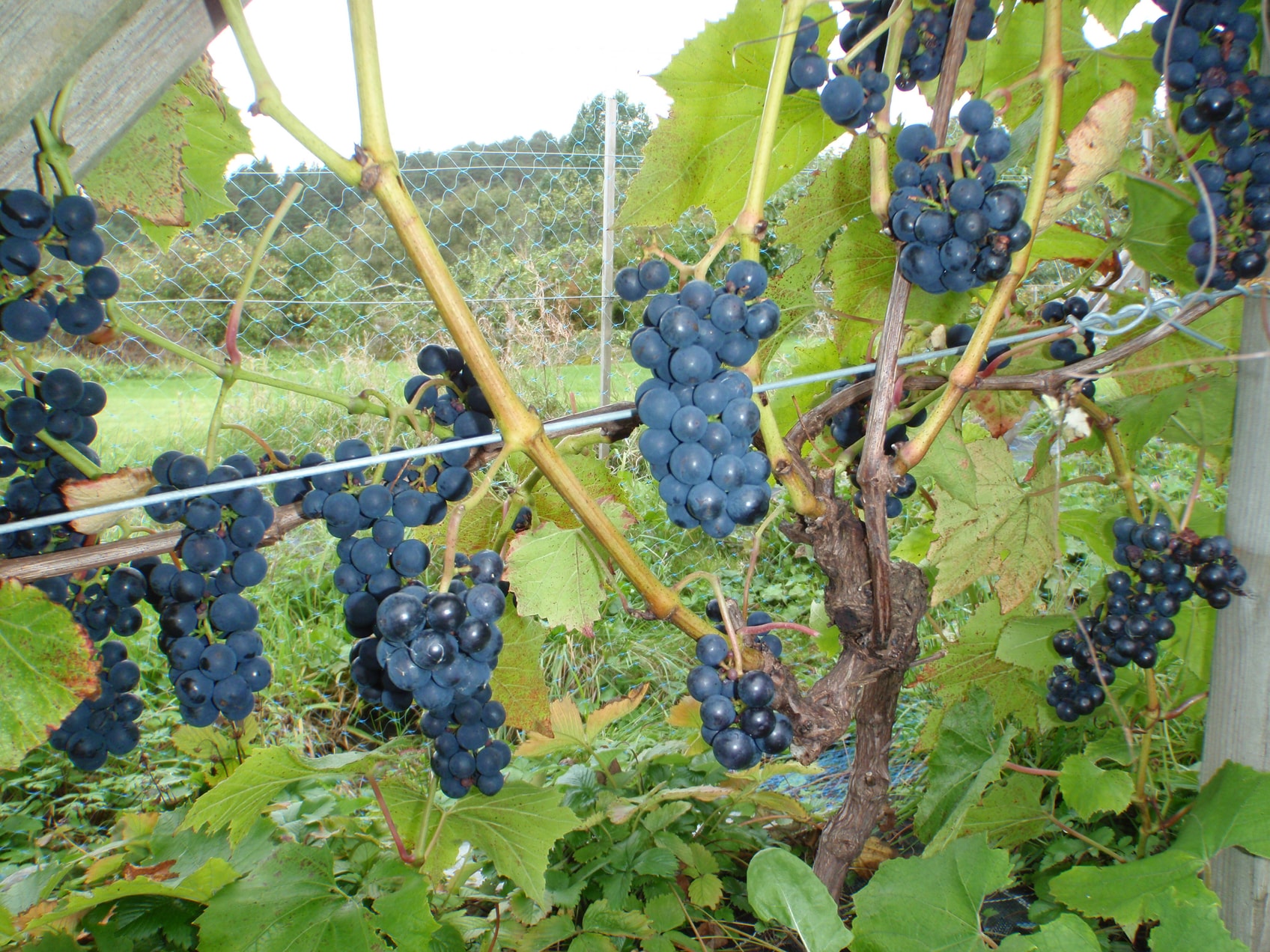
Photo: Knut Sætrevik
Varduva.
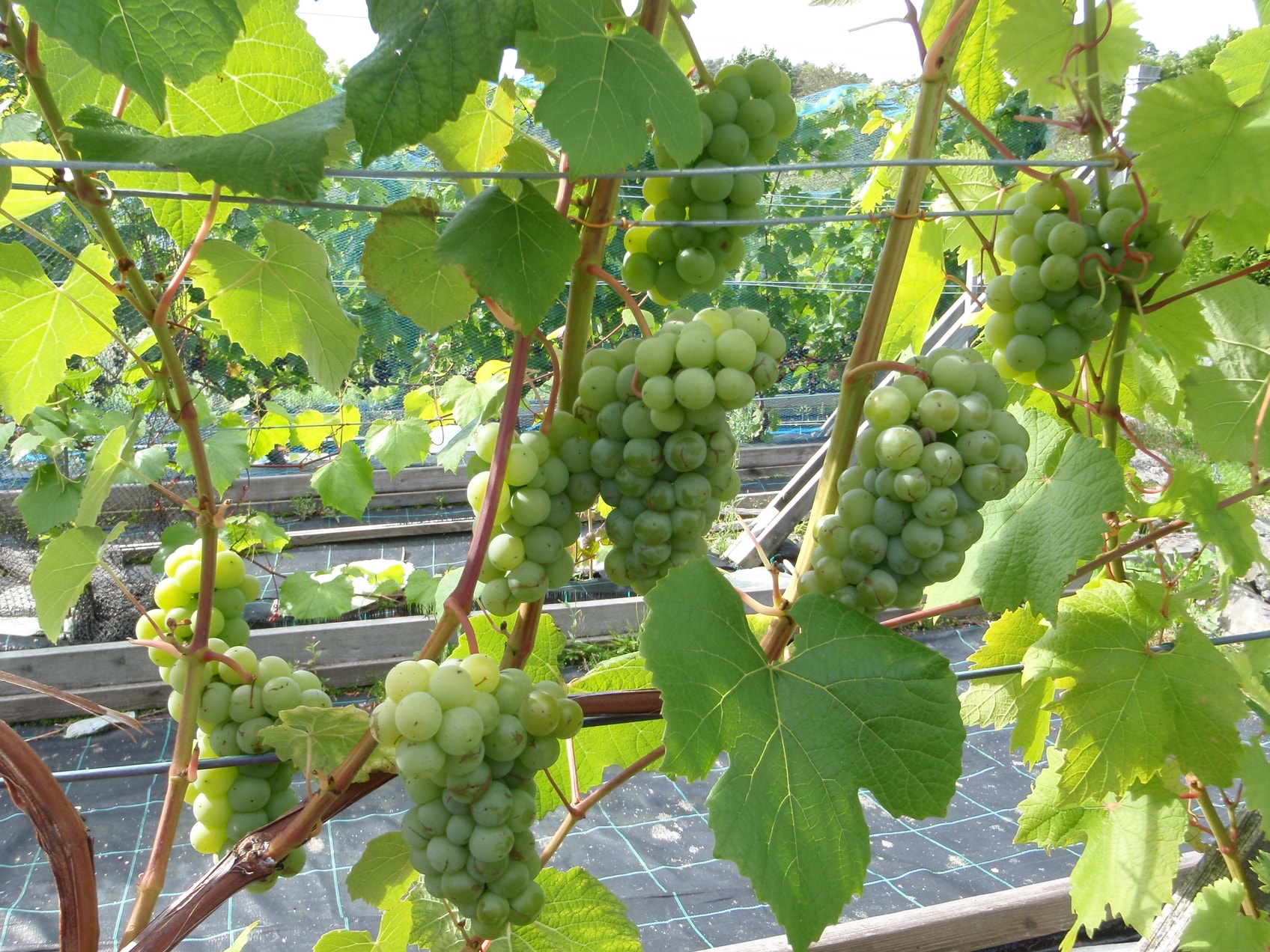
Photo: Knut Sætrevik
Nearest Smugleanka, then Rondo.
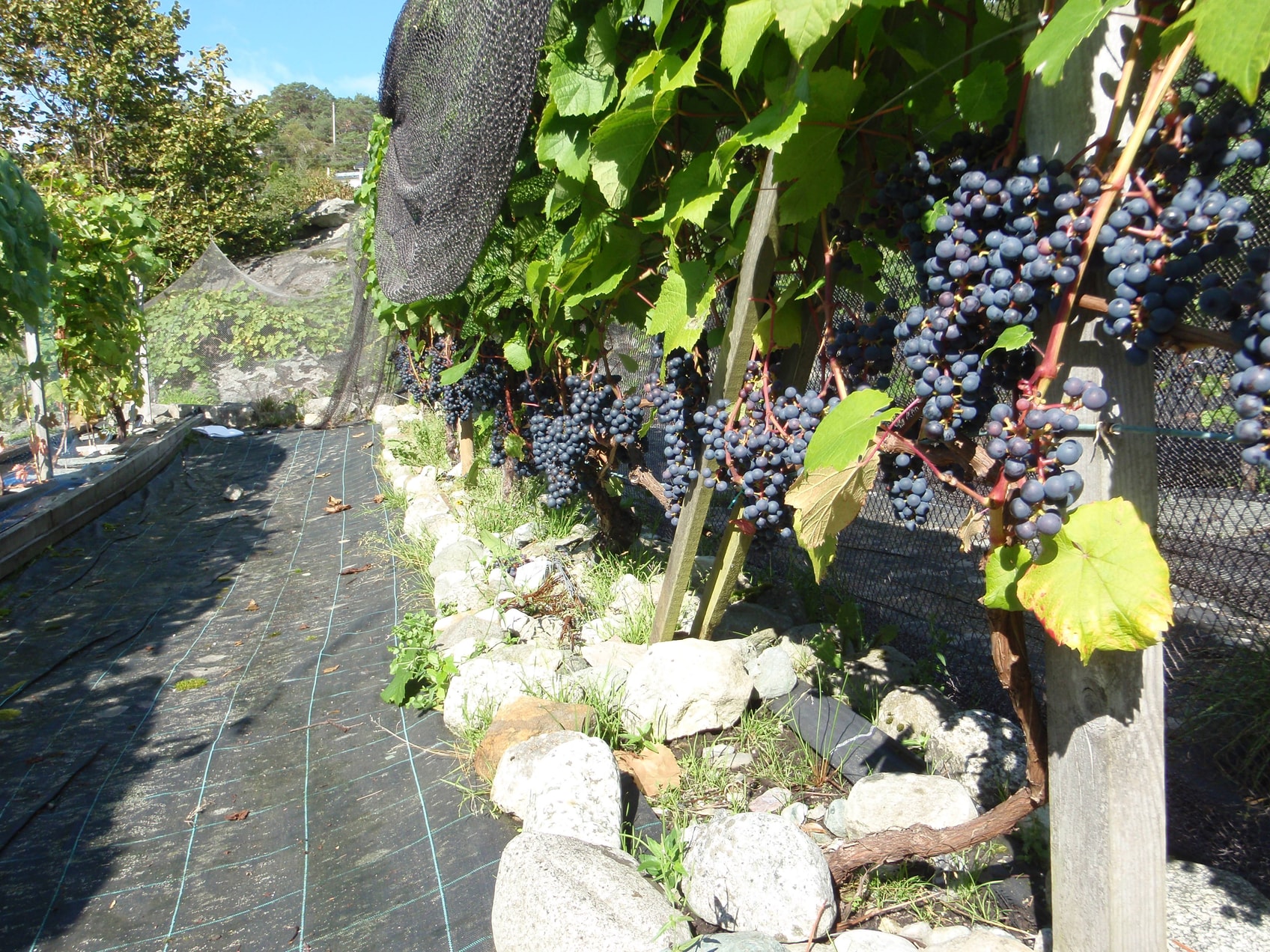
Photo: Knut Sætrevik
Rondo after the last cluster thinning
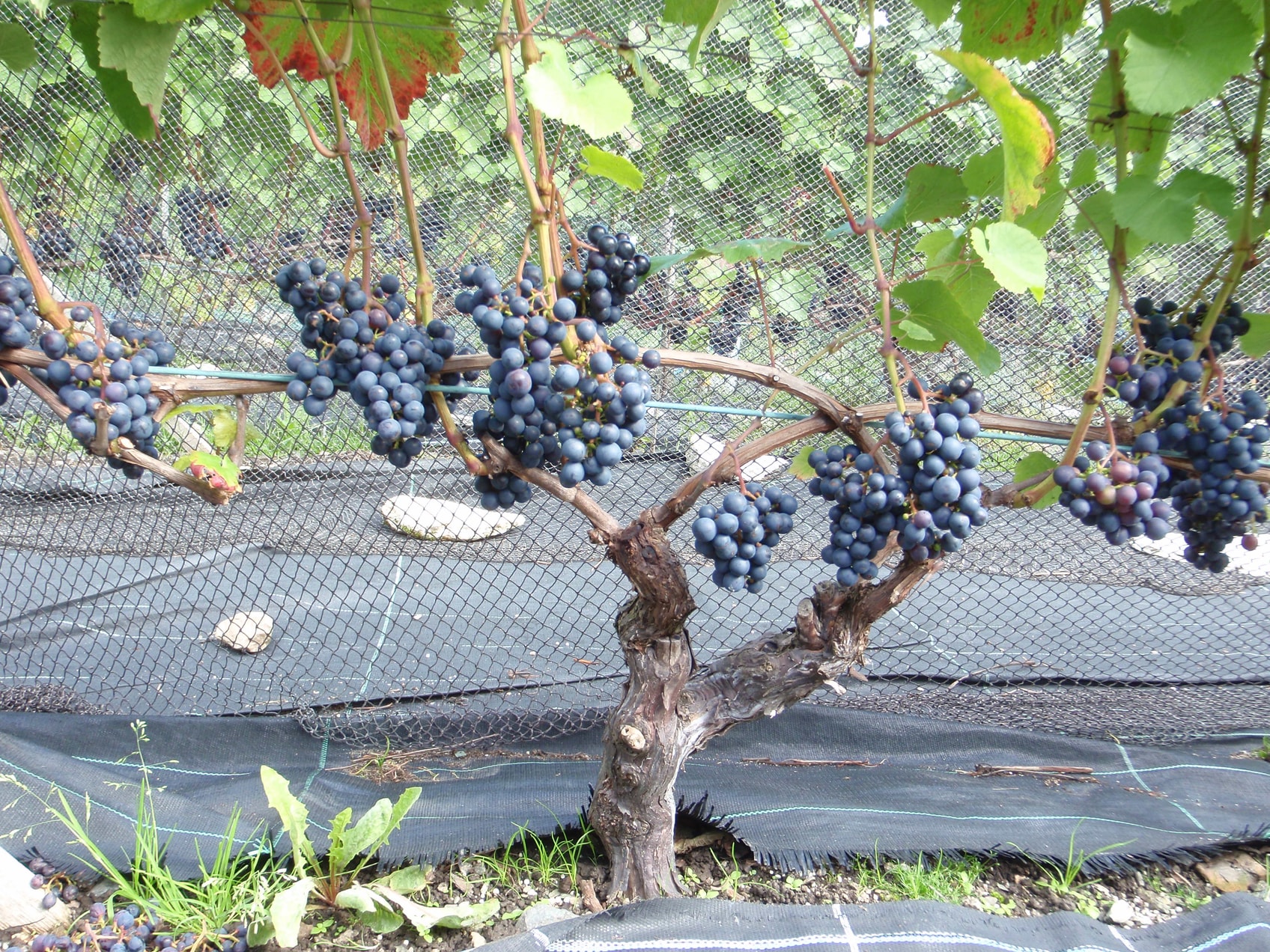
Photo: Knut Sætrevik
11 August
Hasansky is almost completely blue on 11 August.
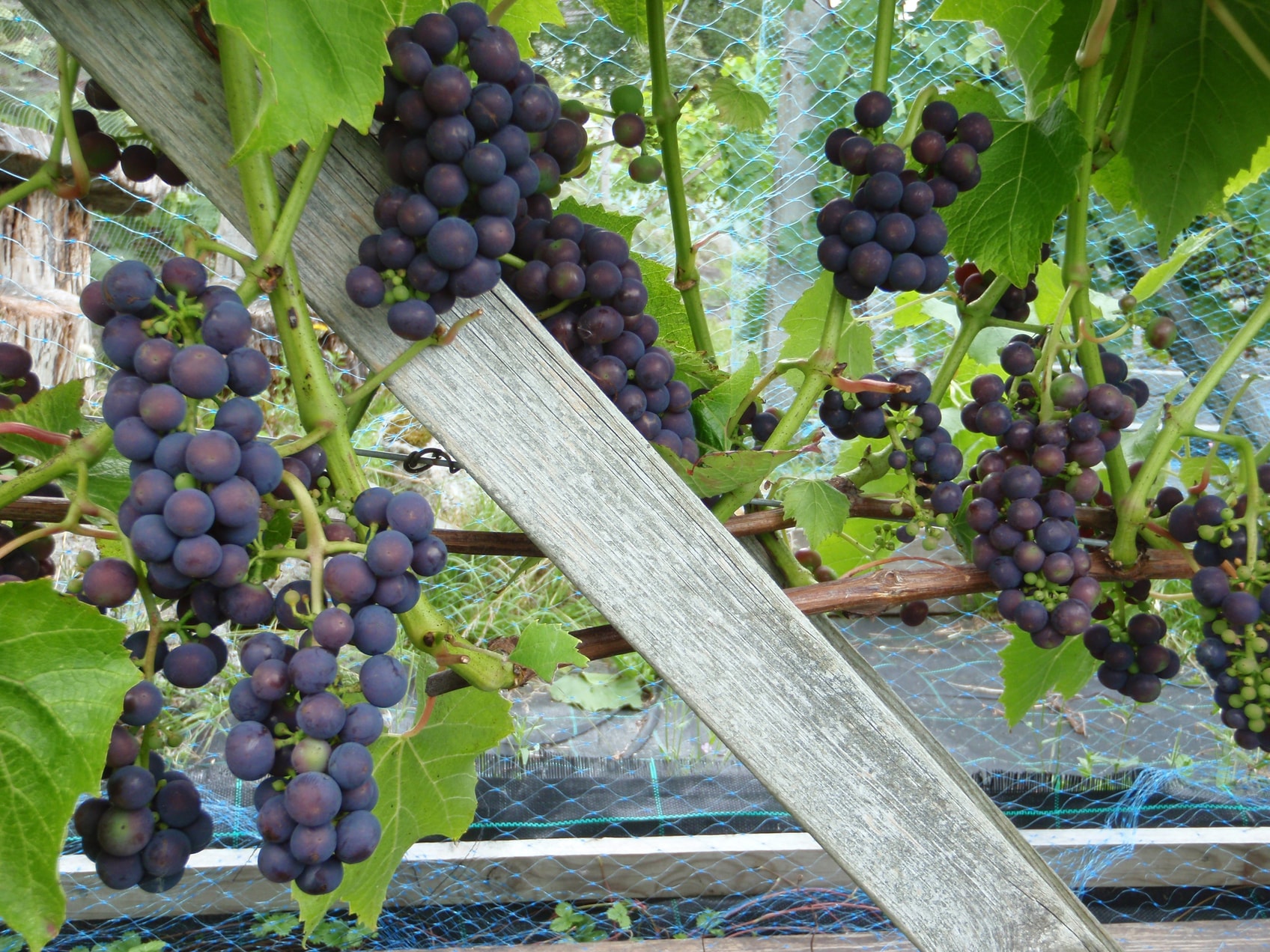
Photo: Knut Sætrevik
Hasansky is among the first to change colour.
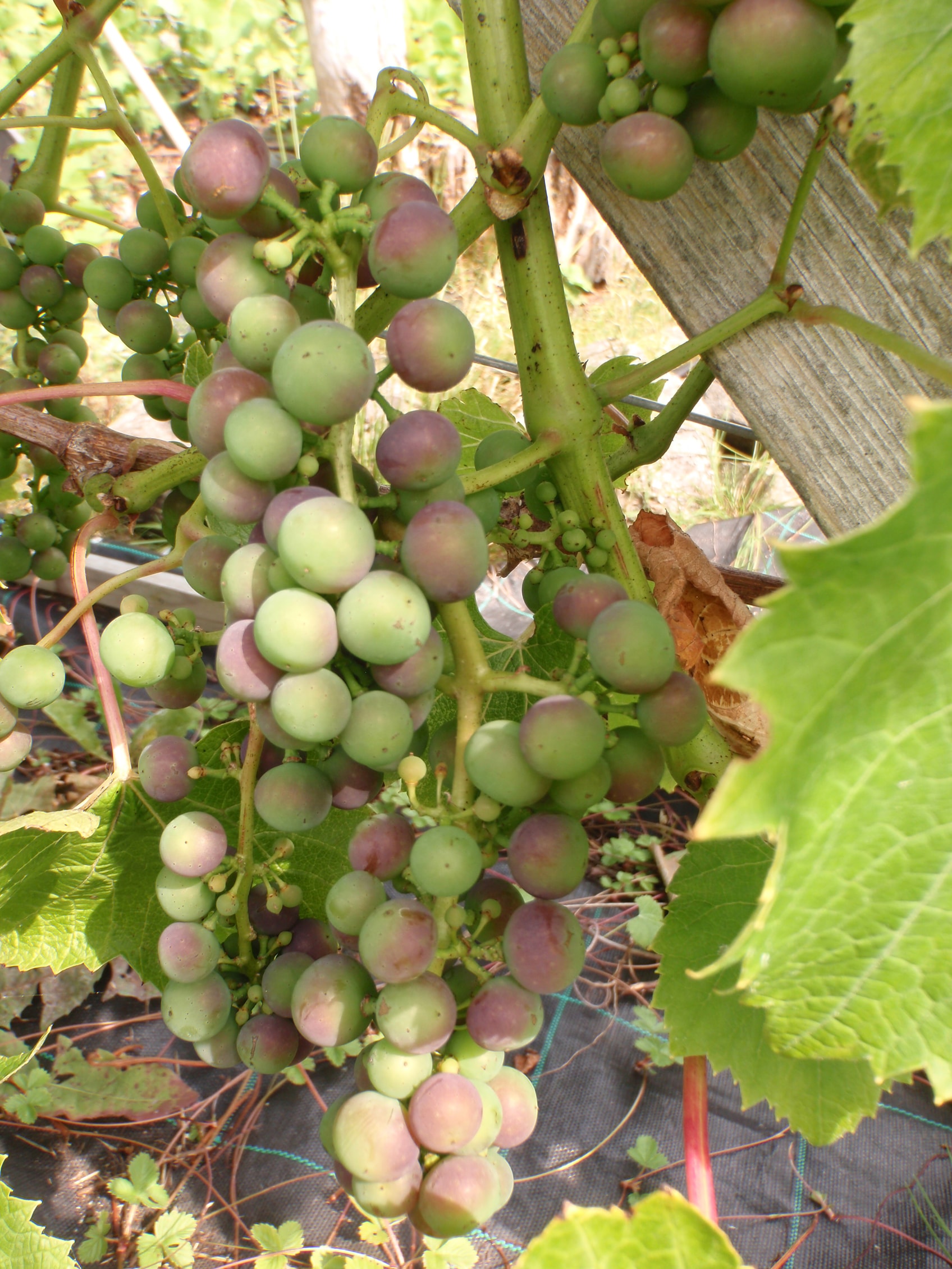
Photo: Knut Sætrevik
Own cross Michurinetz x Zilga.
Crossed in 2002.
It stands partly against the rock, so that it finishes the colour change early.
This one will be tested for wine in a few years.
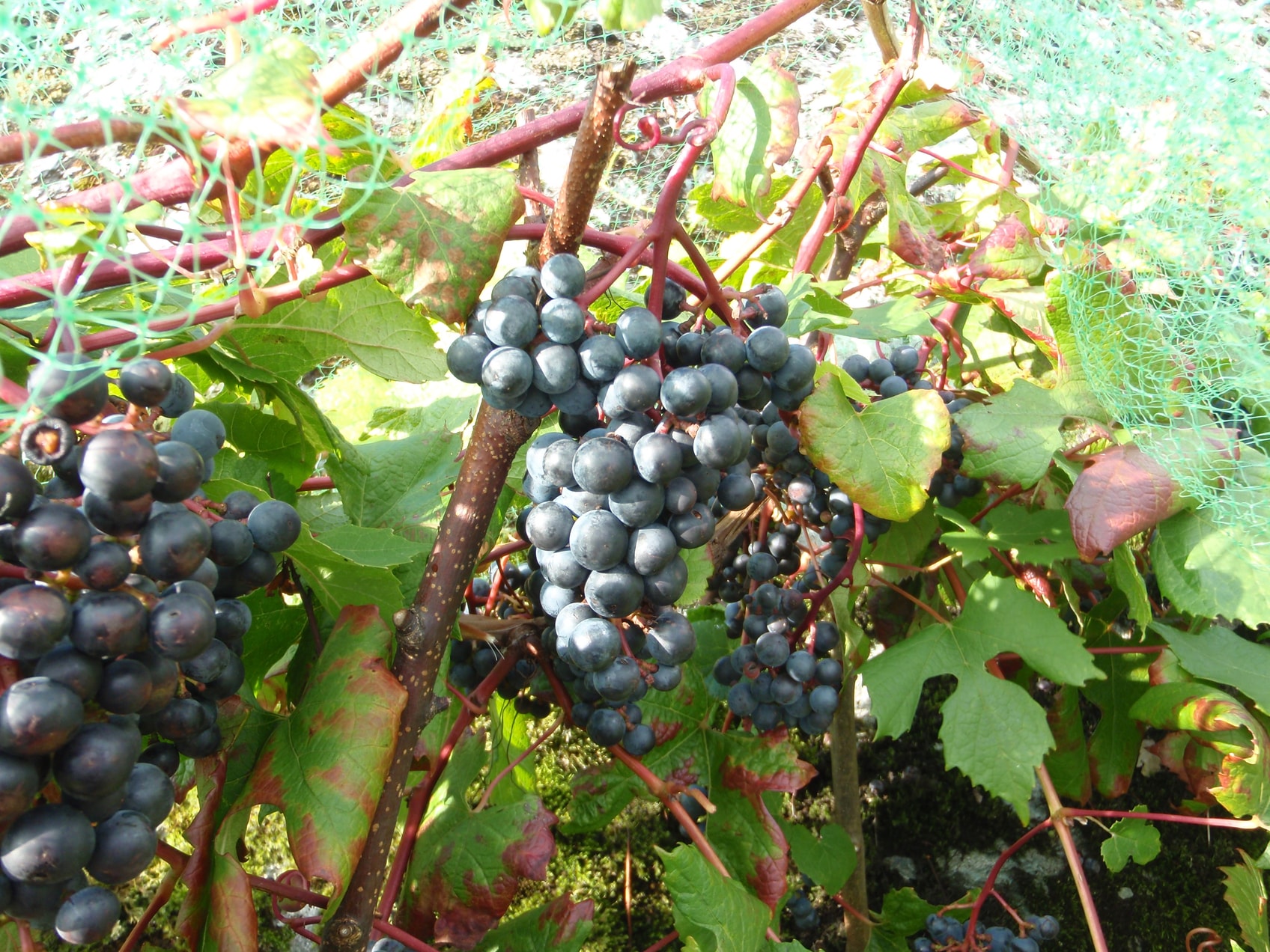
Photo: Knut Sætrevik
At the beginning of August the grapes have reached a good size.
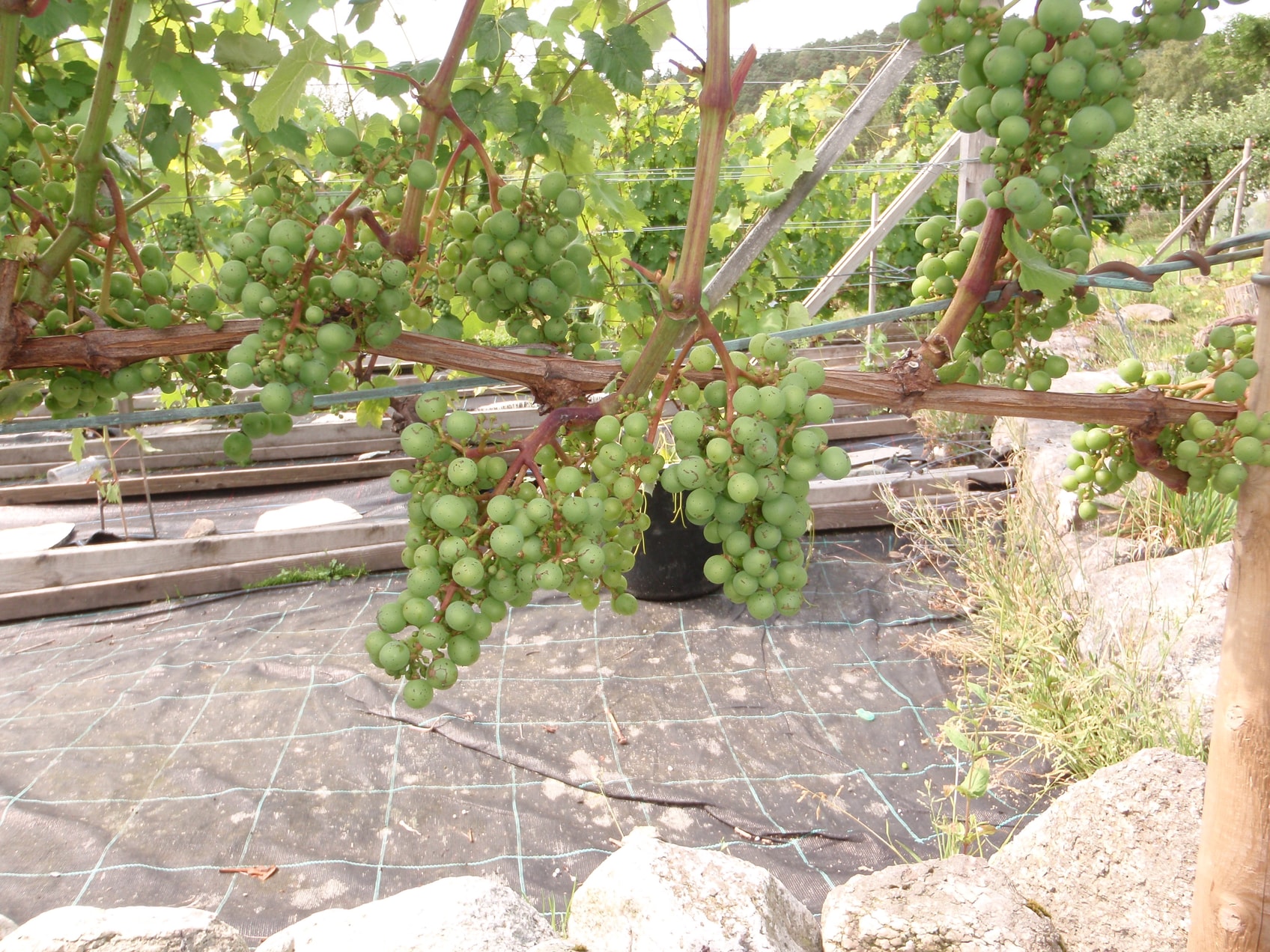
Photo: Knut Sætrevik
31 July
On 31 July some Zilga grapes were so sweet that the wasp
began to help itself to the flesh.
This is going to be troublesome this year for the
grape plants that stand against rock and wall.
It has so far been a really fine spring and summer,
with a whole week above 30 degrees in July.
Even so, heavy thunder showers came some afternoons,
so that pollination for many varieties is not quite at its best.
But there are in any case so many grapes that some clusters,
and shoulder clusters must be removed to get good ripening for wine.
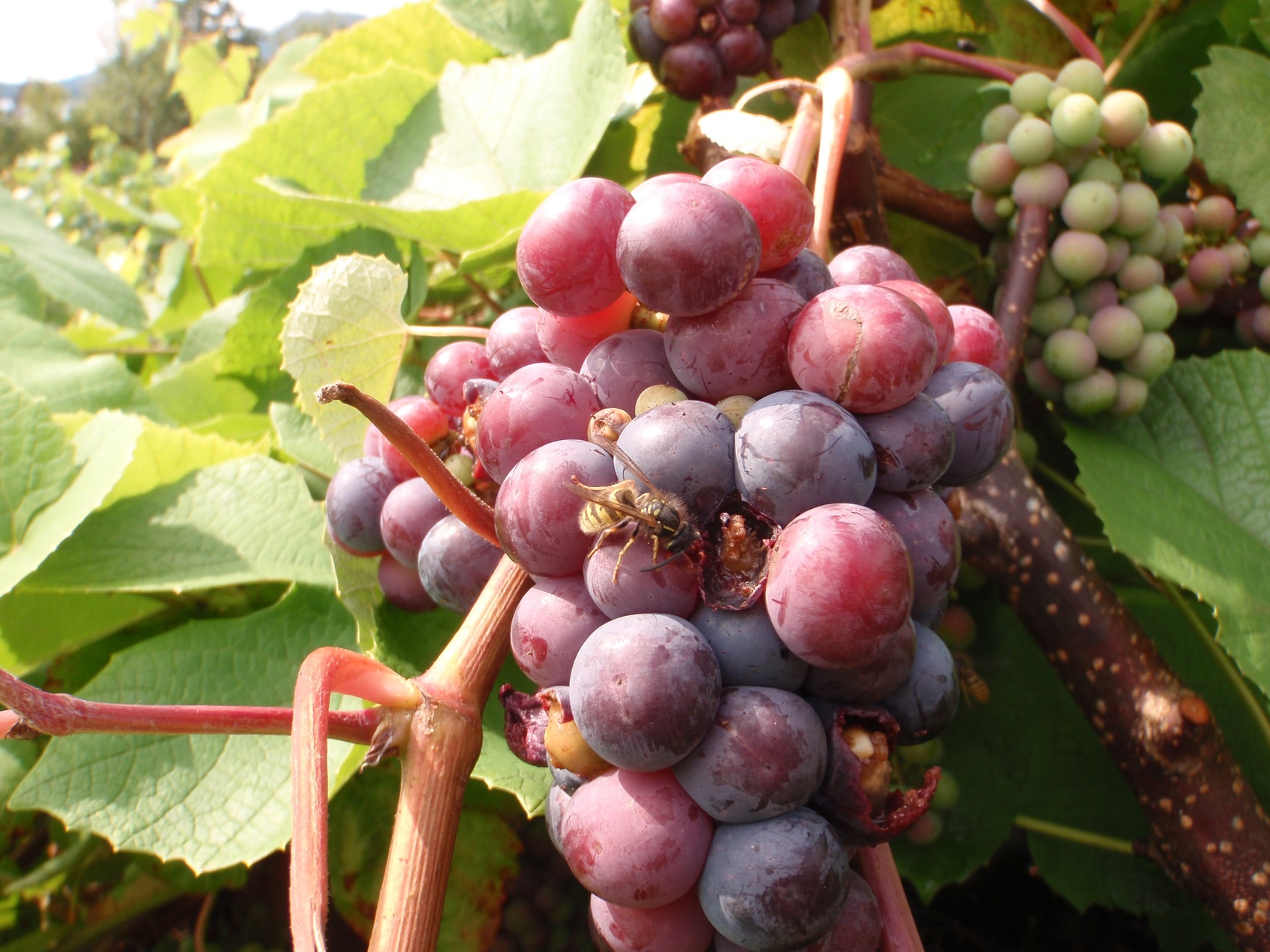
Photo: Knut Sætrevik
24 July
On 24 July we thinned shoots and clusters, and also removed leaves
in the fruit zone so that the sun could get in.
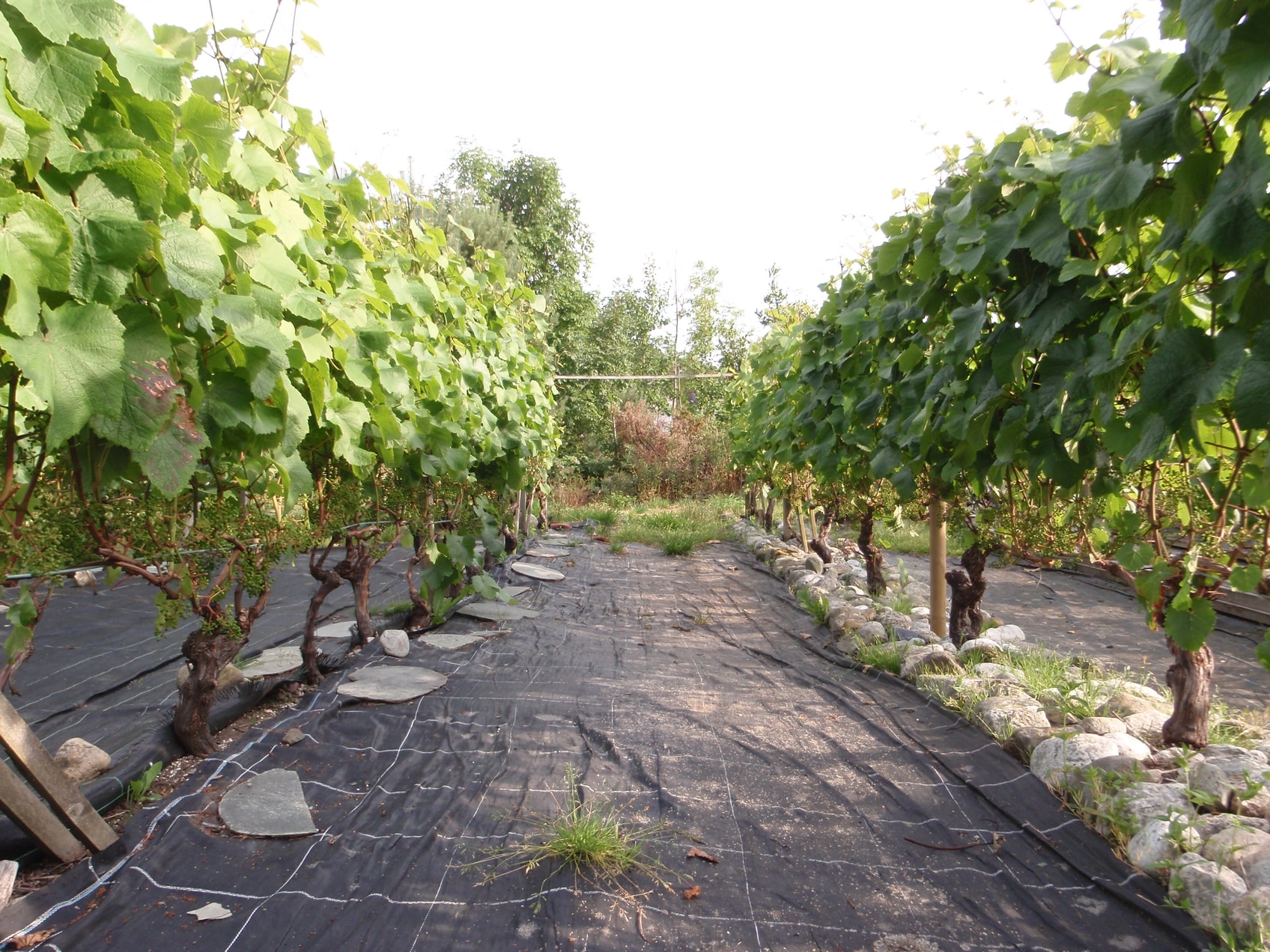
Photo: Knut Sætrevik
This year Smugleanka has flowered in fine and warm weather,
so that there has been a good fruit set on this variety, which
has only female flowers.
No pollen of its own.
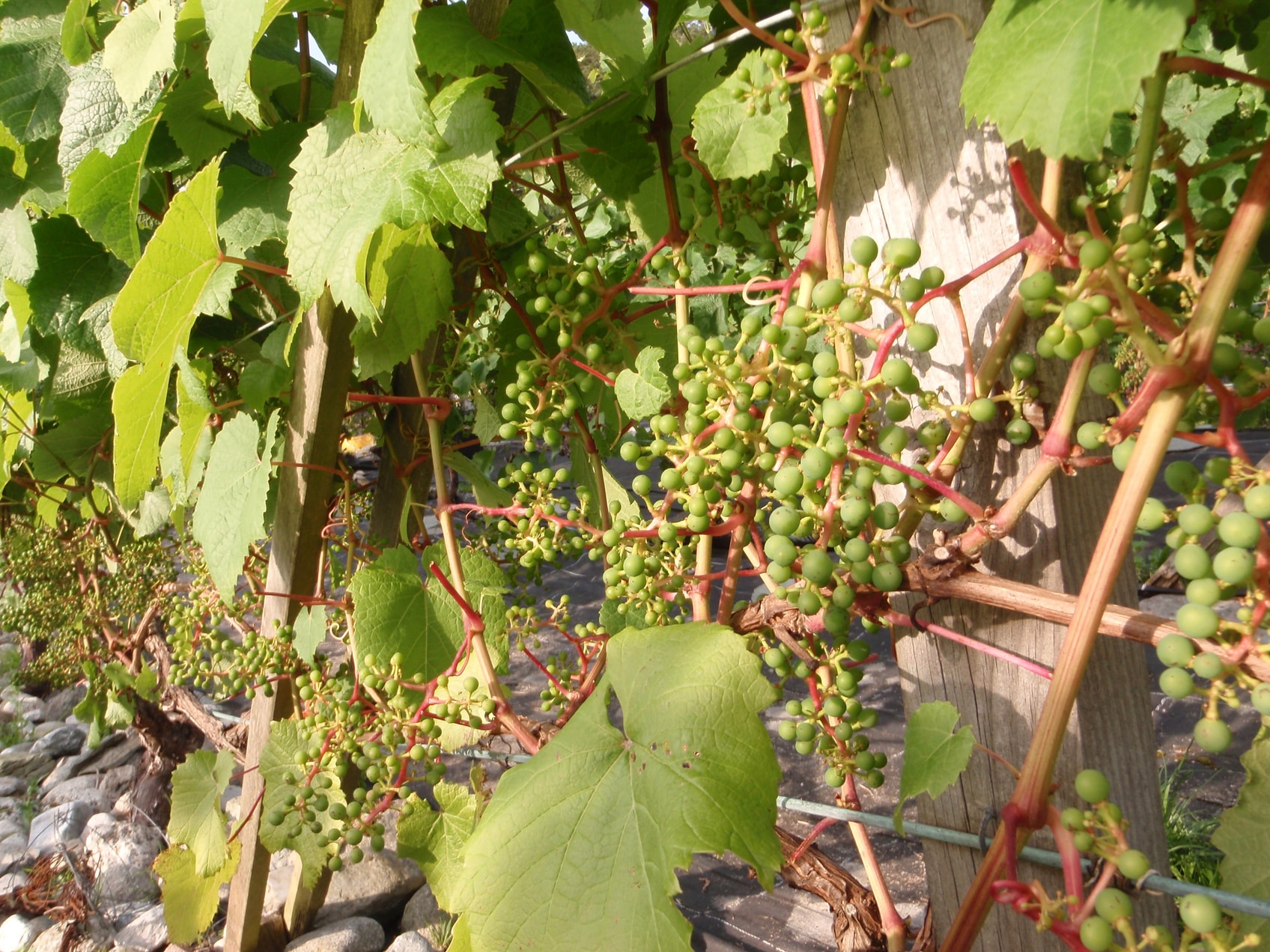
Photo: Knut Sætrevik
21 July
On 21 July Zilga against the rock is in “veraison” (colour change)
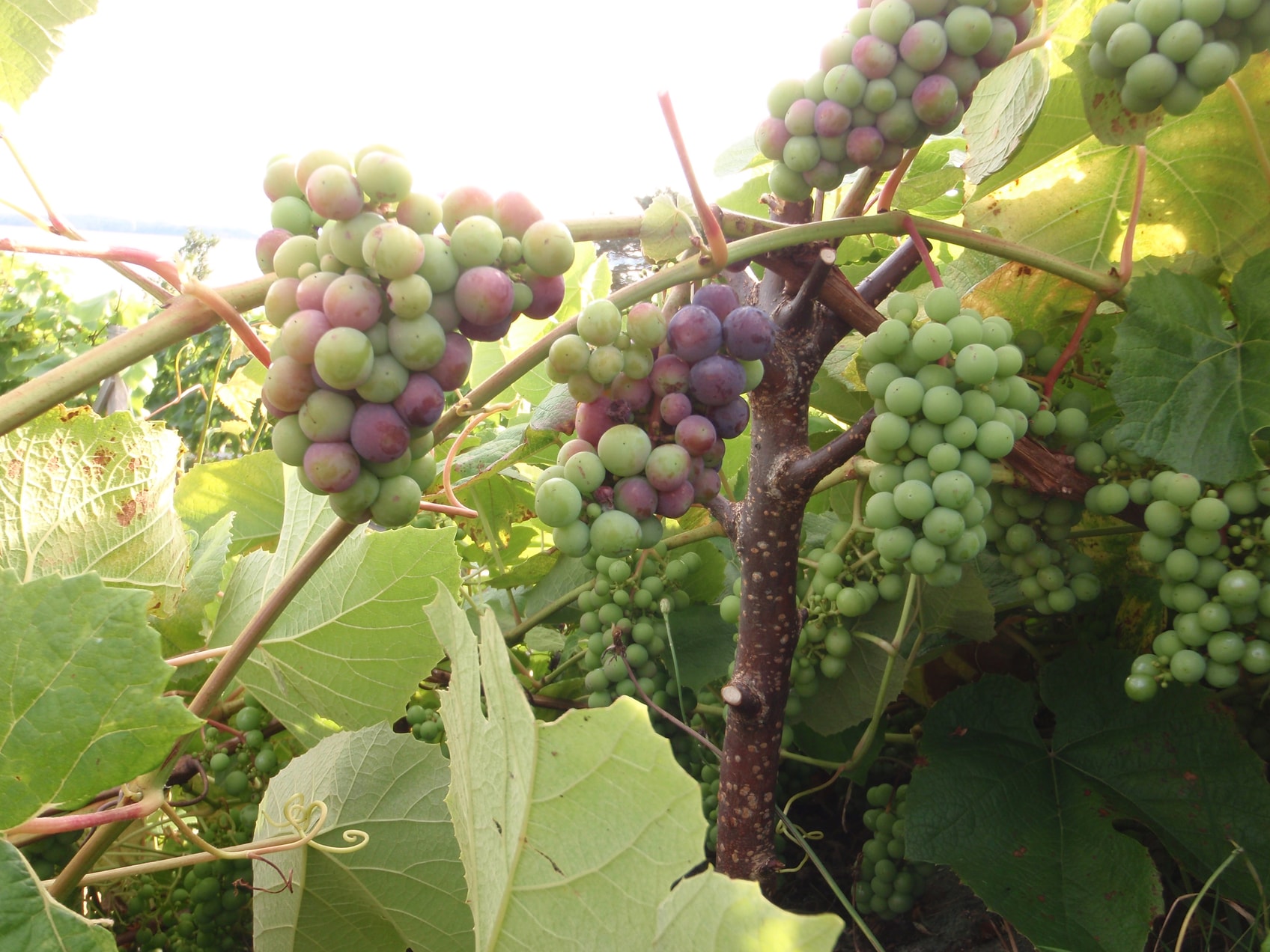
Photo: Knut Sætrevik
10 July
On 10 July Negro has turned blue in the greenhouse.
Then it takes about 5 weeks before these clusters are ripe
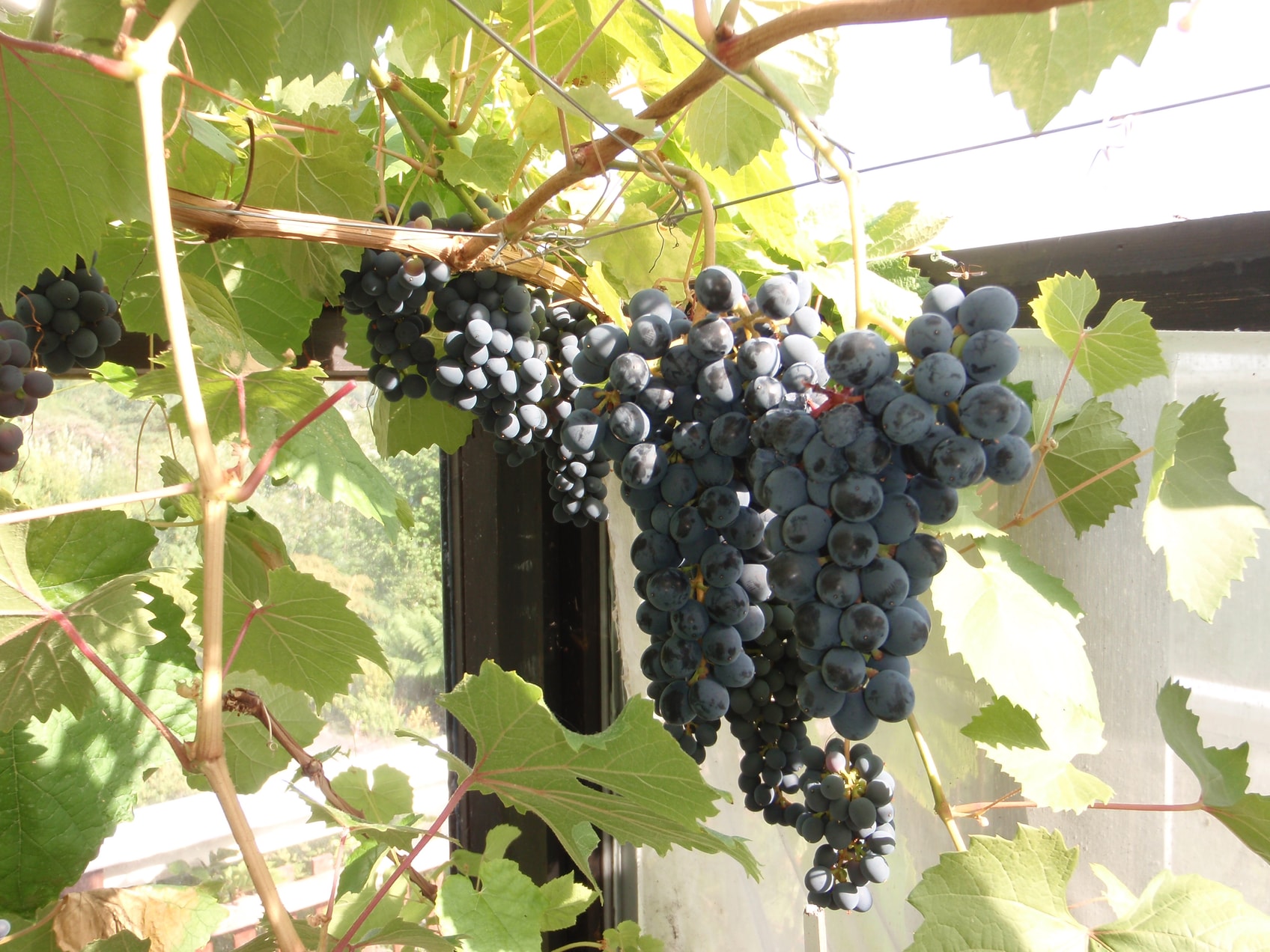
Photo: Knut Sætrevik
The bumblebee was diligent this year, but it is a bit heavy and greedy,
so that it kicks off the stamens.
The wind gives the best pollination for wine grapes, without a doubt.
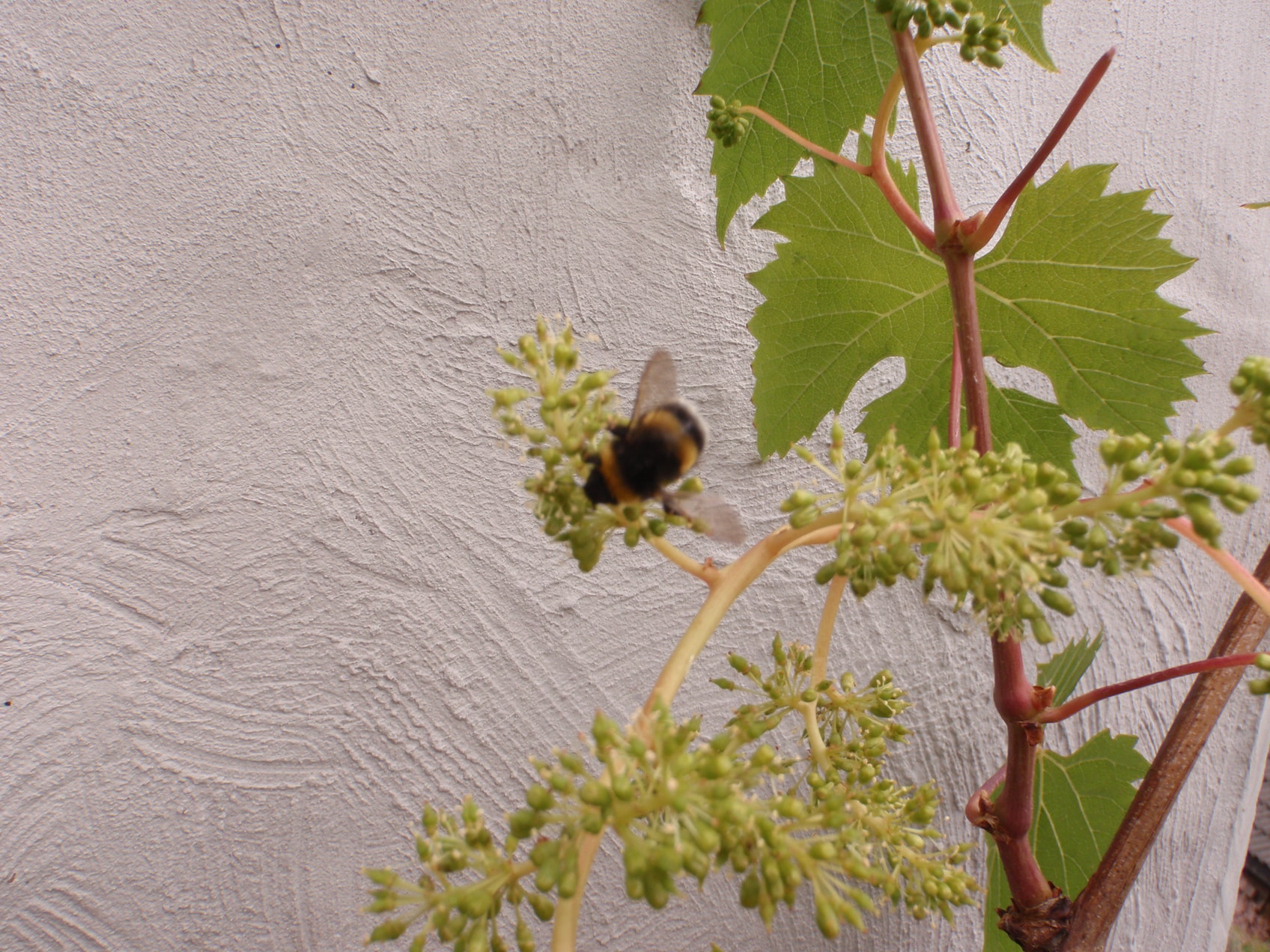
Photo: Knut Sætrevik
4 June
On the outside of the greenhouse wall a cluster of Negro is in flower on 4 June.
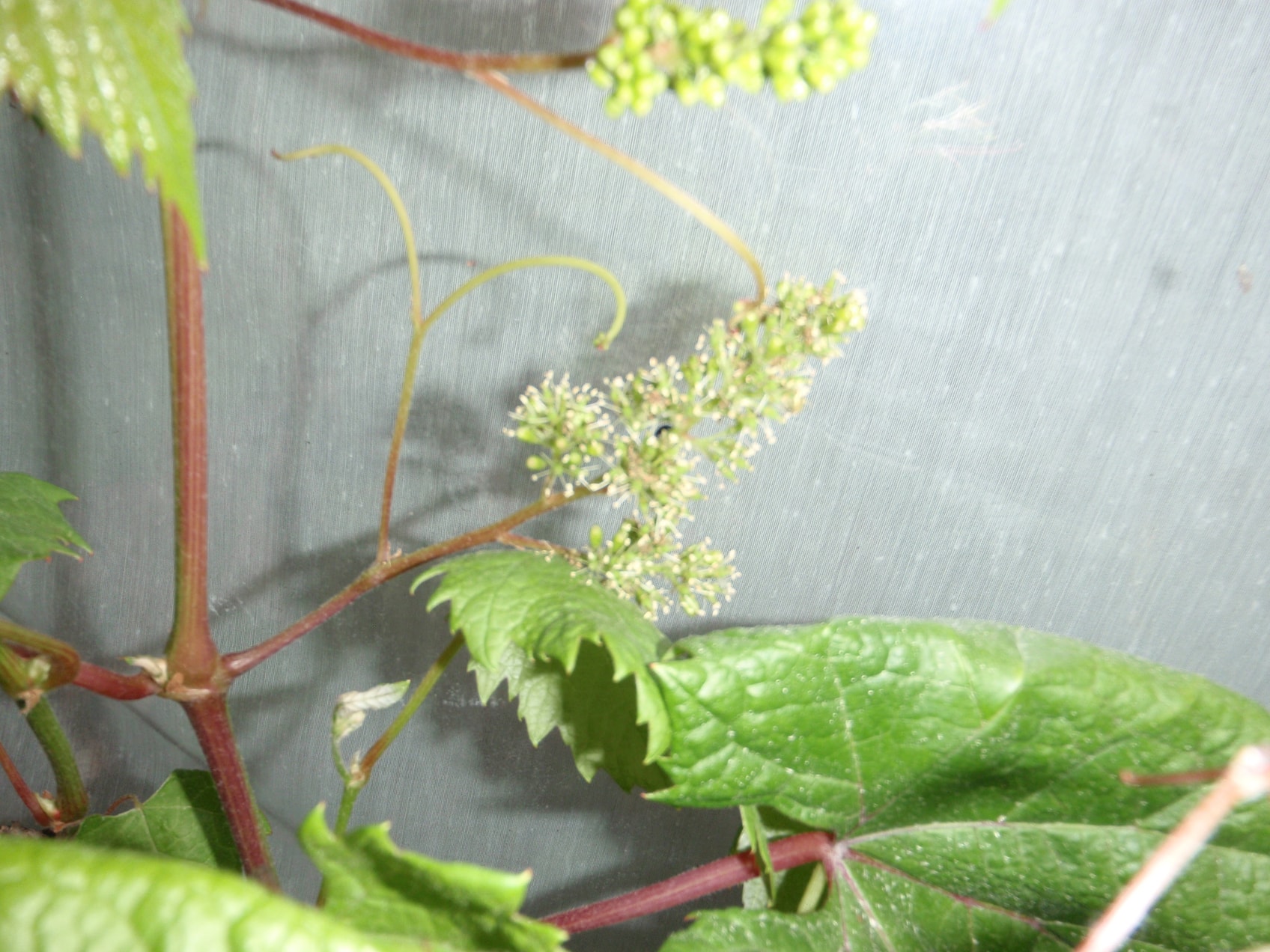
Photo: Knut Sætrevik
29 May
In the greenhouse Blå Donau has set grape clusters on 29 May.
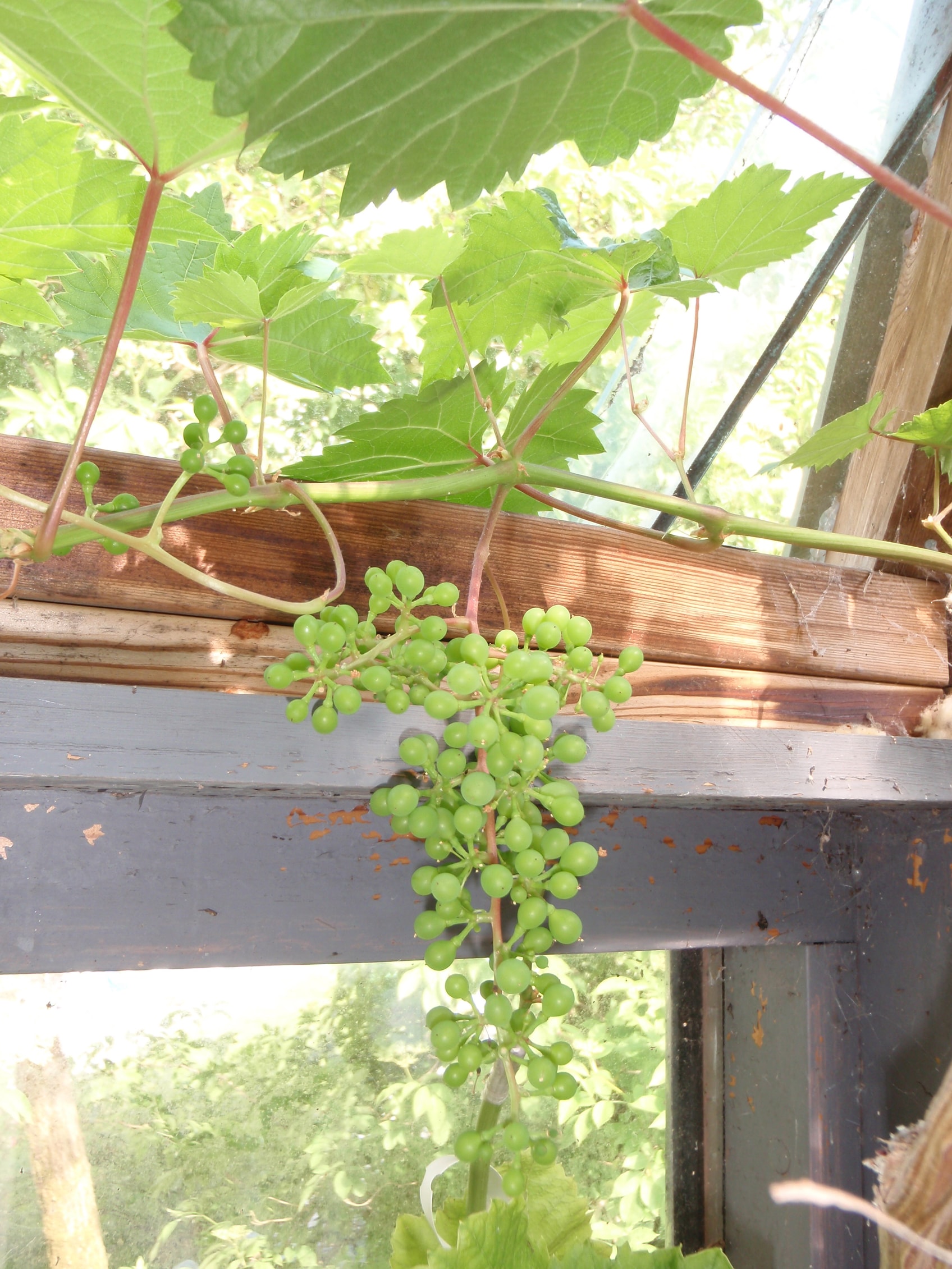
Photo: Knut Sætrevik
End of May
Towards the end of May the shoots are in good growth.
Here is one of the trial varieties.
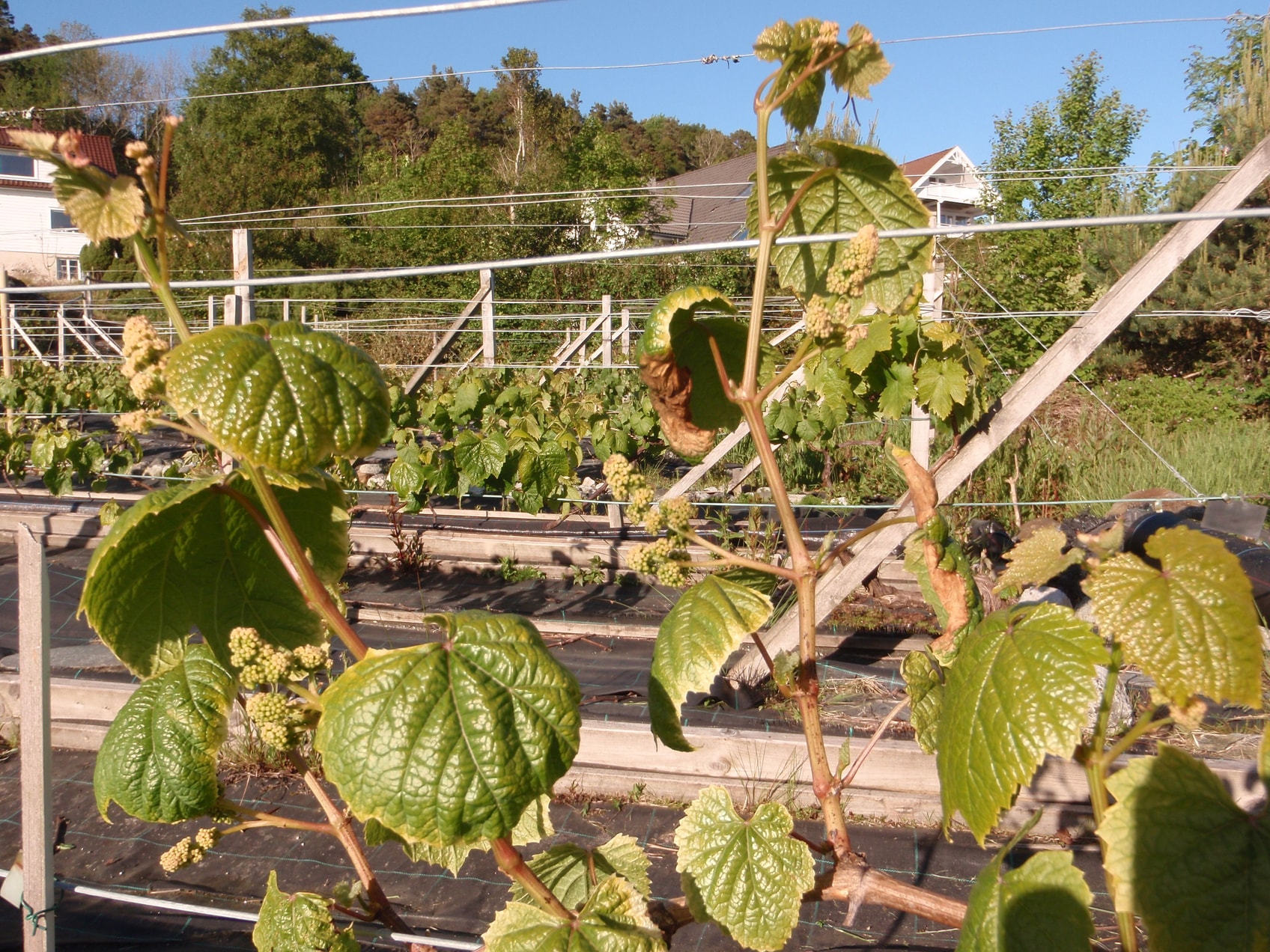
Photo: Knut Sætrevik
25 March
Bud swell
Here we see that the buds are already swelling
on some grape varieties. We may still get frost, but at this stage they tolerate
a couple of degrees of frost. When the buds unfold into leaf and stem it should not
go below 0 degrees Celsius.
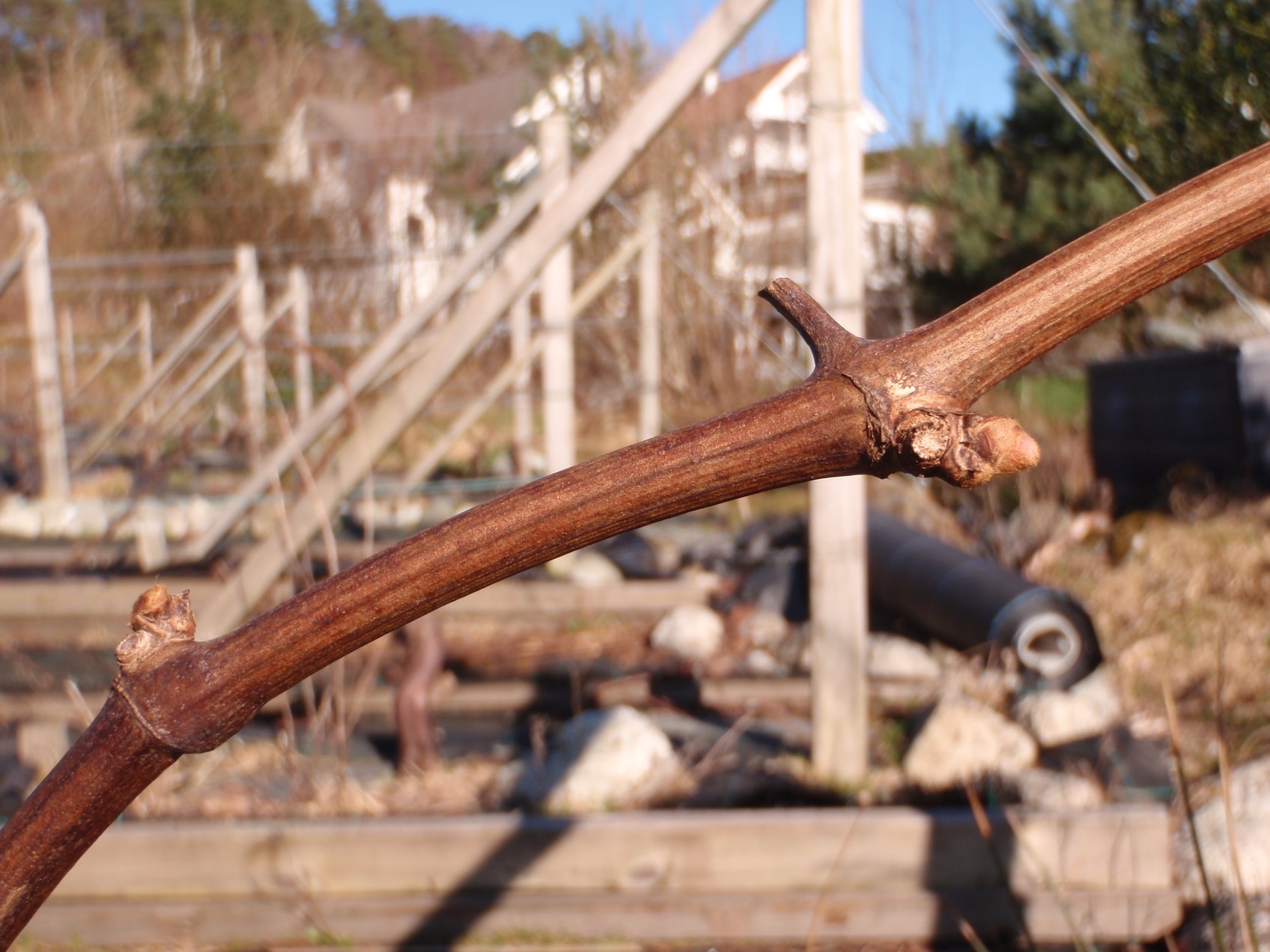
Photo: Knut Sætrevik
25 March
Still bleeding on some…
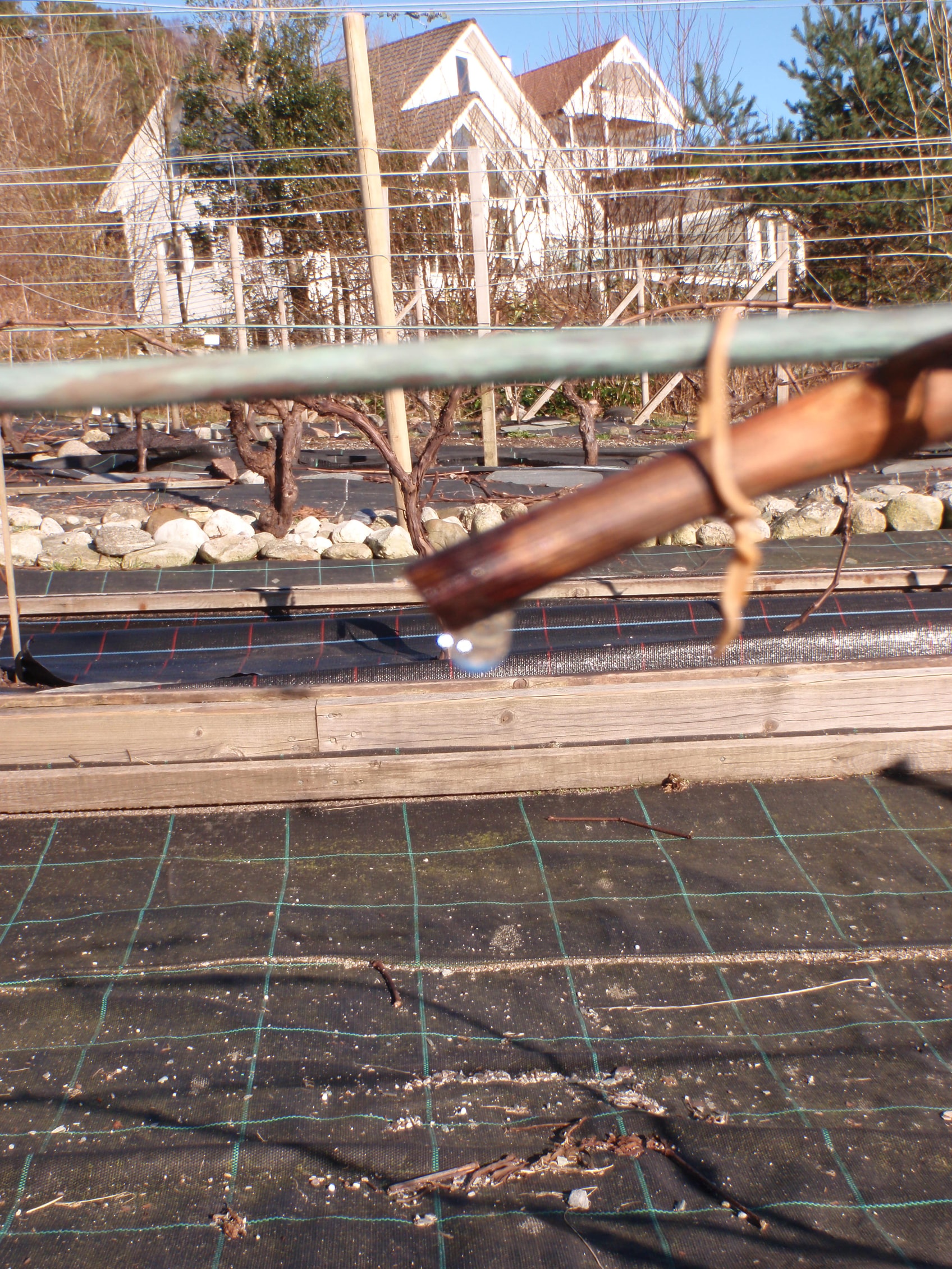
Photo: Knut Sætrevik
1 February
Pruning was finished by 1 February
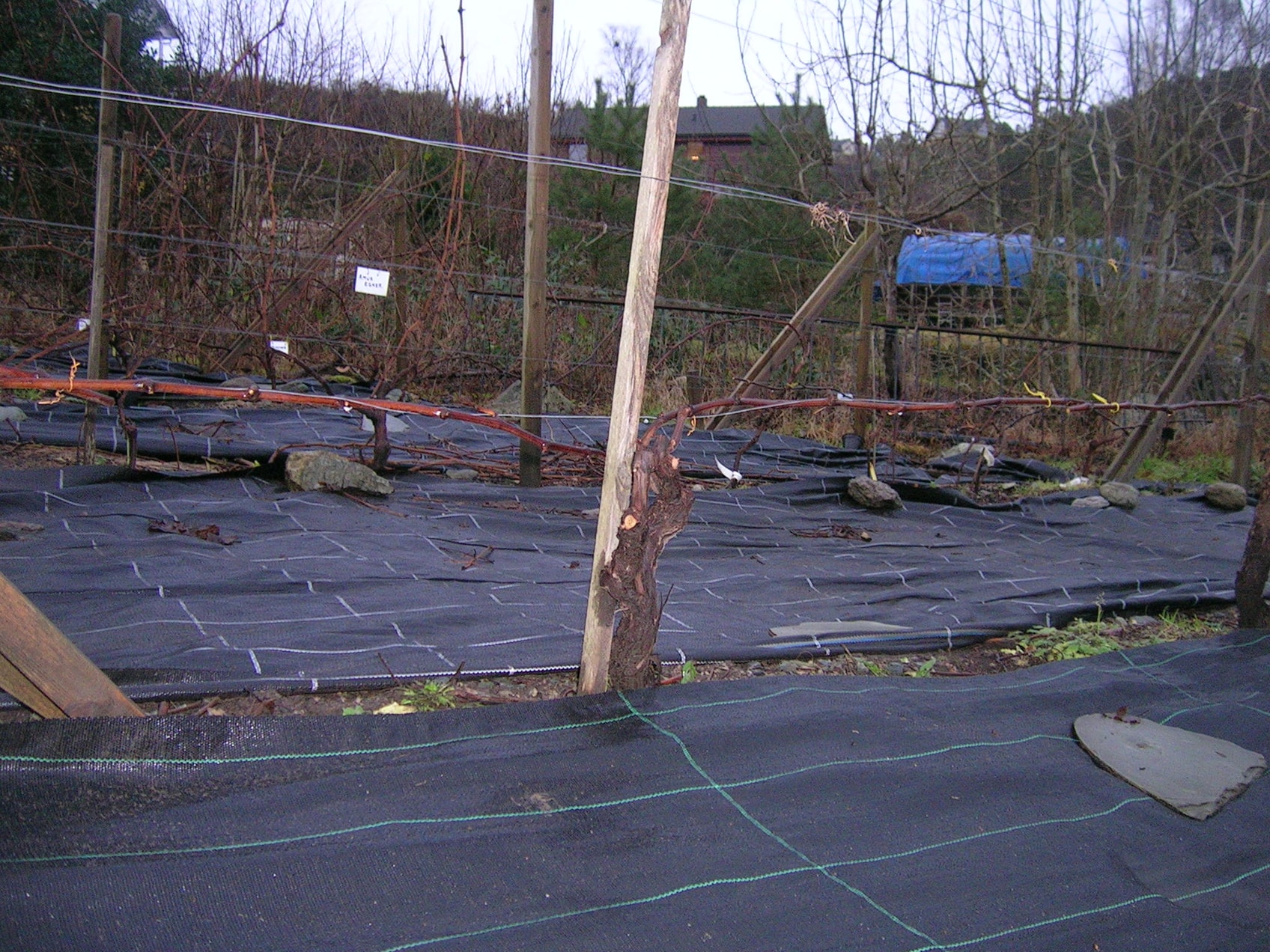
Photo: Knut Sætrevik
A new season’s turn
A new season is now under way.
The pruning was finished around the end of January.
An unusually mild February made the grapevines begin to bleed already on 24 February.
It is no advantage that they wake so early.
After the sap has begun to rise in trunks and fruiting shoots,
it should not go below minus 5 - 6 degrees.
That can cause frost cracking in the wood.
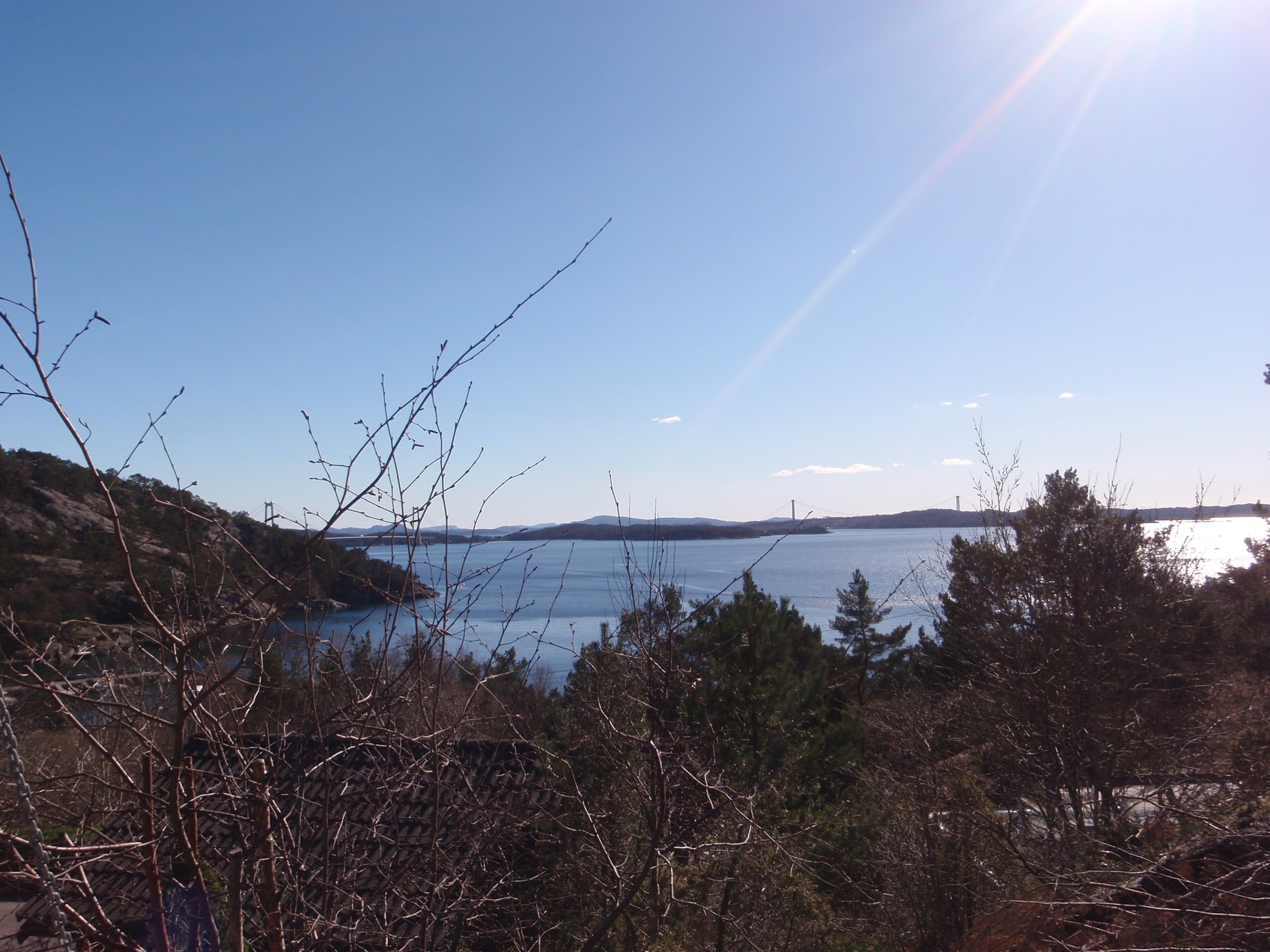
Photo: Knut Sætrevik