Latest news 2013
Author: Knut Sætrevik
Then it was autumn in the vineyard, and the quiet settled in.
The plants gradually go into winter rest.
They wake again around 15 April.
During the winter I will post a little about pests on the vines.
A fine winter to everyone who uses this site!
Regards, Knut.
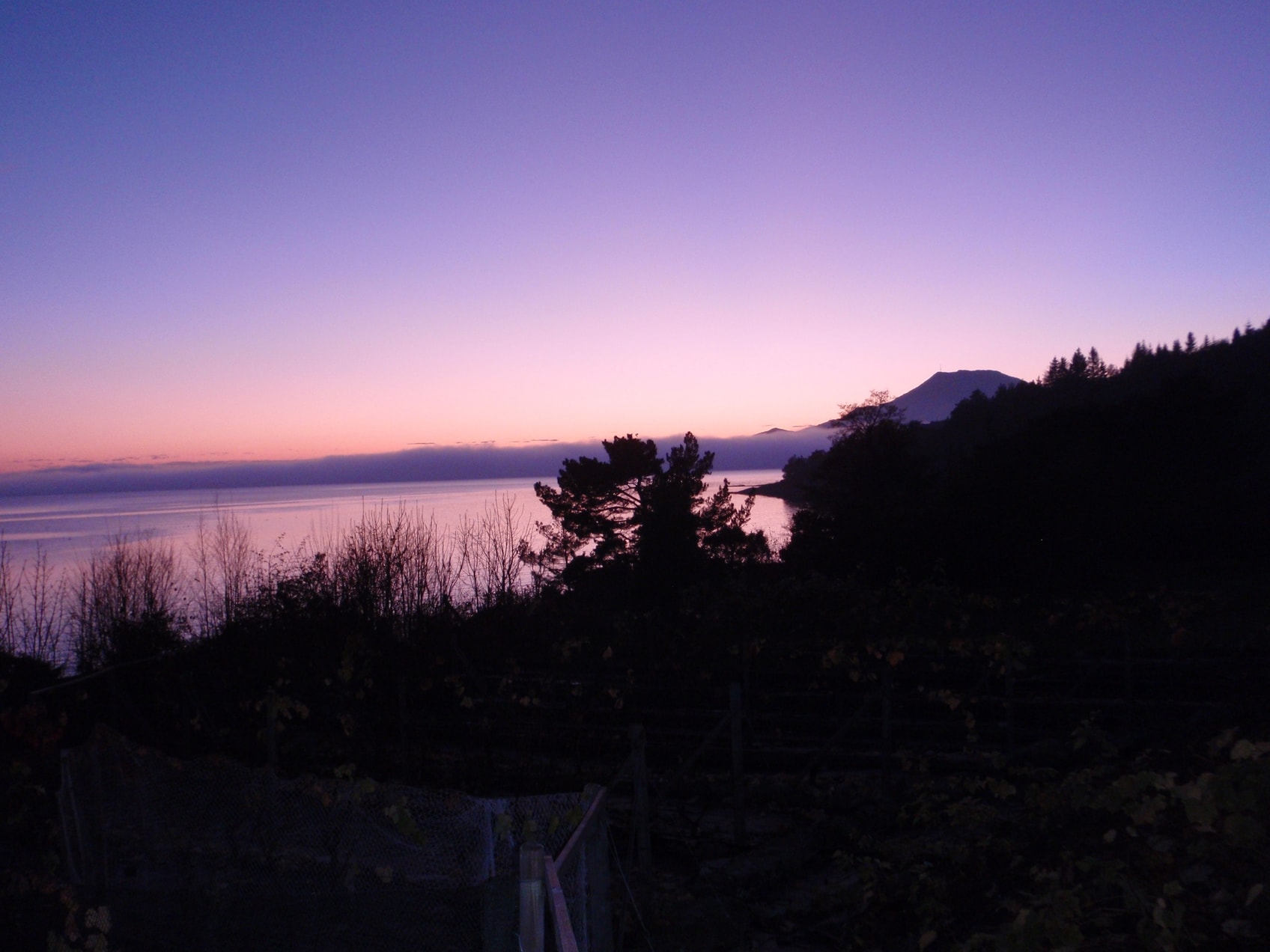
Photo: Knut Sætrevik
The last of the press for this year!
Rosé wine for a fine summer evening with shrimp and crab.
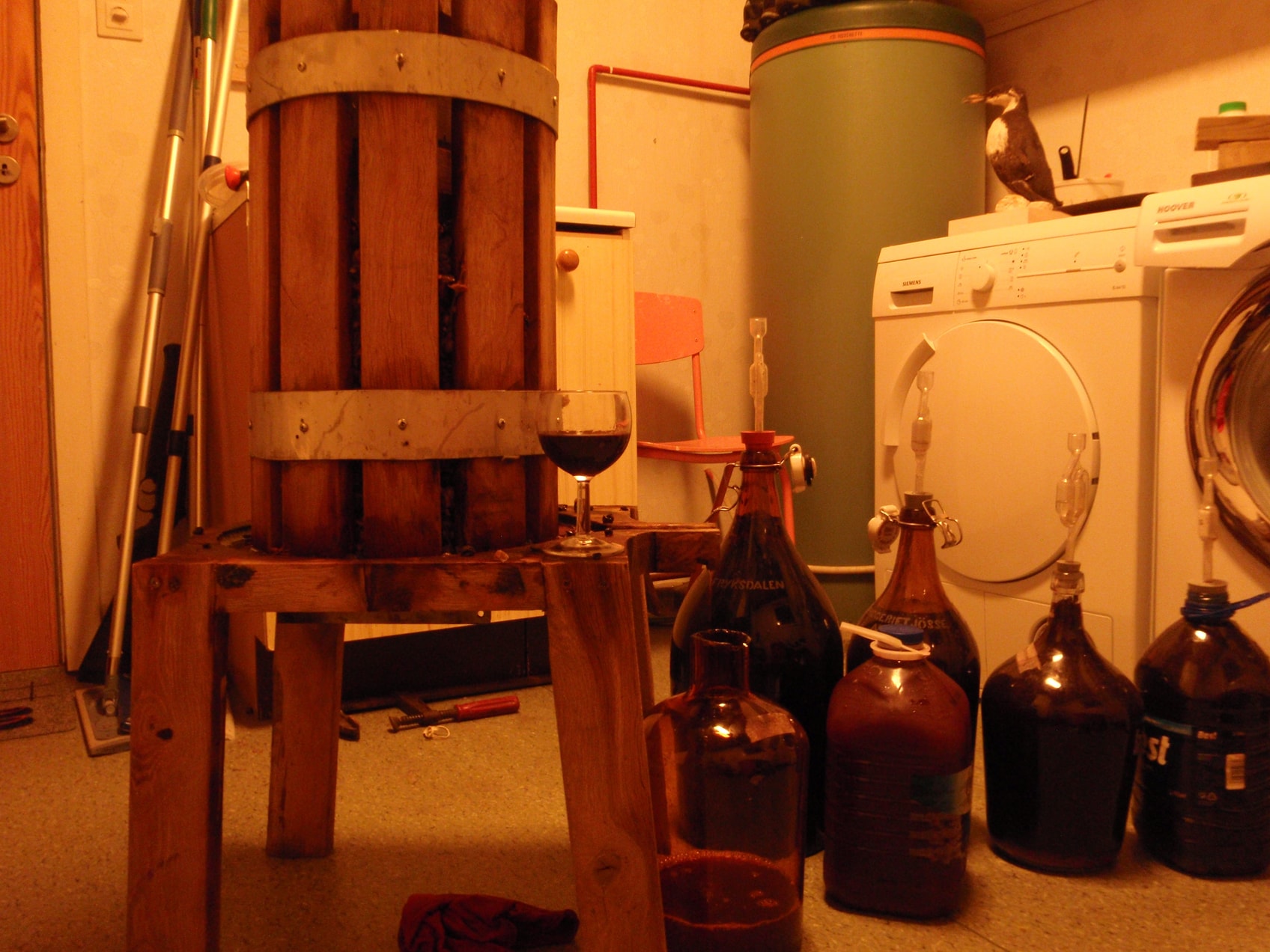
Photo: Knut Sætrevik
25 October.
Thumbs up for a season that, in terms of quality, turned out better than expected.
But small quantities…
We should probably have halved the yield per plant every year.
That would have triggered a better result in relation to acidity, pH and sugar.
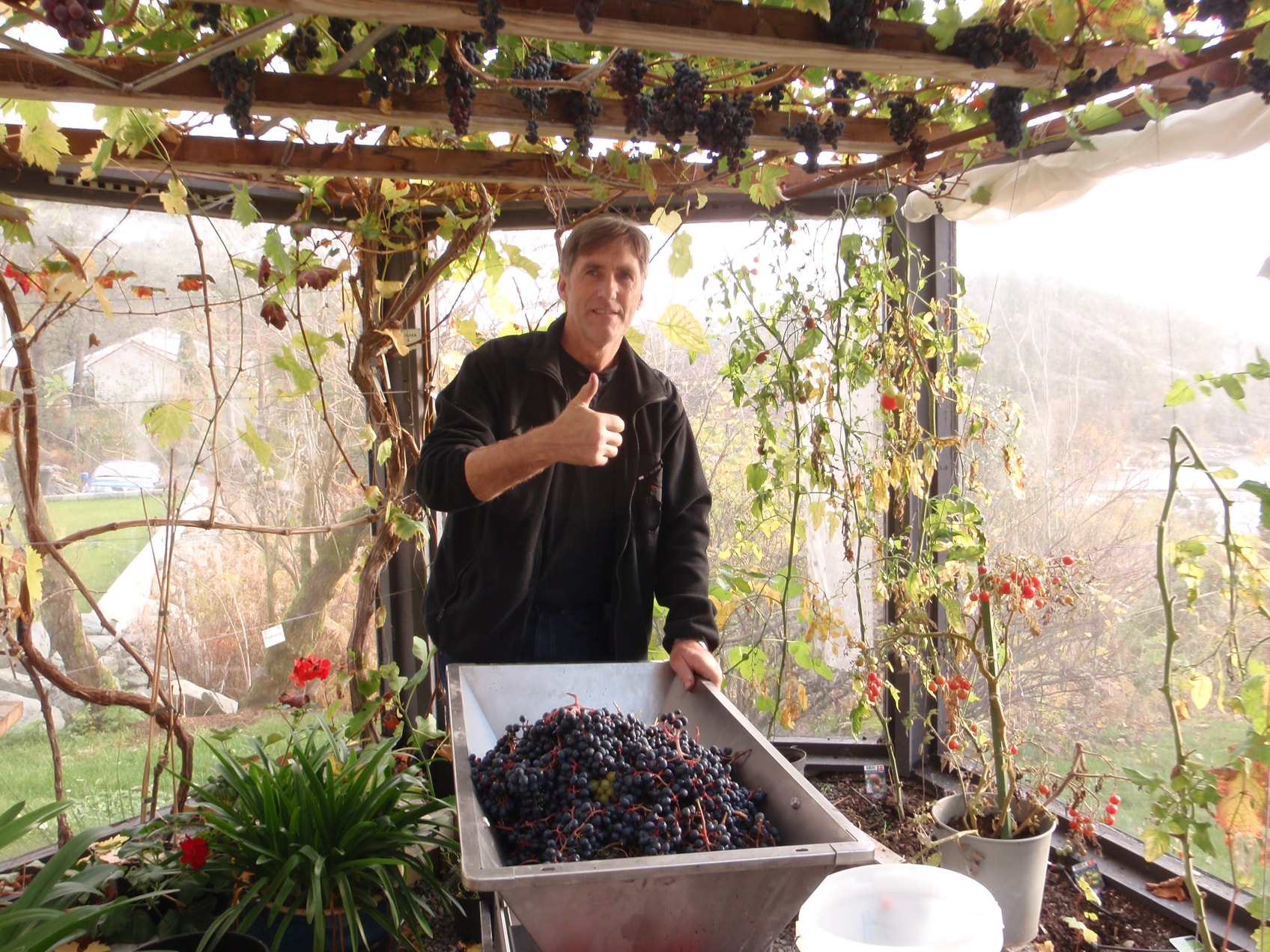
Photo: Knut Sætrevik
2 October
This autumn we had a visit from a hind with a calf in the grape garden.
They ate some of the newest leaves on the shoot tips, but otherwise did no harm.
Left behind a little natural manure.
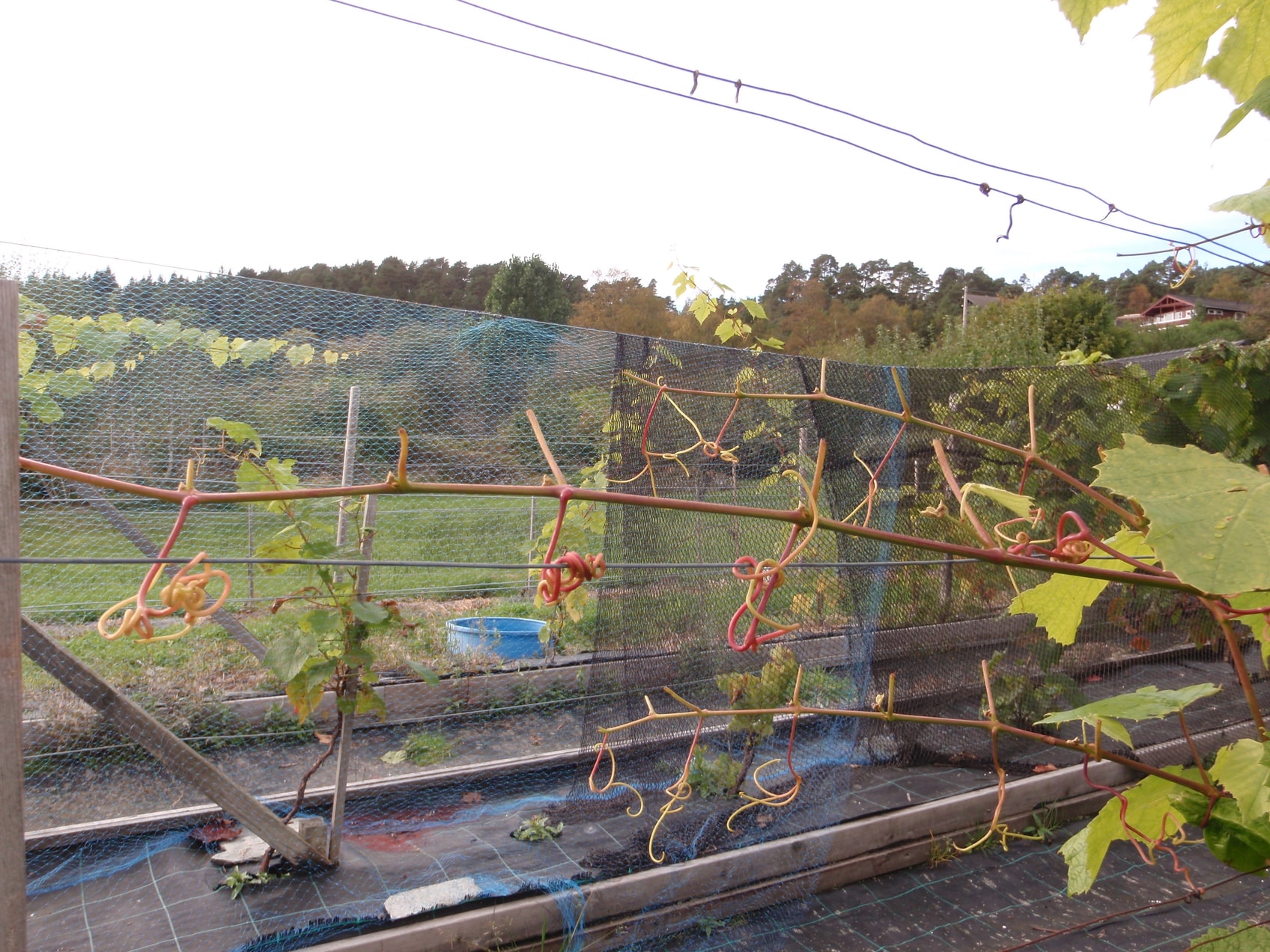
Photo: Knut Sætrevik
25 September
Lovely autumn colours on Rondo x Sheremushka. (KS)
It is one of the first to finish the growing season.
That may suggest that this will be an early variety.
But whoever lives will see.
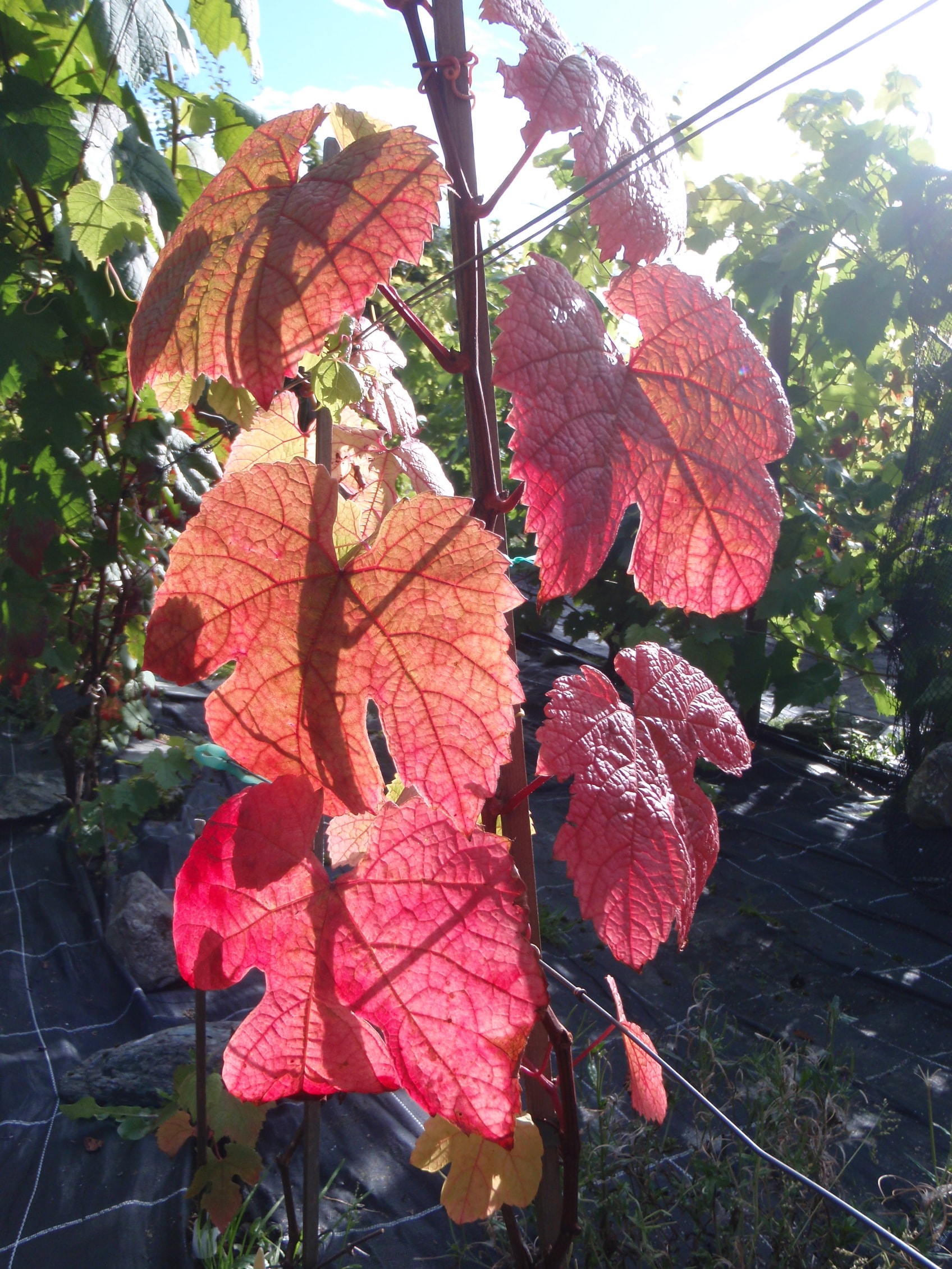
Photo: Knut Sætrevik
25 September
These were a little smaller, but I will taste them too…
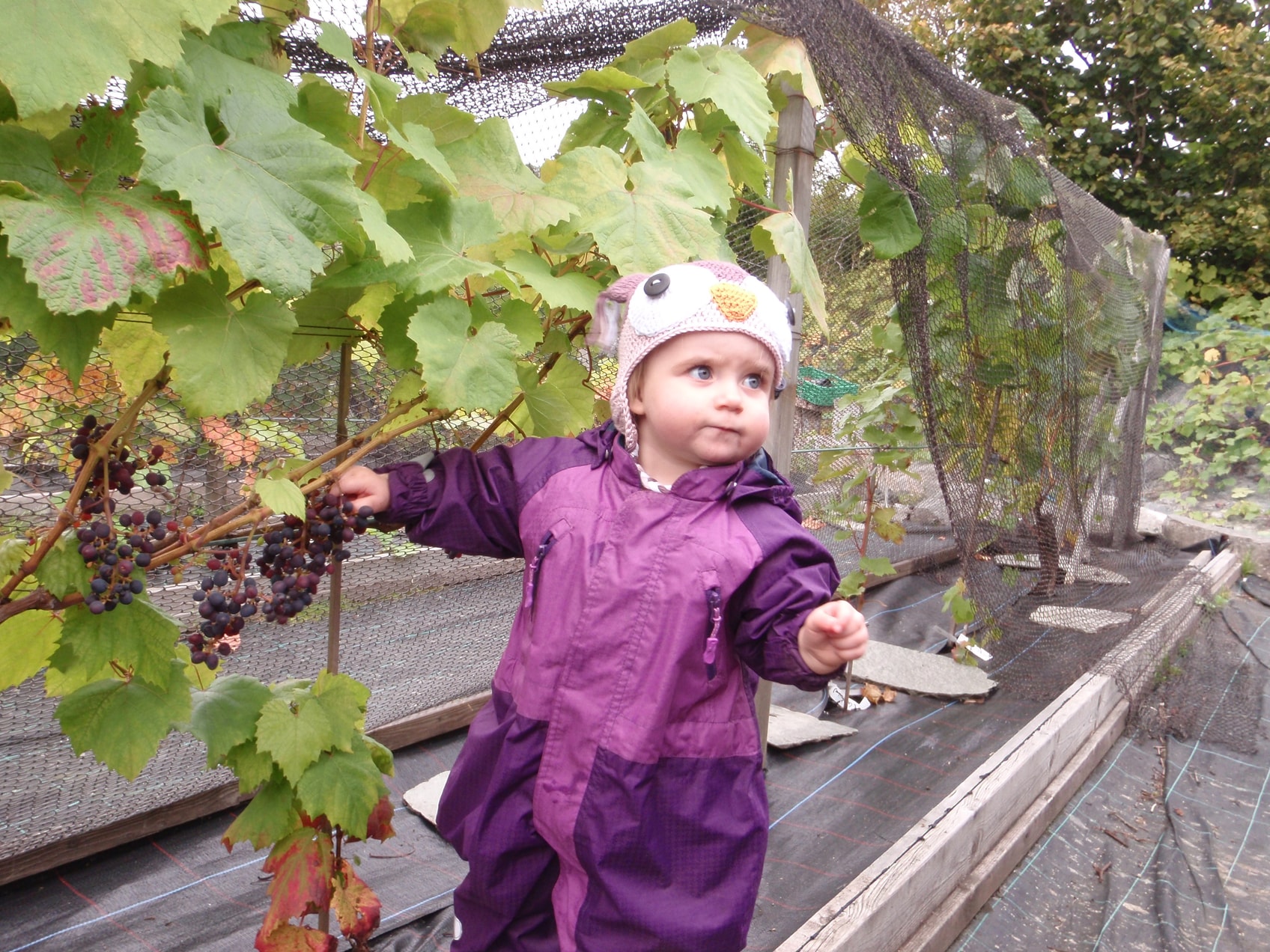
Photo: Knut Sætrevik
25 September
Look, Mum: Julie, 1 year old, on her first trip in Grandad’s grape garden.
Yum yum!
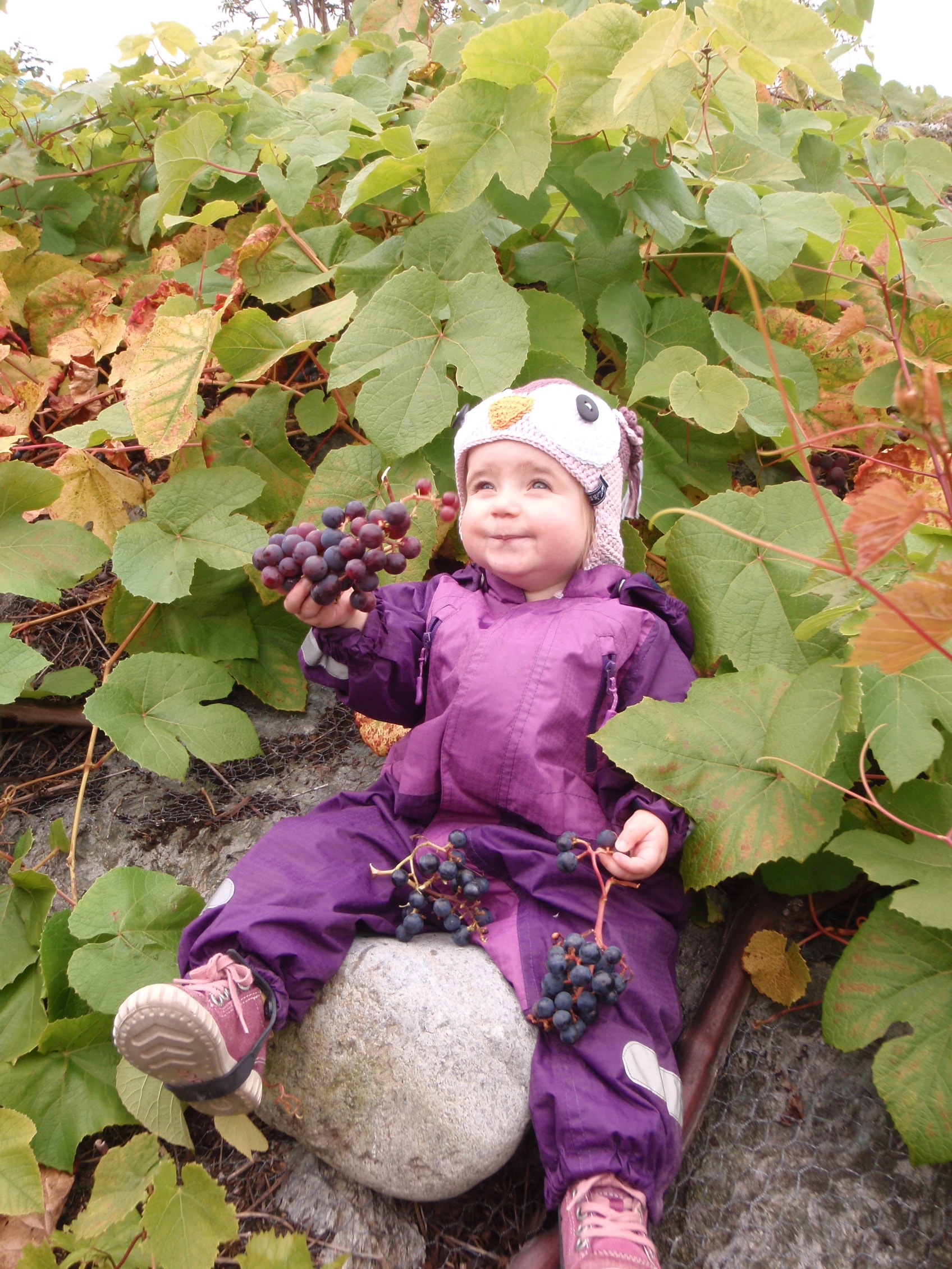
Photo: Knut Sætrevik
25 September
Here is a rascal that thinks sweet grapes are good.
The brown slug can destroy a cluster in one night.
It sucks up the grape flesh, and the stones are left hanging.
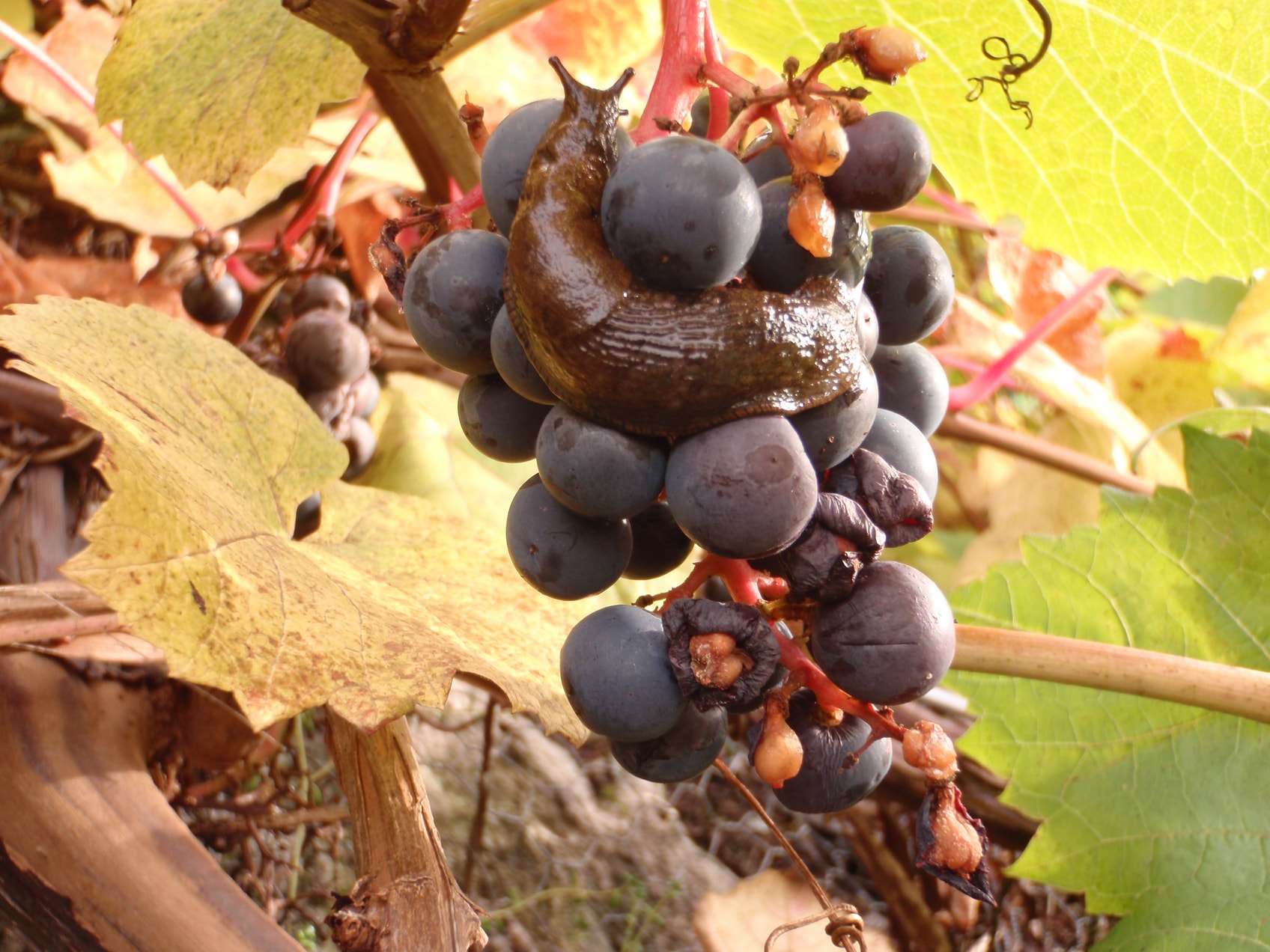
Photo: Knut Sætrevik
25 September
A test variety that will be tested over about 5 years.
A sweet-sour wine variety with small grapes.
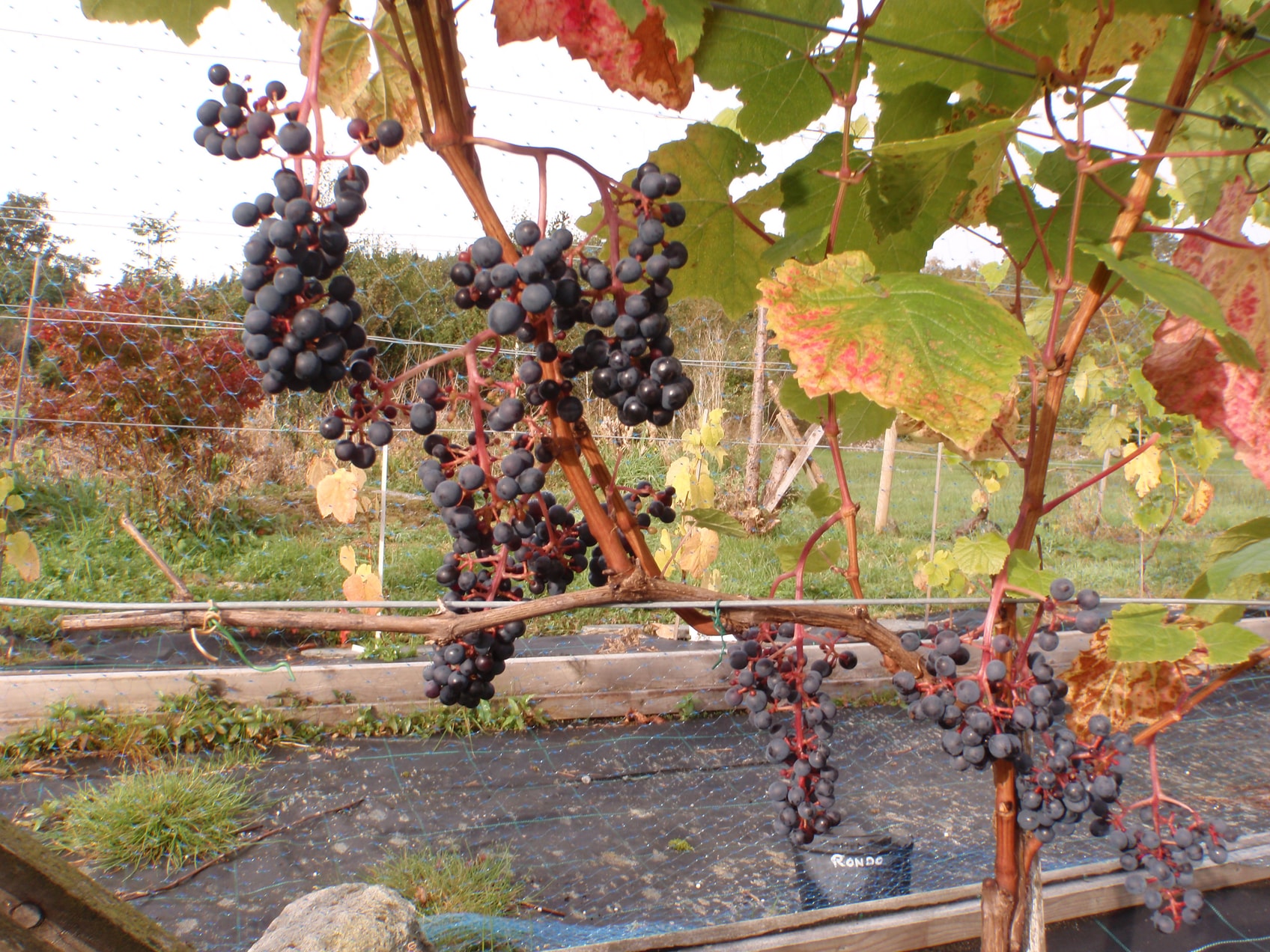
Photo: Knut Sætrevik
25 September
Not many grapes per cluster on Kuzminski this year.
Heavy rain during flowering saw to that.
It did, however, get good grape quality with 80 Oe sugar,
and a fine balance with the acidity and the pH.
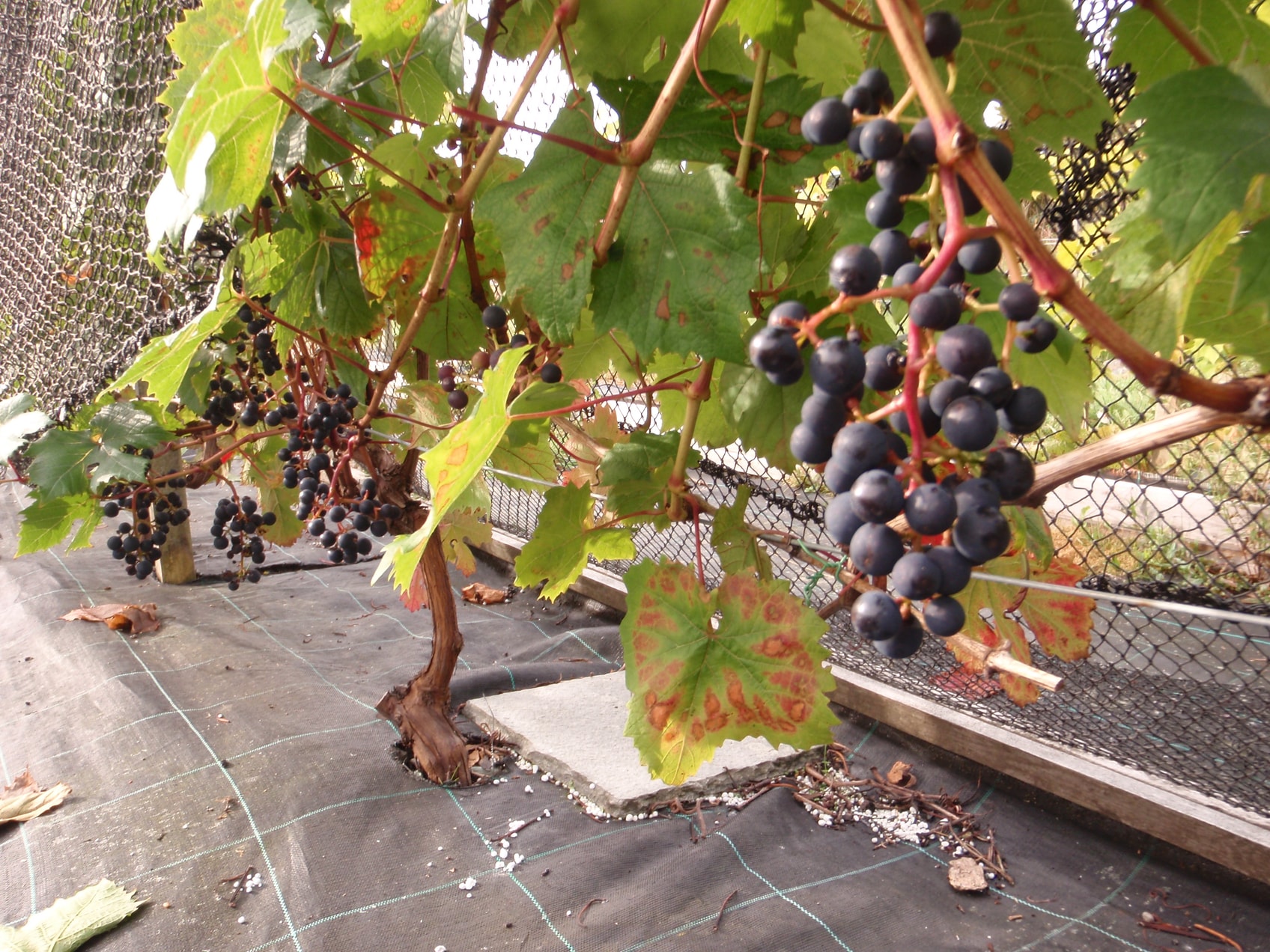
Photo: Knut Sætrevik
25 September
Varduva does well even with damp flowering.
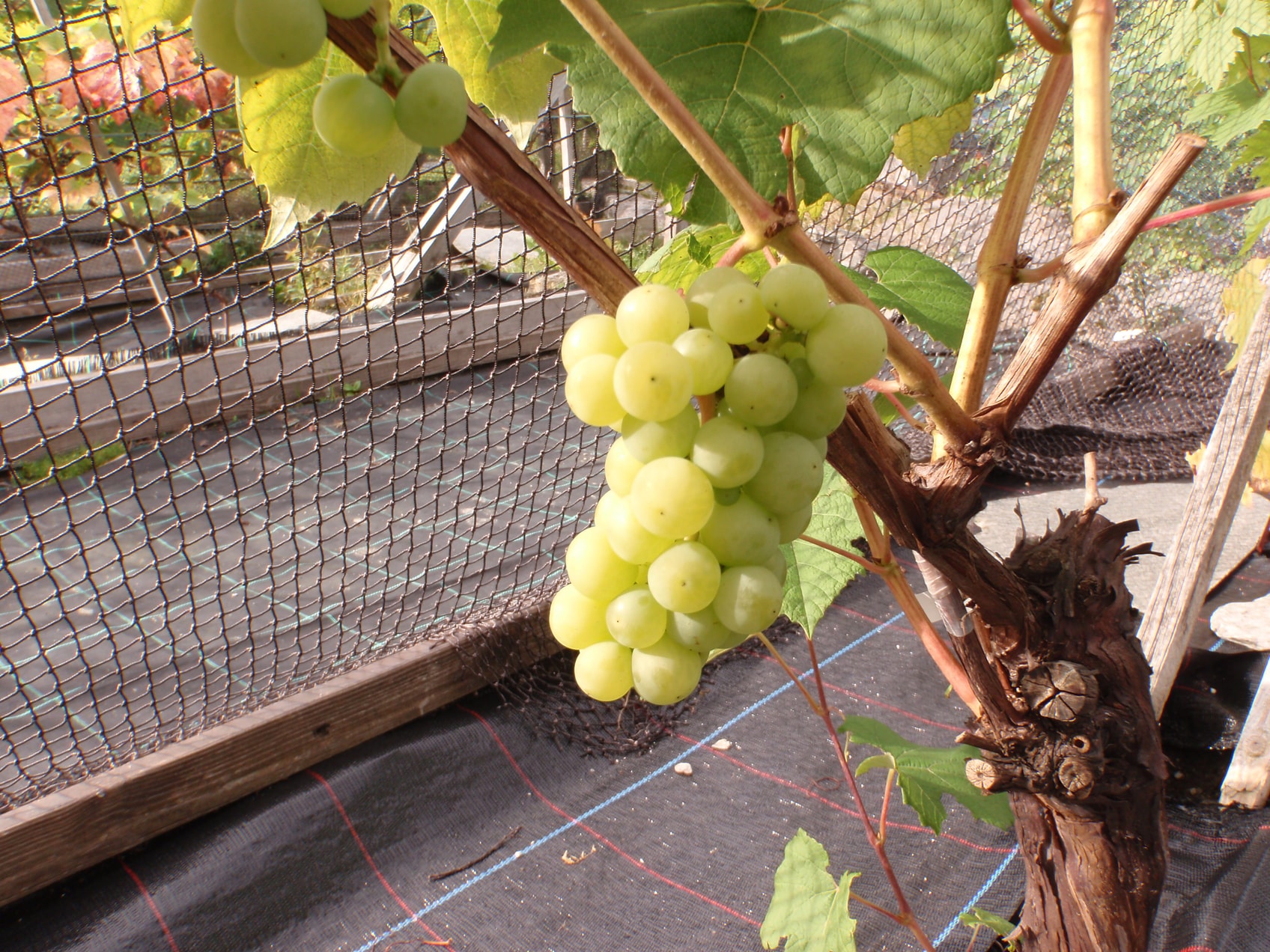
Photo: Knut Sætrevik
25 September
Negro (Negritionok).
A good wine variety with low acidity.
This large cluster is from a shoot that was led into the greenhouse.
A pity it is so marginal when planted out in the open.
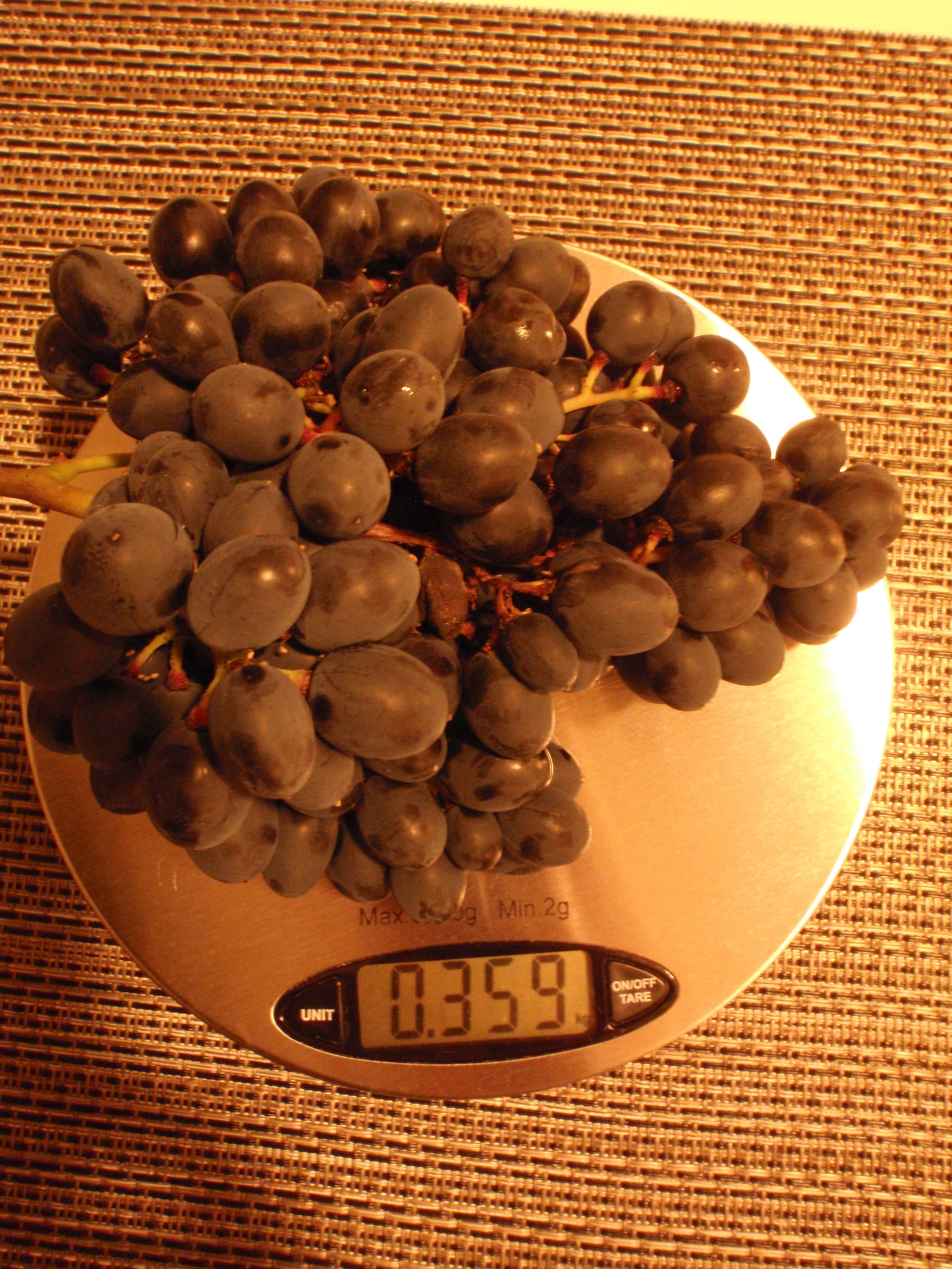
Photo: Knut Sætrevik
25 September
Lilac managed reasonably well.
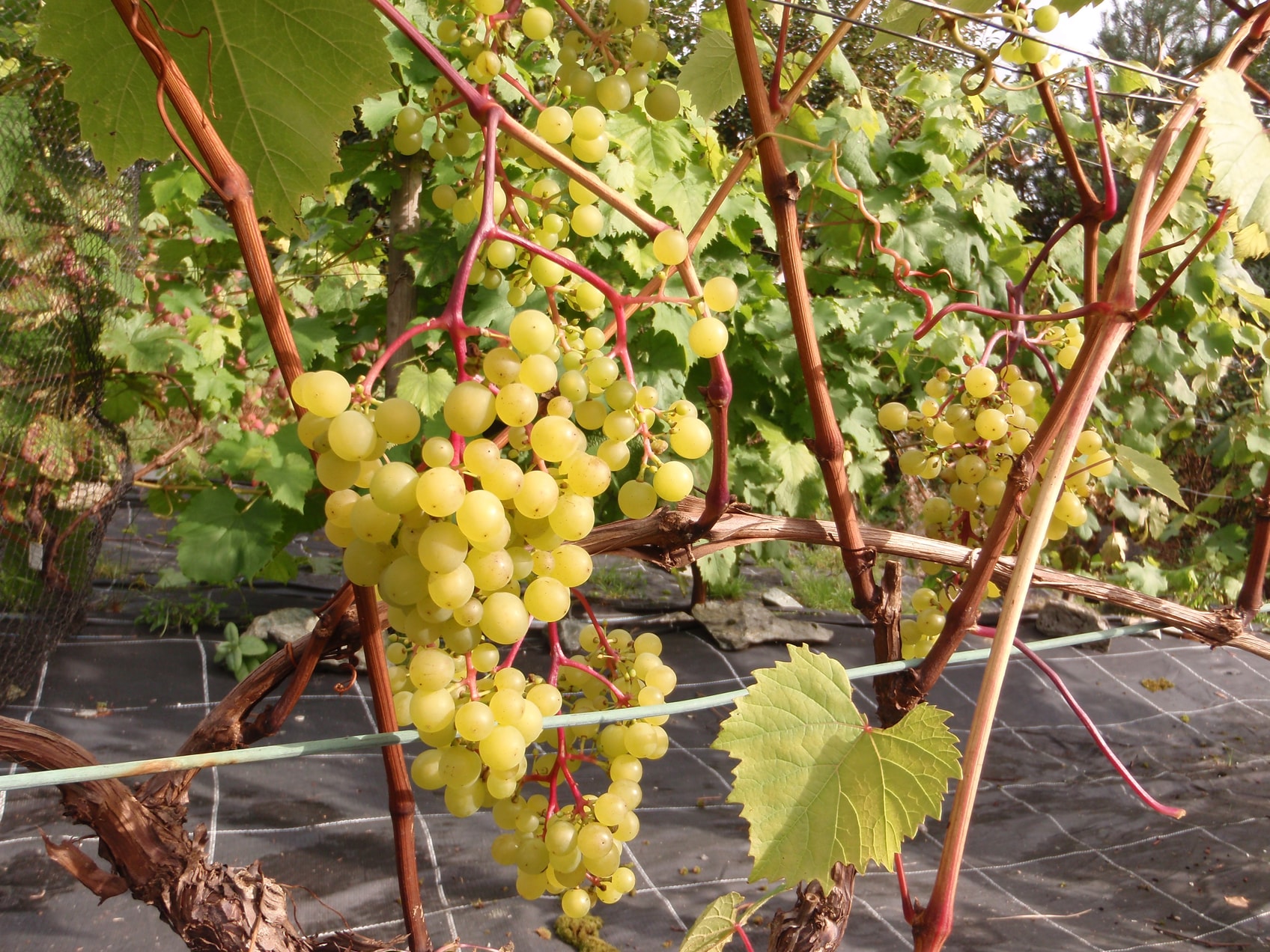
Photo: Knut Sætrevik
25 September
At the end of September there are lovely clusters on Frotenac.
It has such high acidity outdoors here with us that it is served to the blackbird.
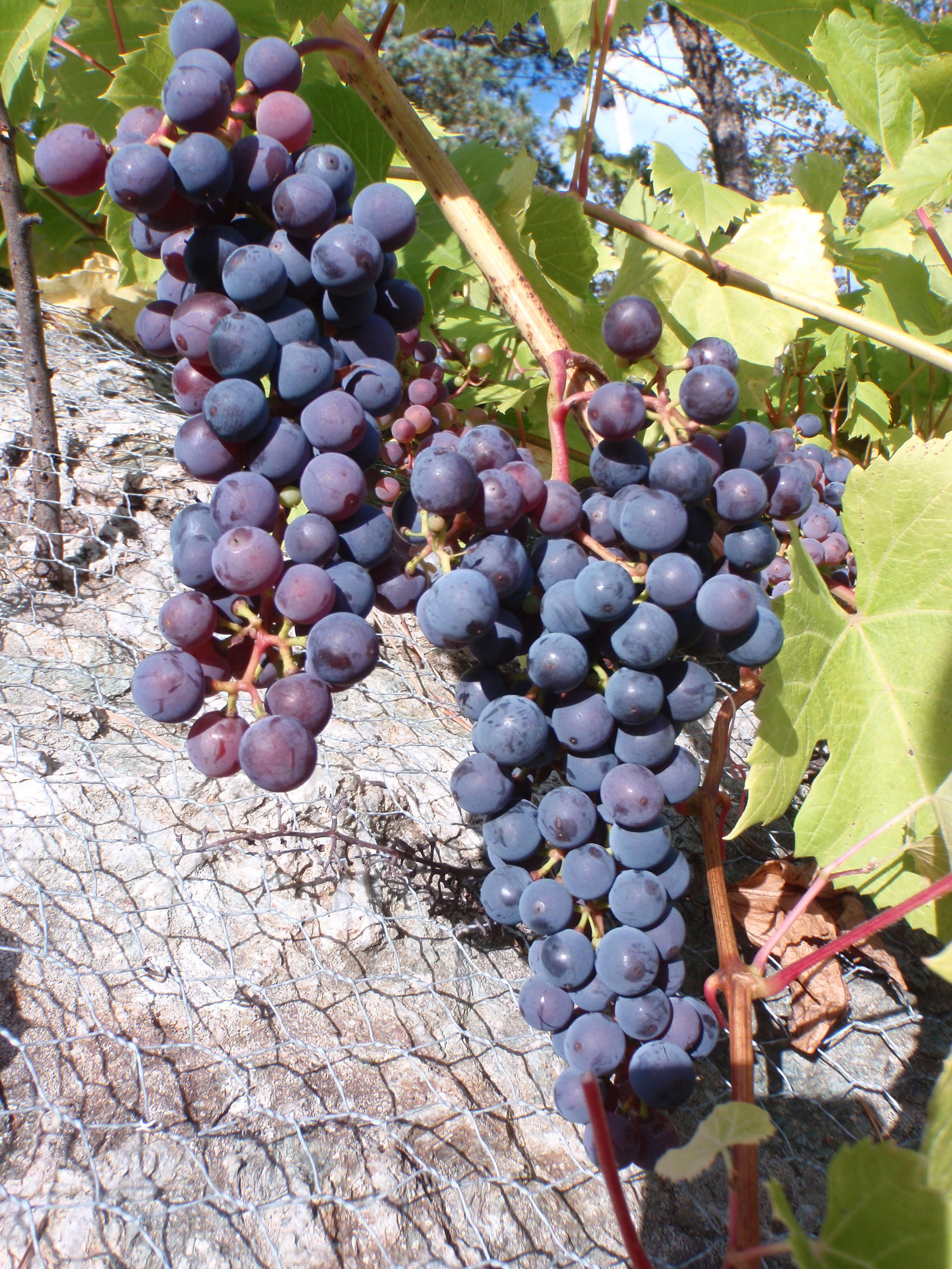
Photo: Knut Sætrevik
Turn of the month, July/August
Zilga against the bare rock has managed reasonably this year.
The vine has stood for 15 years and can, in good years, give between 15 and 18 kg of grapes.
They can be used for a halfway decent rosé wine.
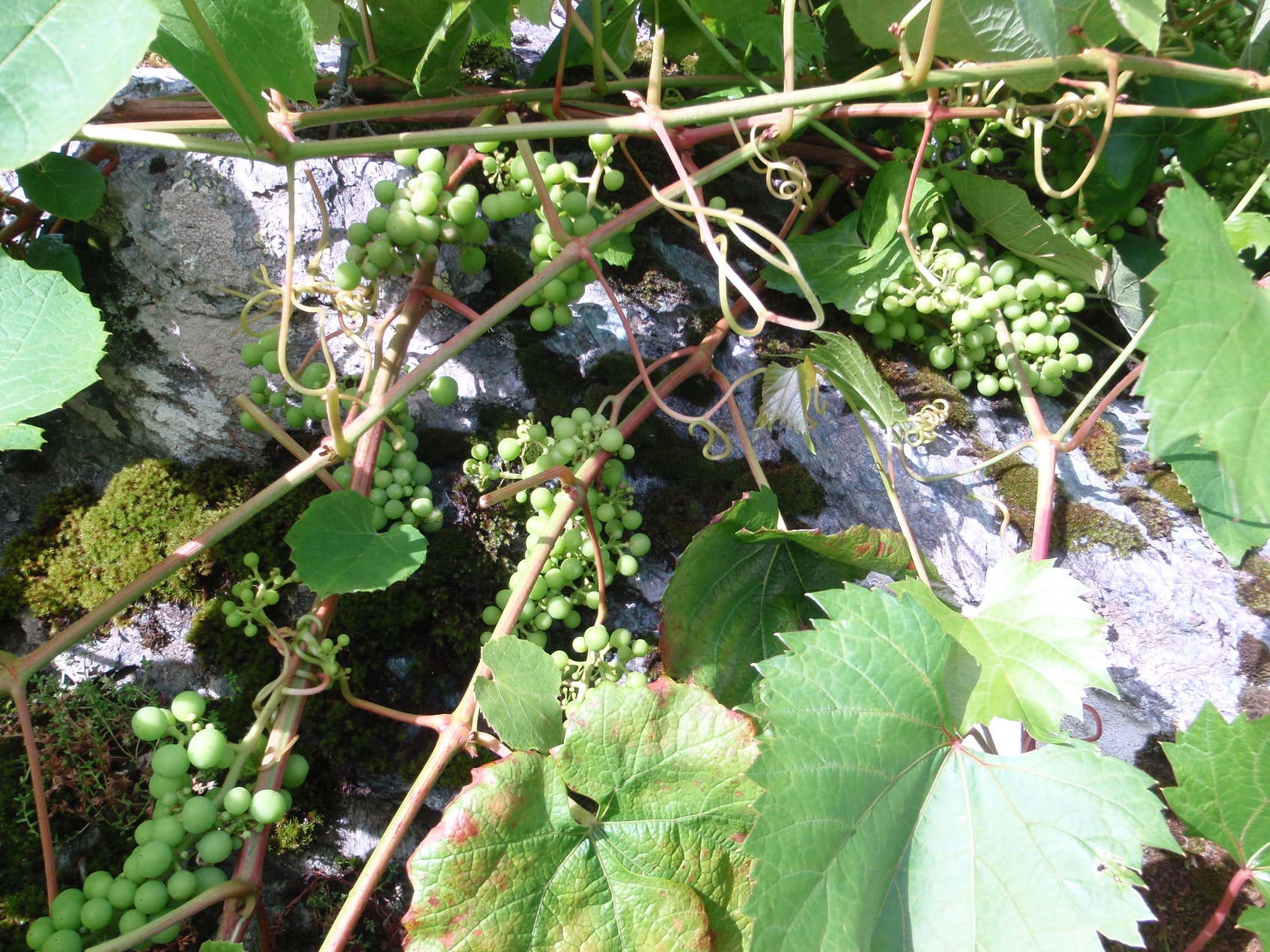
Photo: Knut Sætrevik
Turn of the month, July/August
This one is supposed to have rapid development, according to the description.
It needs that this year, since flowering got off to a late start.
It was one of the first to flower.
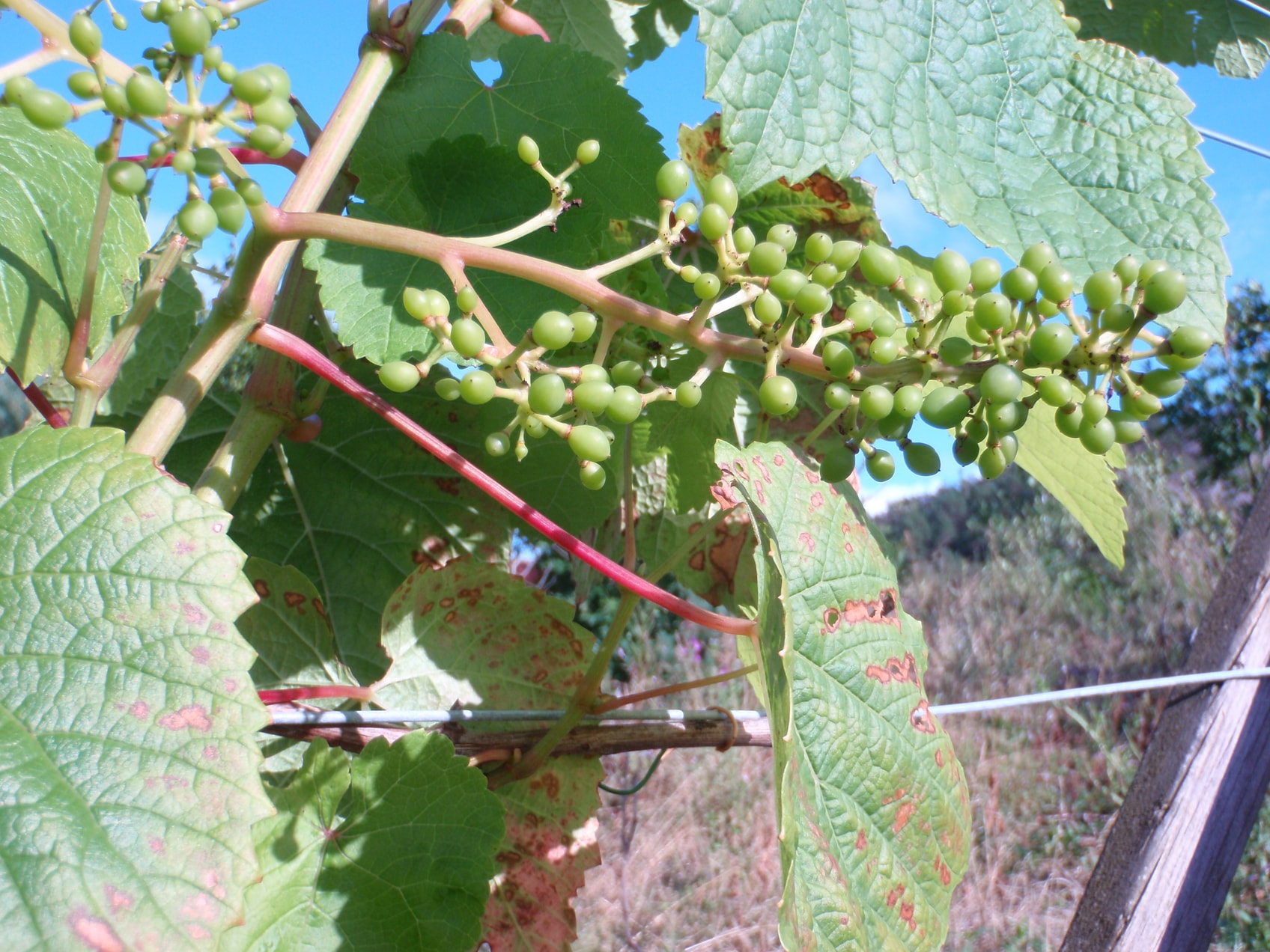
Photo: Knut Sætrevik
28 July
This year I led a fruiting shoot of Negritionok (which we now call Negro)
into the greenhouse, in order to make crosses between this one and a number of other early varieties.
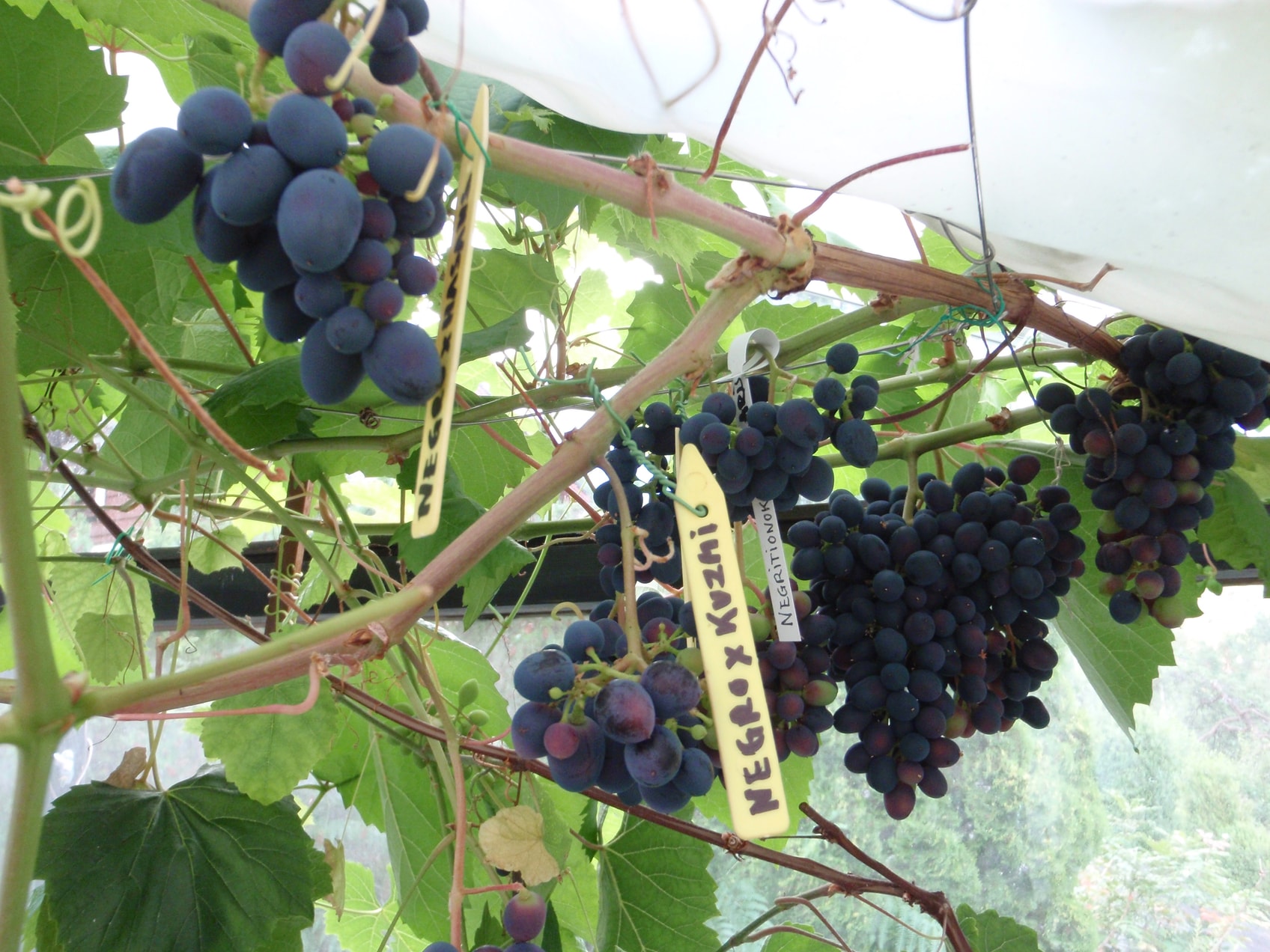
Photo: Knut Sætrevik
16 July
A successful approach graft (suging) in the greenhouse.
This is the easiest way to get a take,
but it requires that you first have a plant with roots.
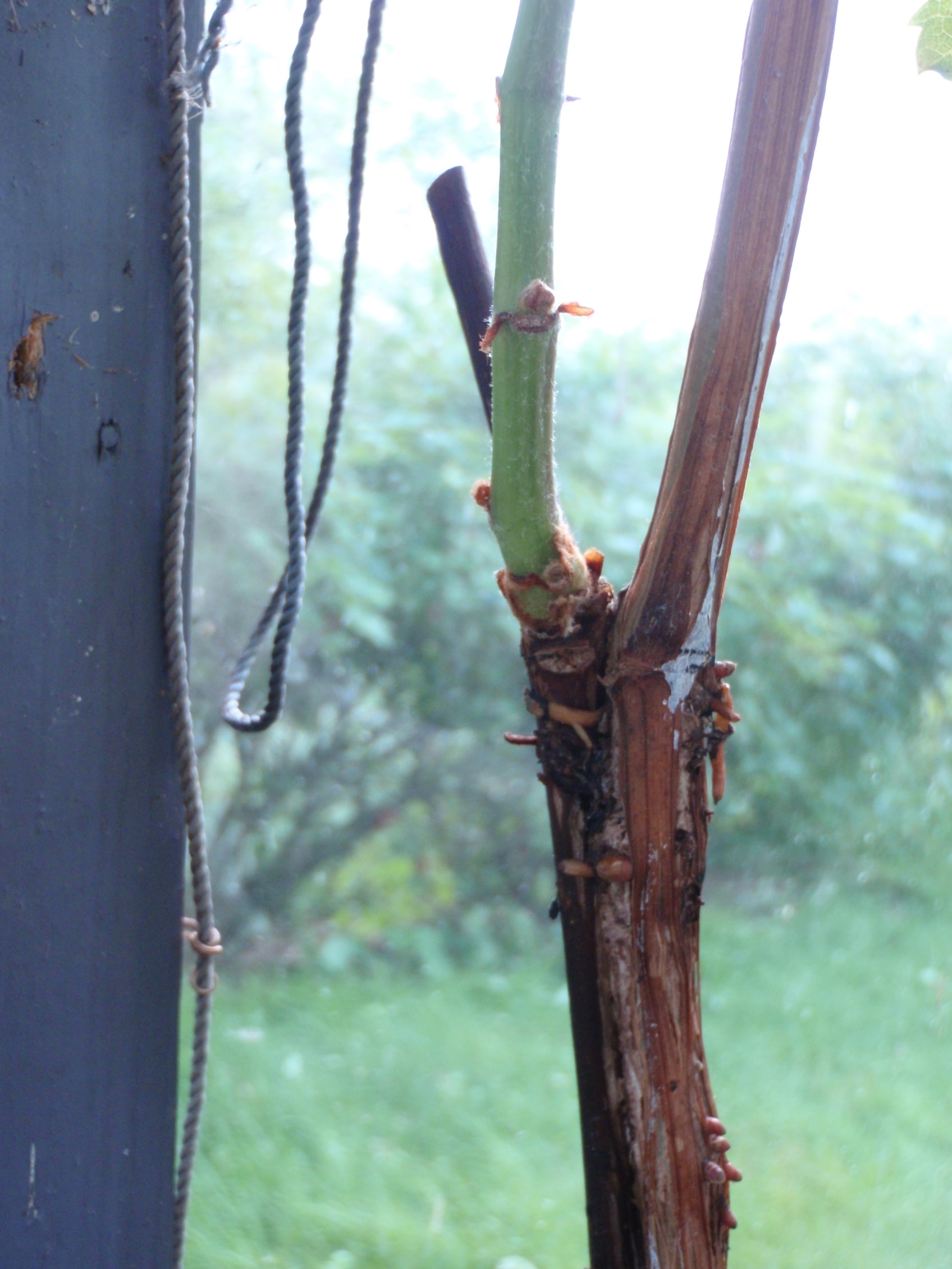
Photo: Knut Sætrevik
Turn of the month, June–July
Rondo is almost ready to open its flower,
so we will have to cross our fingers for good weather.
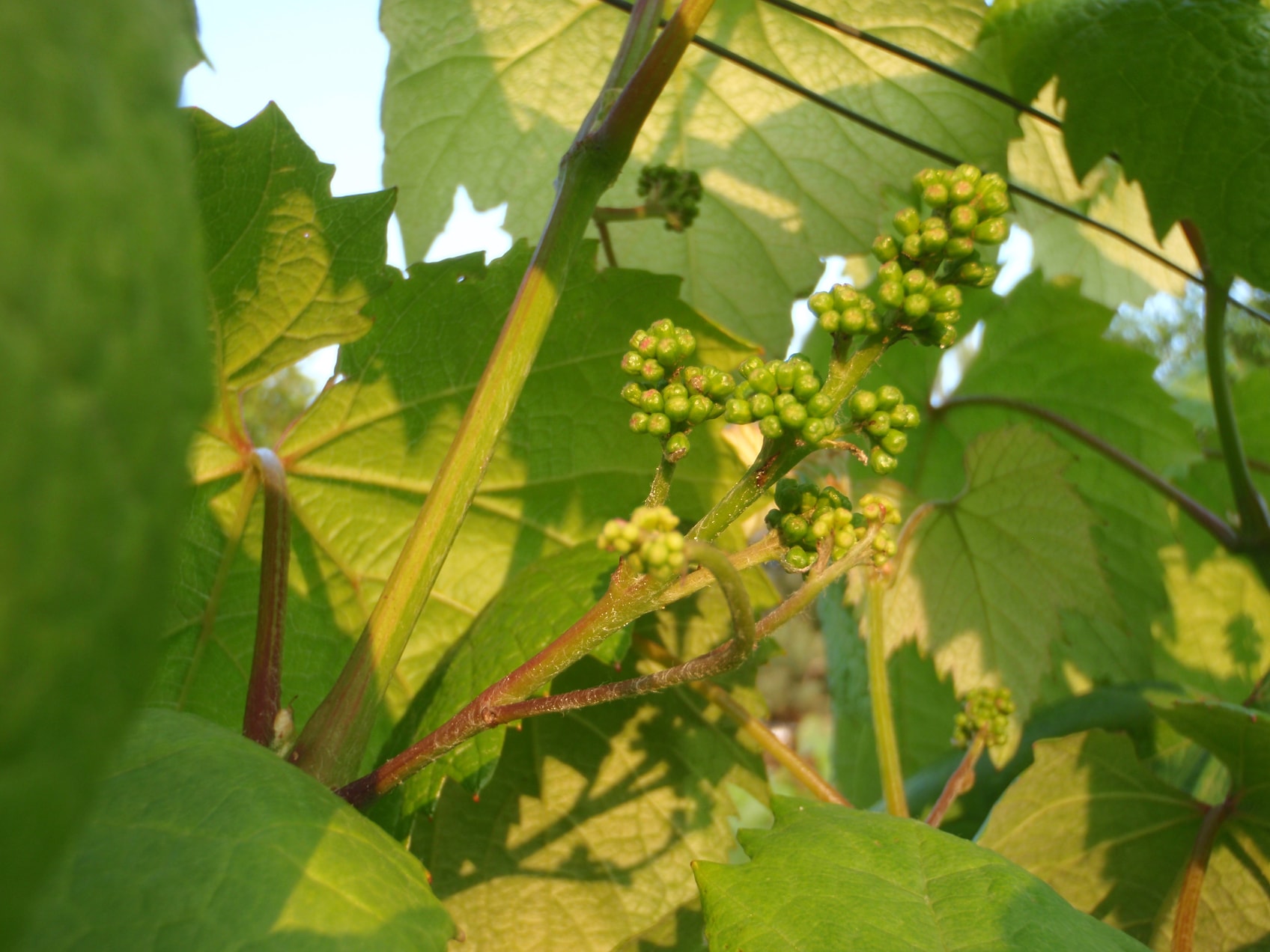
Photo: Knut Sætrevik
18 June
The magnolia tree has flowers.
It will flower for several weeks to come.
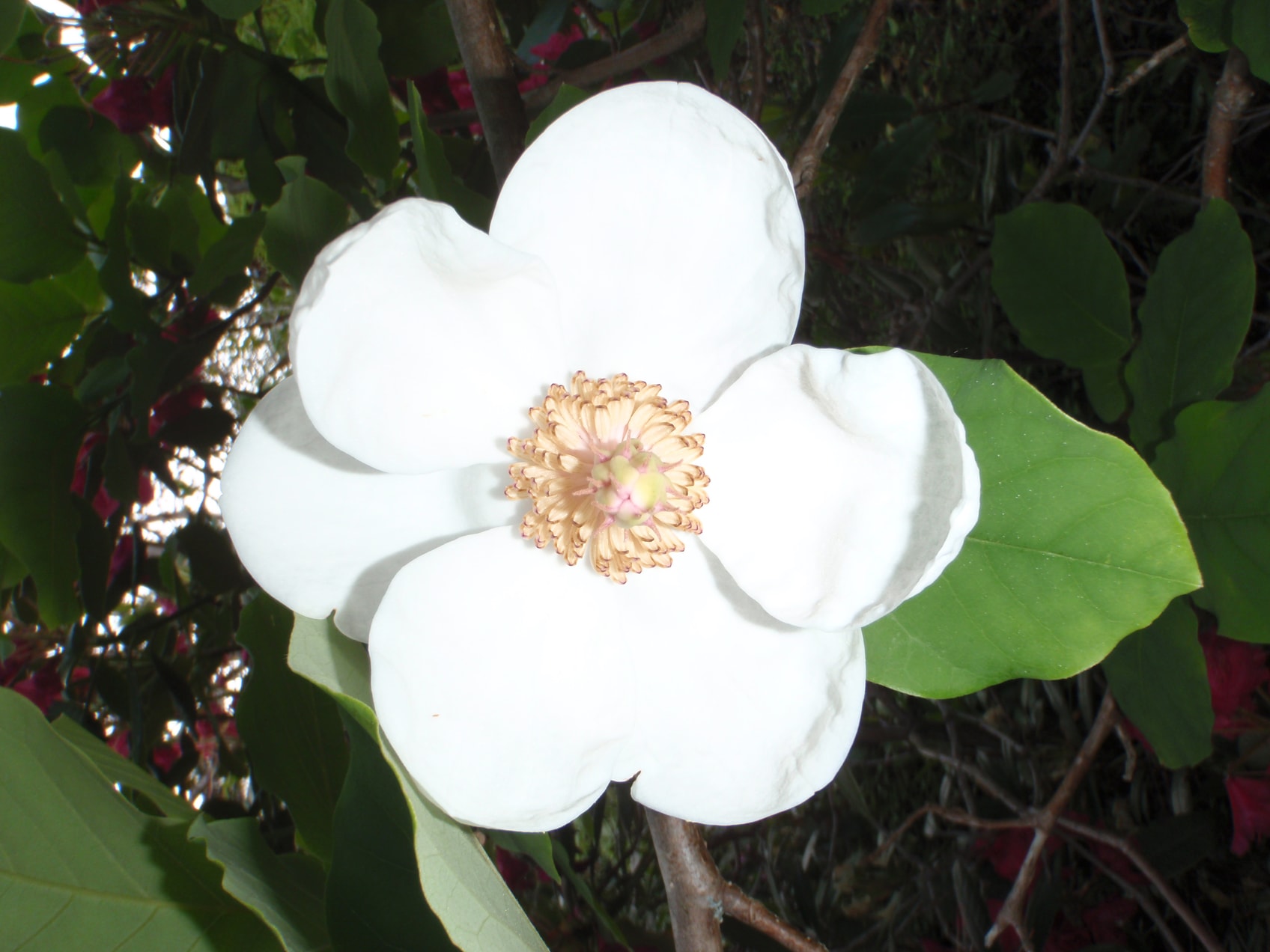
Photo: Knut Sætrevik
16 June
The brown slugs (Iberian slug) are fond of leaves and new stems on the grapevine.
For mature plants this is not a big problem,
but for plants that shoot down at ground level after a hard winter, measures must be taken.
Otherwise the slug eats the shoots as they come out.
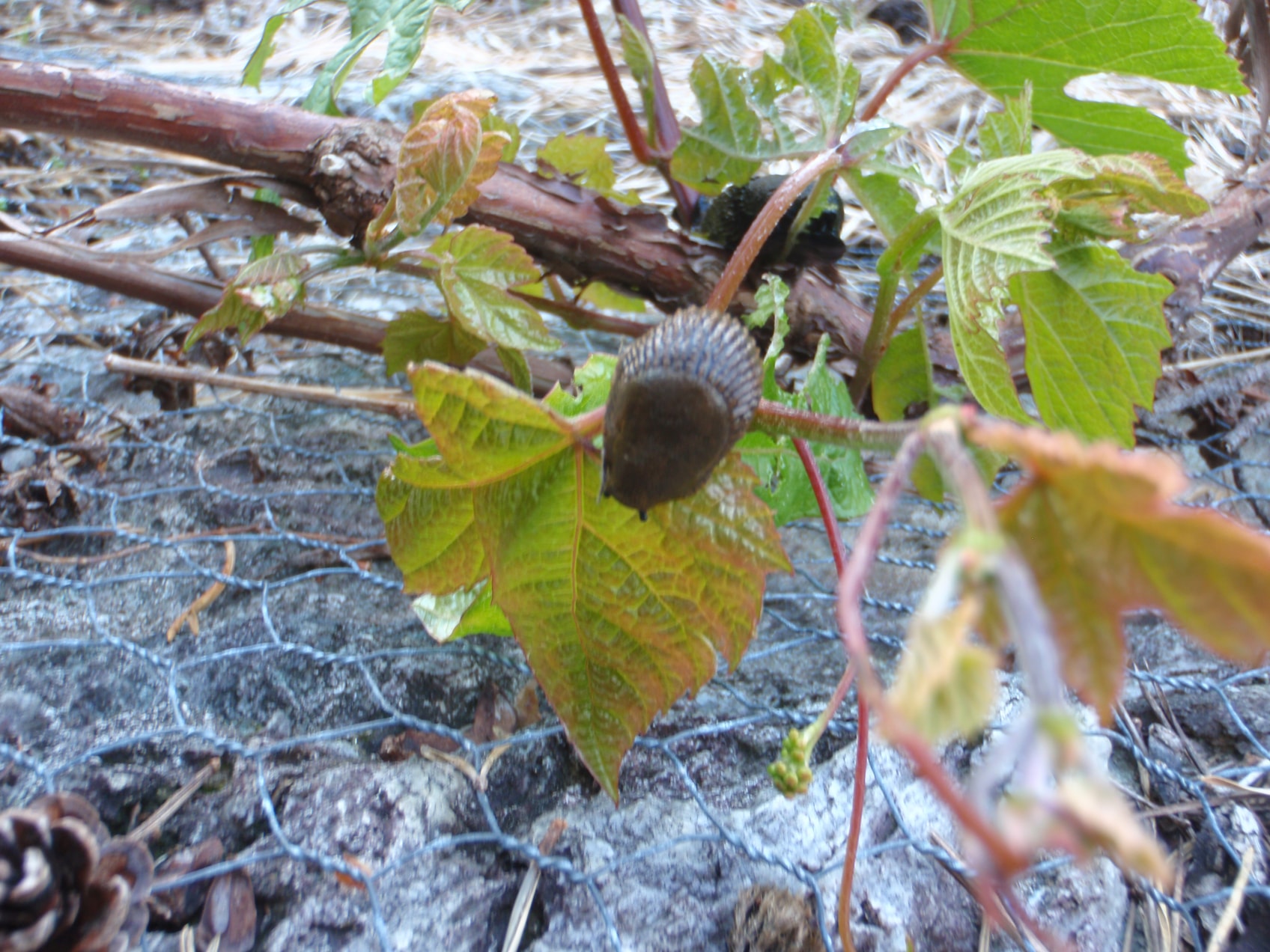
Photo: Knut Sætrevik
16 June
Quite fine clusters on Amurski 3 this year.
Last summer the rain broke the flowers to pieces.
Hope it goes better this year.
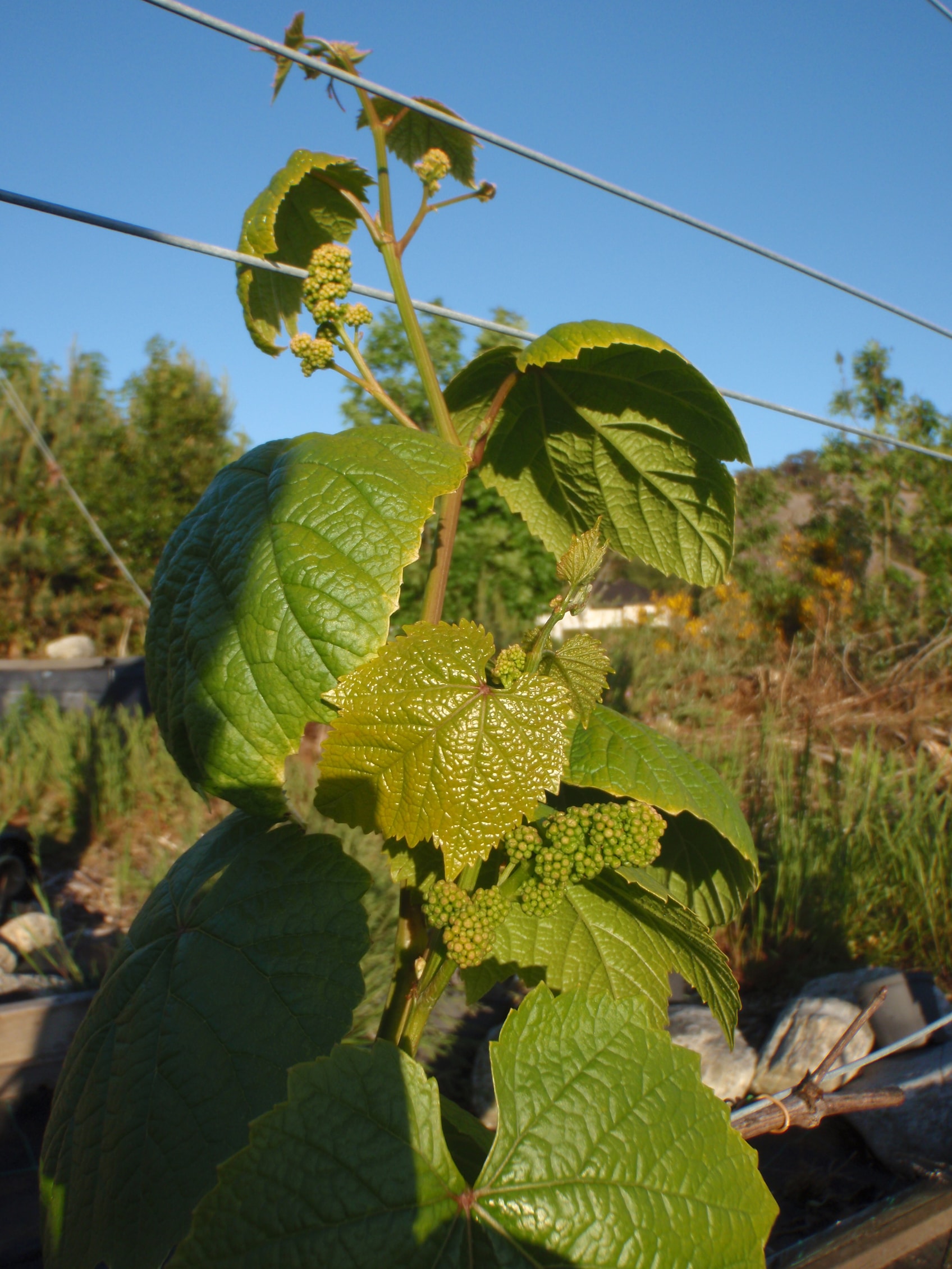
Photo: Knut Sætrevik
28 May
Amurski no. 3 has perhaps come the furthest now, 28 May
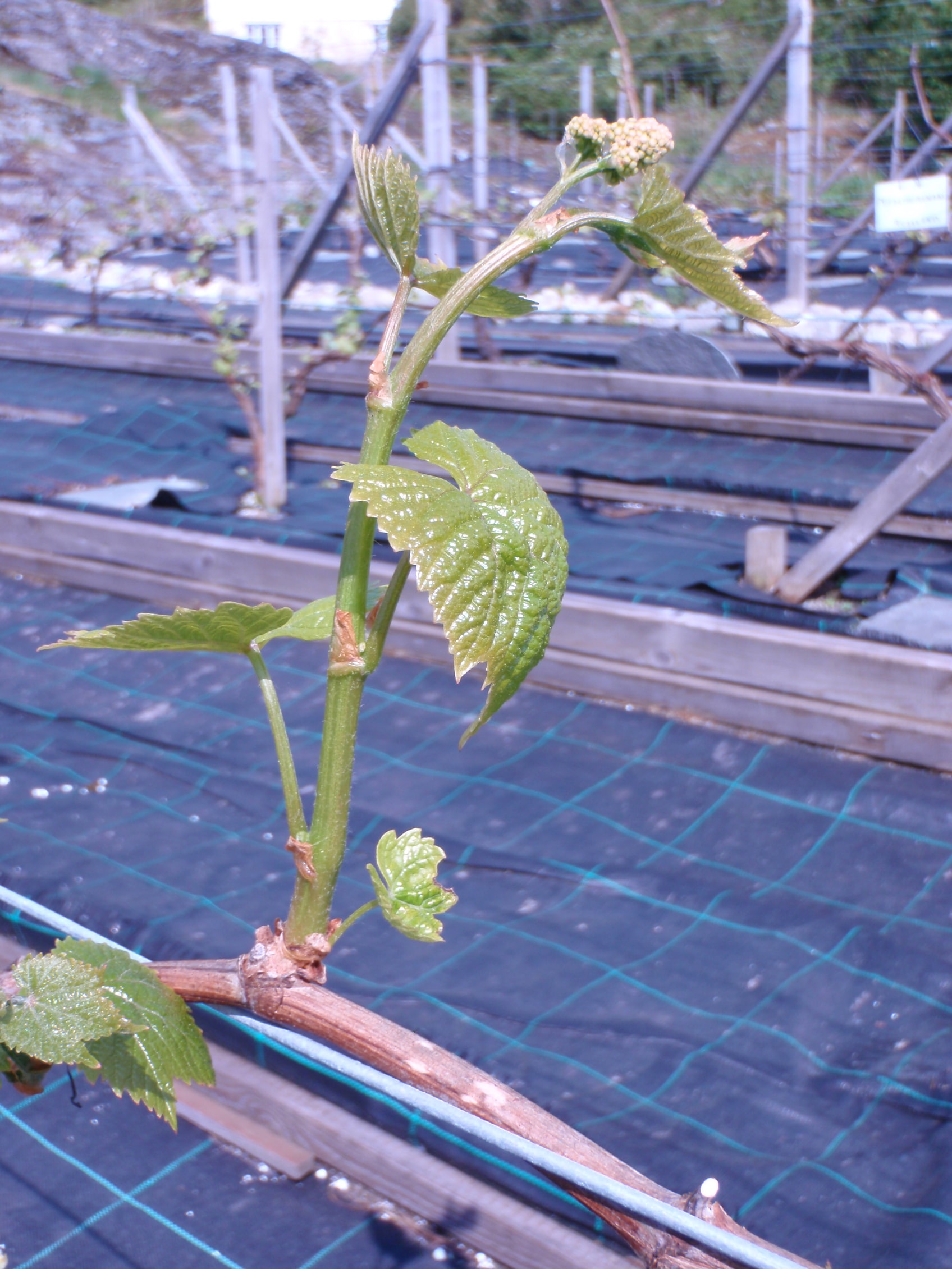
Photo: Knut Sætrevik
28 May
With most of them, growth is well under way, here by the variety Lilac.
The temperature is good enough; hope it continues like this.
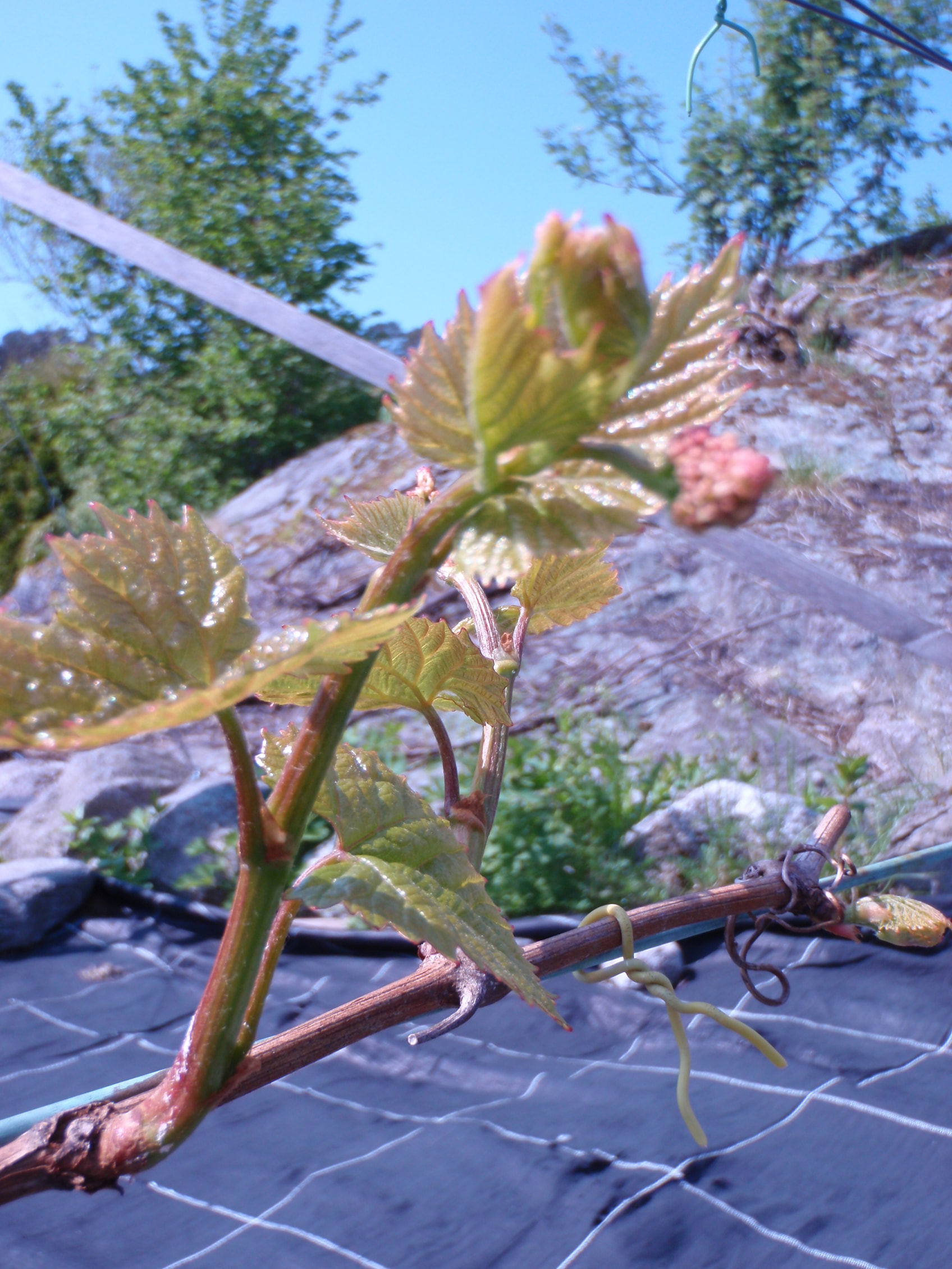
Photo: Knut Sætrevik
10 May
Tumbelina (Duyomovodca 3), the buds have begun to swell,
but this is about 2 weeks later than normal.
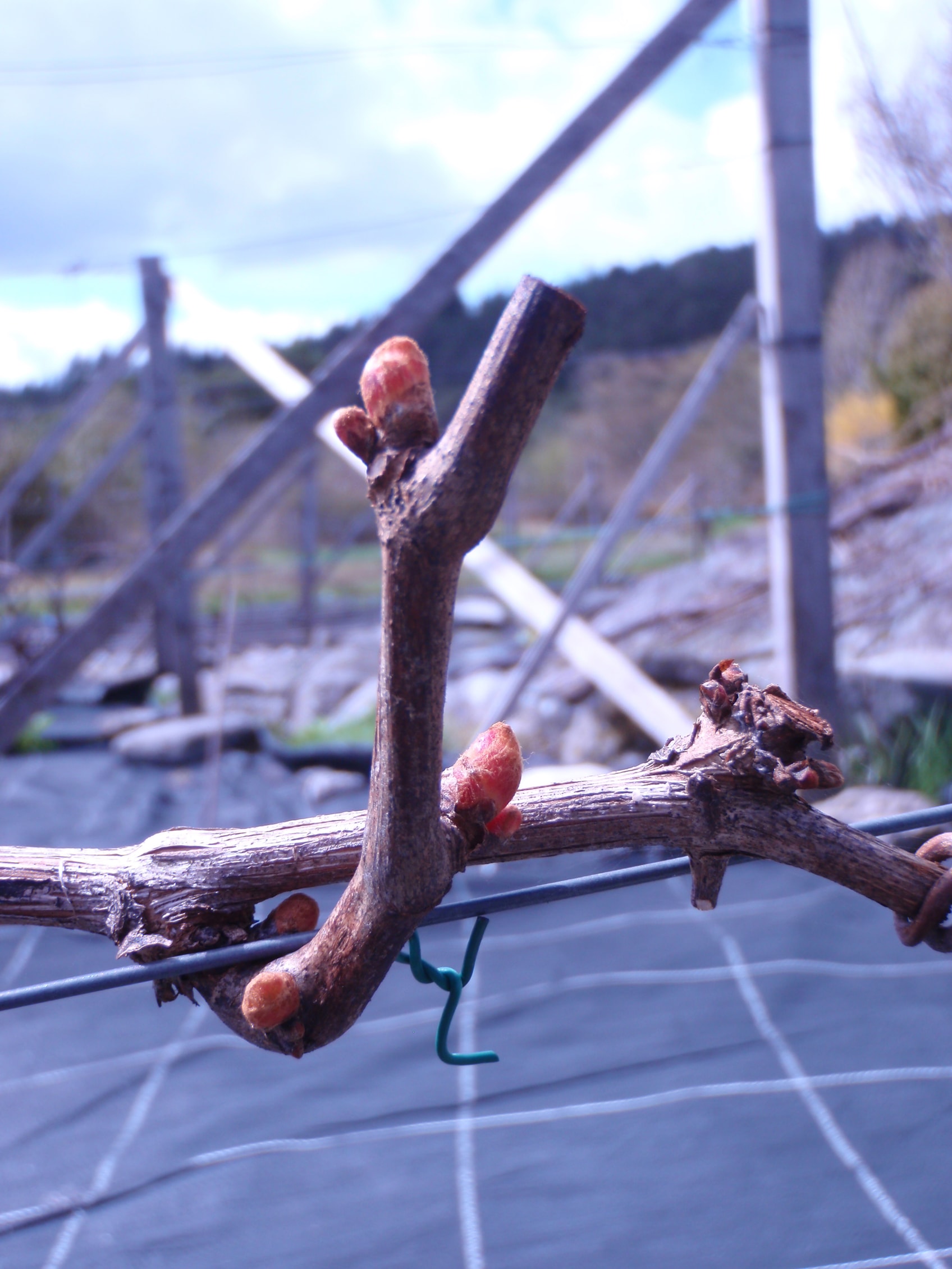
Photo: Knut Sætrevik
10 April
Now, 10 April, the outdoor vines have got tears,
but these are tears of joy when the sap rises.
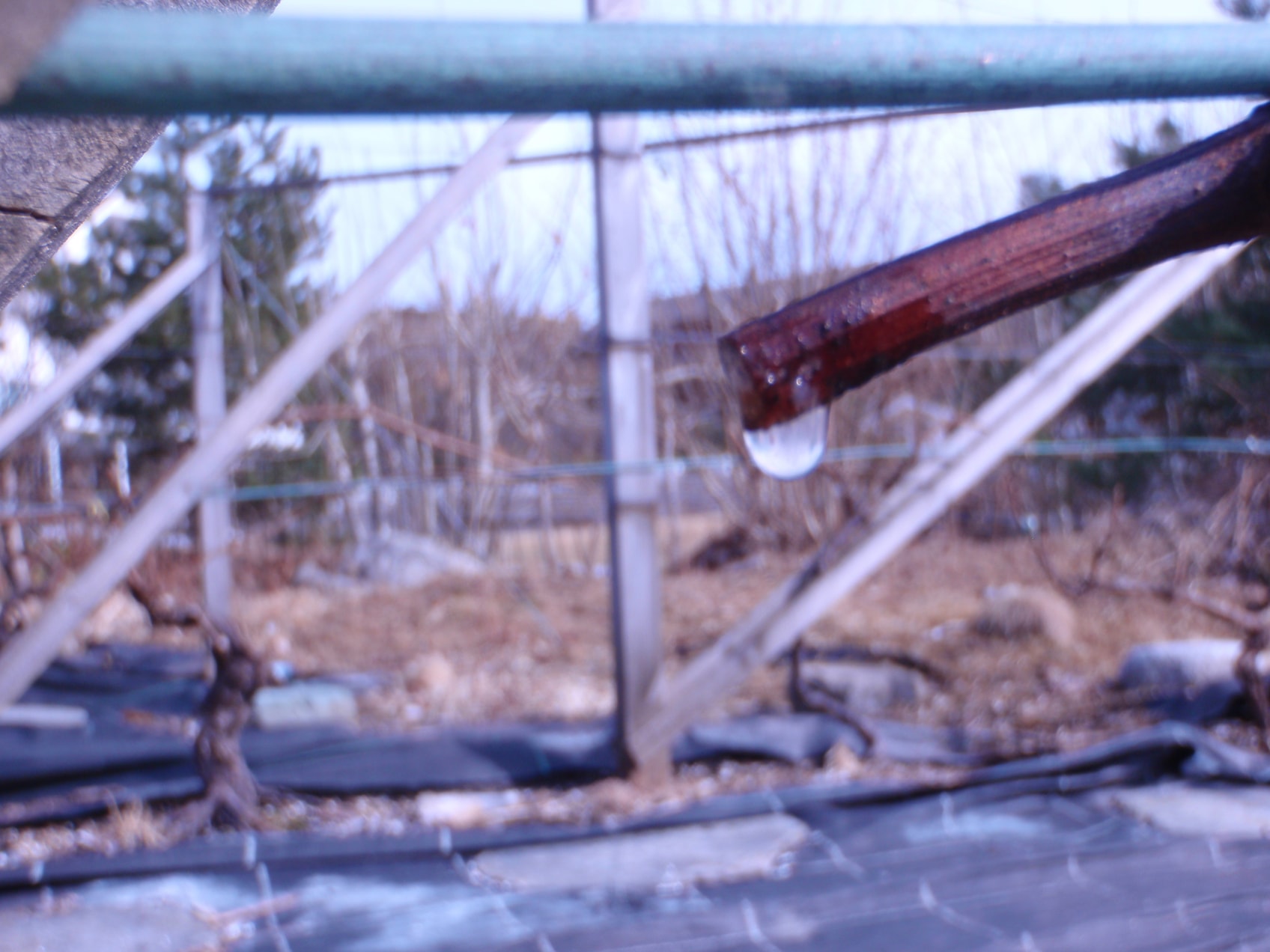
Photo: Knut Sætrevik
25 March.
In the greenhouse with a frost guard, growth is well under way.
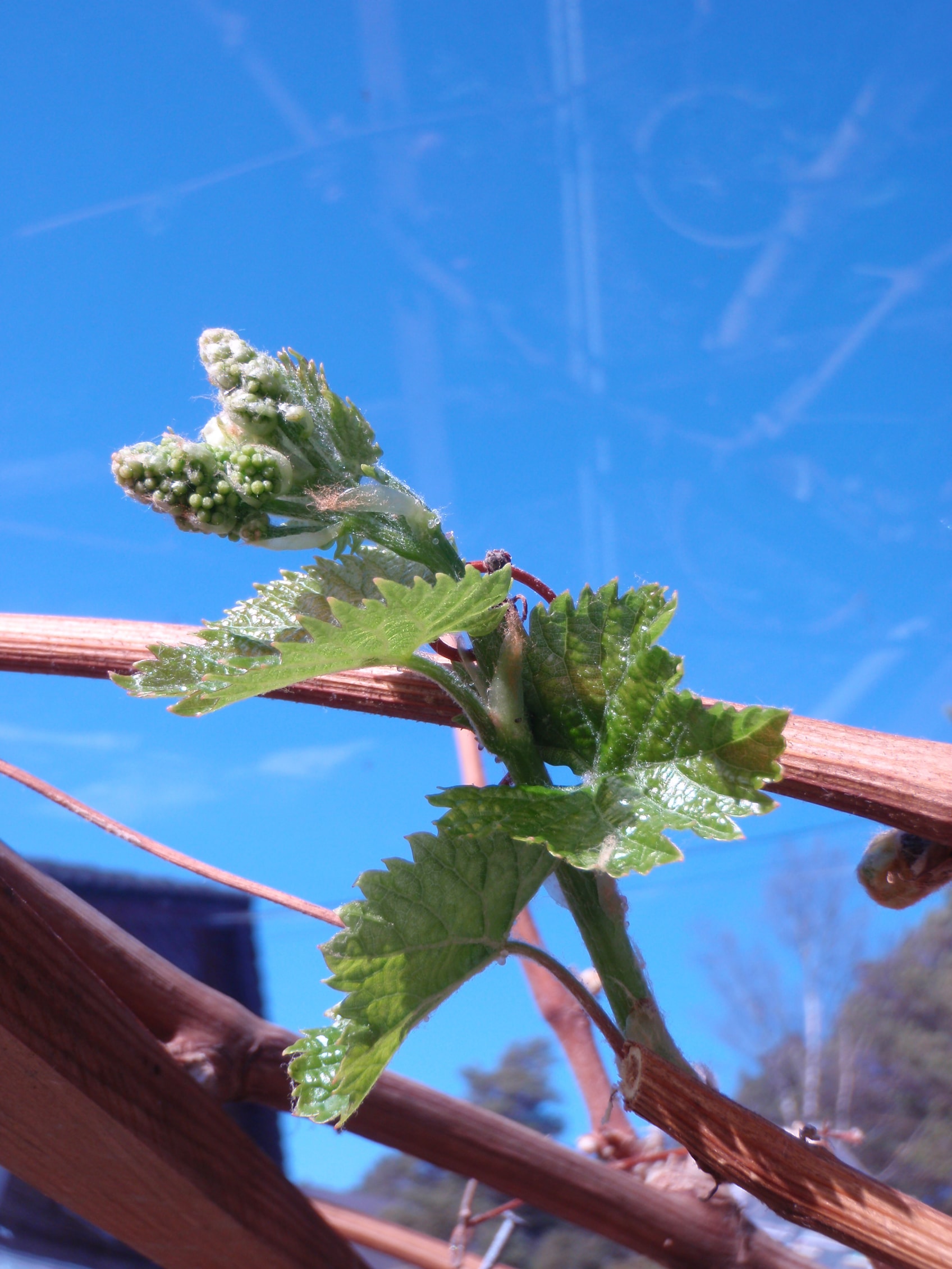
Photo: Knut Sætrevik
5 March.
It also turns out that white moss / bog moss is well suited for setting cuttings in.
It stays moist for a long time, and is airy so that oxygen gets to the roots.
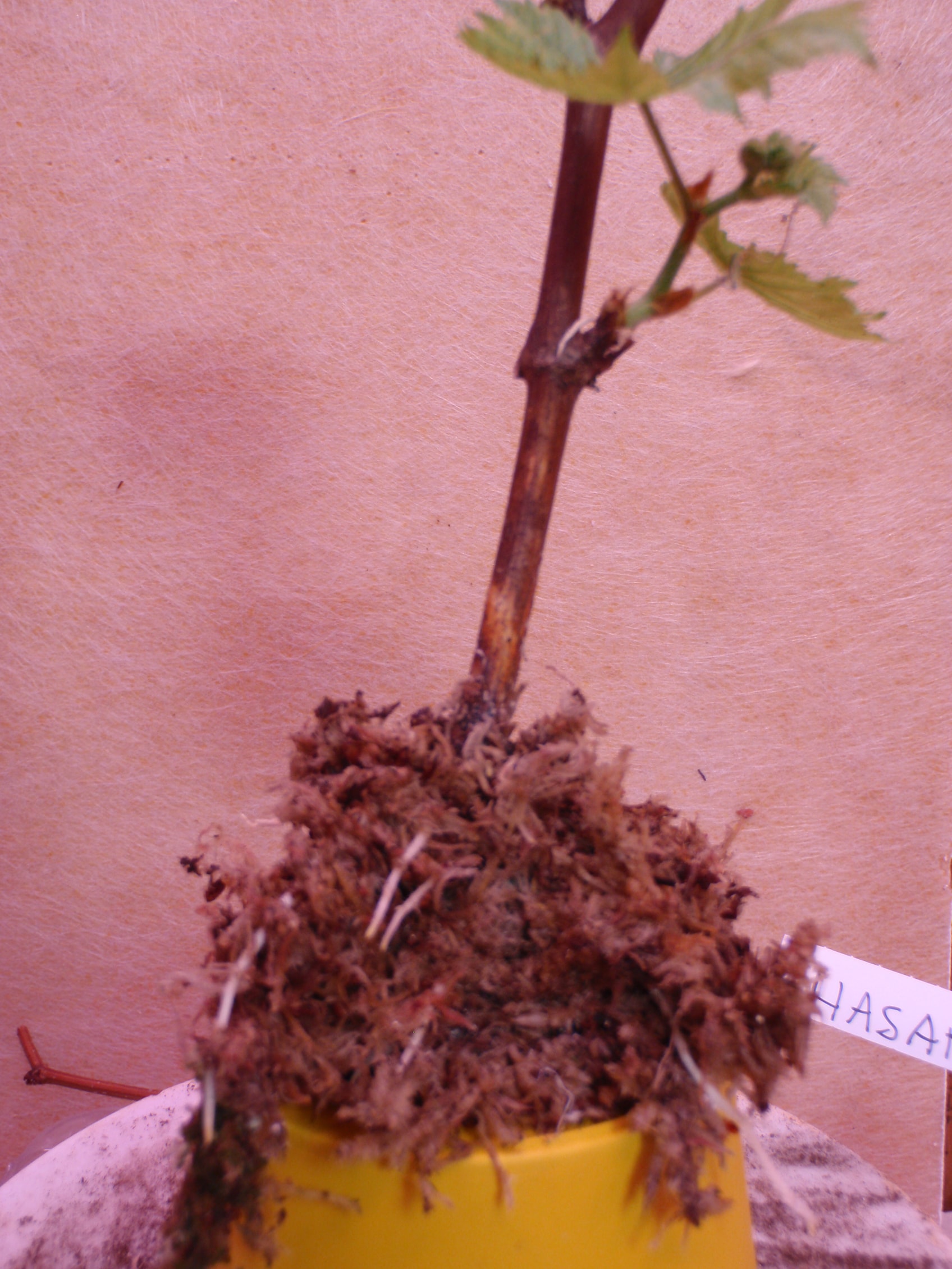
Photo: Knut Sætrevik
1 March.
Pure perlite is well suited to propagation by cuttings.
Here with peat mixed with perlite at the bottom.
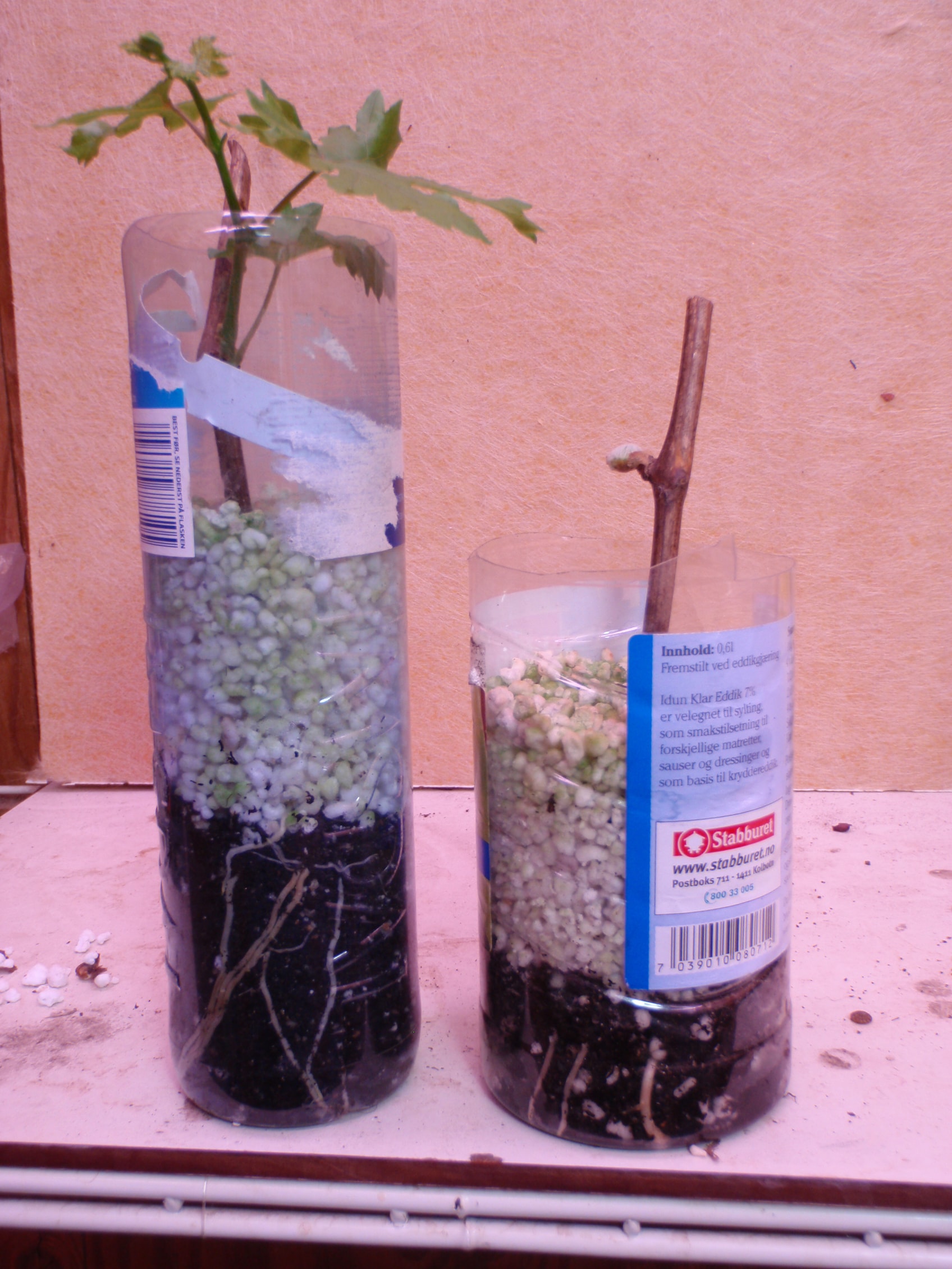
Photo: Knut Sætrevik
End of February
Pruning is finished now, at the end of February.
This is a vine that was planted in the year 2000.
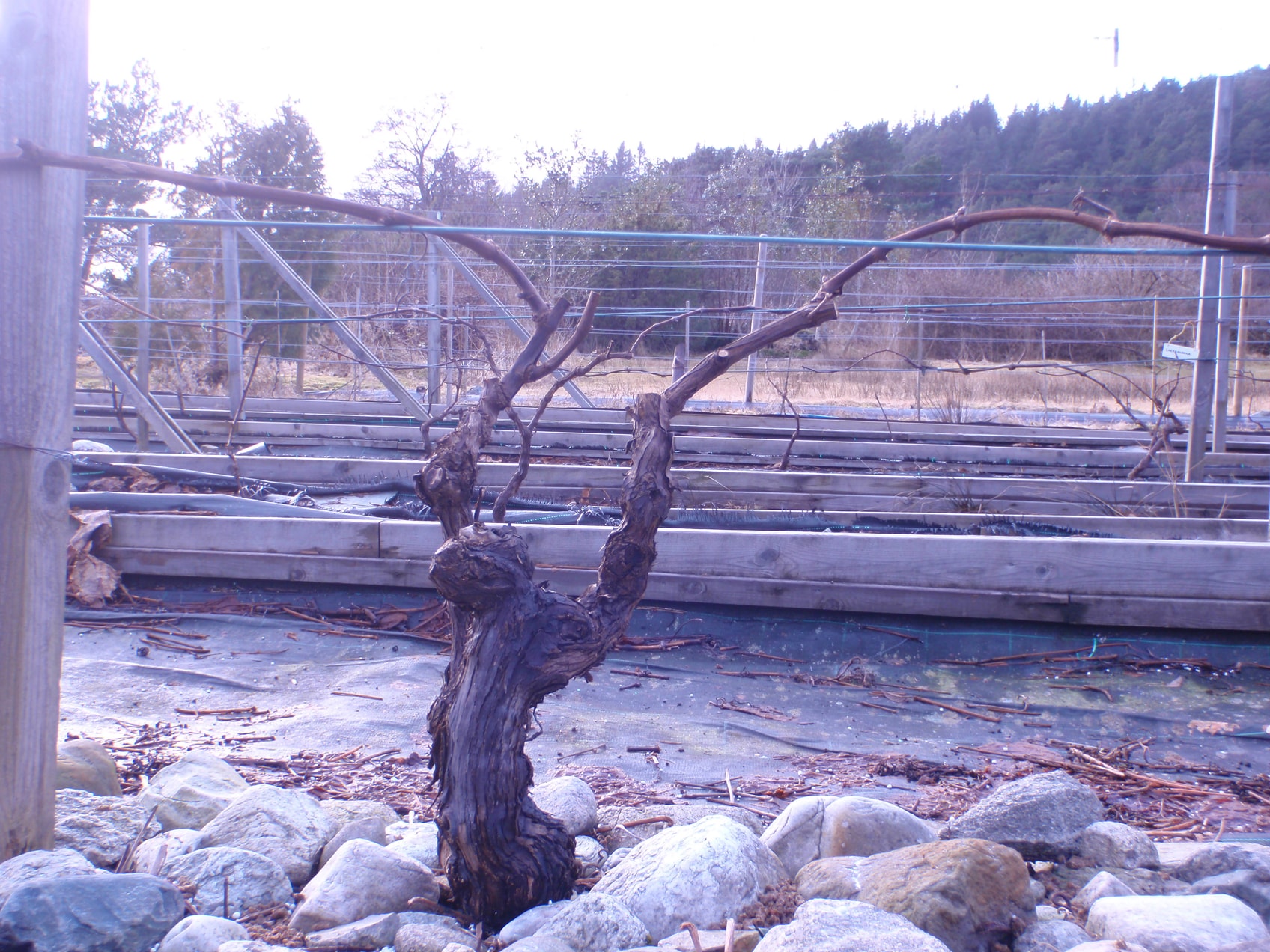
Photo: Knut Sætrevik
Winter is over!
One of the finest winters in many years,
with continuous fine weather without precipitation for about 33 days.
There was bare frost, which led to frozen ground.
This contributes to the plants waking later
in the spring than is normal here in the south-west of the country.

Photo: Knut Sætrevik